





Roots of the Invention
In the aftermath of the devastating 2001 Gujarat earthquake, a visionary potter named Mansukhbhai Prajapati witnessed firsthand the hardships faced by communities grappling with the loss of homes, electricity,
and essential resources for food preservation. This profound experience spurred him to conceive of a low-tech, yet highly impactful solution. His goal was to provide a reliable method for keeping food fresh, a challenge amplified in the sweltering Indian climate. The inspiration, therefore, stemmed directly from a critical societal need, aiming to offer practical relief and stability to those most affected by natural disasters and resource scarcity. This wasn't just about creating a product; it was about fostering resilience and self-sufficiency in vulnerable populations through accessible technology.
Crafting the Clay Cooler
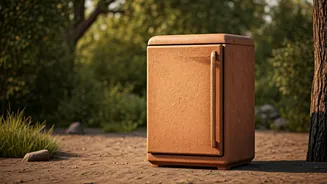
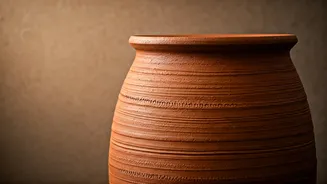
The creation of Prajapati's unique clay refrigerator was a testament to persistent innovation, involving a dedicated period of four to five years of meticulous experimentation. He meticulously refined the composition of the clay, incorporating elements like sawdust and sand. This deliberate addition rendered the clay body exceptionally porous, facilitating a slow but steady seepage of water through its exterior. As this surface moisture naturally evaporates, it draws heat away from the interior chamber, generating a remarkably effective cooling effect. The National Innovation Foundation has lauded this invention as a prime example of natural refrigeration, born from years of trial, error, and a deep understanding of traditional materials. This process underscores the principle that elegant solutions can arise from reimagining age-old craft techniques.
The Evaporative Principle
The functionality of this clay refrigerator is rooted in a beautifully simple yet powerful scientific principle: evaporative cooling. Water is introduced into an upper reservoir and gradually trickles down the porous clay walls. The constant evaporation of this moisture from the outer surface acts as a natural air conditioner, dissipating heat and consequently lowering the temperature within the insulated inner compartment. The clay's inherent porosity ensures that the surface remains damp for extended durations, sustaining the evaporative process throughout the day. This eco-friendly mechanism operates without any reliance on electricity, compressors, or any mechanical components. According to the National Innovation Foundation, this device can maintain the freshness of fruits, vegetables, milk, and drinking water for up to two to three days. Its efficiency is most pronounced in arid, hot climates where evaporation rates are highest, capable of achieving a cooling differential of approximately 5–8°C below ambient temperature.
Affordability and Impact
Crucially, this clay refrigerator was conceived not as a luxury appliance but as a vital resource for ordinary households, particularly those facing financial constraints. The United Nations Conference on Trade and Development has highlighted this innovation as a quintessential example of 'frugal innovation.' It is accessible at a price point below $50 (initially around ₹2,500), making it a practical and affordable alternative to conventional, energy-intensive refrigerators. The primary aim was to address the everyday challenge of food preservation for families in regions plagued by inconsistent power supply and limited financial resources. The invention prioritized functionality and accessibility over advanced technological features, ensuring it could genuinely benefit those who needed it most. This focus on affordability and practical need cemented its place as a truly transformative solution.
From Potter to Innovator
Mansukhbhai Prajapati's journey from a village potter to a nationally recognized innovator is a powerful narrative of blending traditional craft with modern needs. He wasn't an engineer from a research institution; he was an artisan deeply familiar with clay. Prajapati leveraged this intrinsic knowledge to reimagine its potential for contemporary use. His groundbreaking work earned him accolades, including recognition from the National Innovation Foundation in its 2009 competition for grassroots innovations and a feature in Forbes' 2010 list of influential rural Indian entrepreneurs. His success didn't stop at the refrigerator; he expanded his venture to include other clay-based products like water filters and cookers. The enduring appeal of his clay refrigerator lies in its contextual relevance. In India, where heat, frequent power outages, and affordability are persistent concerns for many families, this invention represents more than just a cooling device; it’s a testament to how profound innovation can emerge from understanding materials and addressing real-world problems with elegant, low-cost solutions.