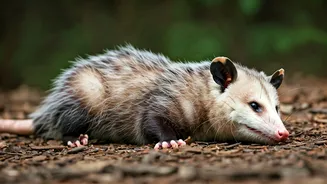








The Opossum's Bluff
The North American opossum is perhaps the most well-known practitioner of playing dead. When threatened, the opossum will enter a catatonic state, appearing lifeless. Its body goes limp, its breathing
slows, and it may even secrete a foul-smelling substance from its anal glands, mimicking the scent of decay. This elaborate performance often convinces predators that the opossum is no longer a viable target. The effectiveness of this strategy lies in the predator's instinct to avoid carrion, thereby allowing the opossum to escape when the danger has passed. Often, after the threat leaves, the opossum will 'miraculously' revive and scurry away, unharmed, leaving the predator baffled. This defense mechanism is not a conscious choice but a physiological response triggered by fear or stress, giving the opossum a crucial survival edge.
Hognose Snake's Gambit
Hognose snakes, found across North America, are masters of deception. When they feel threatened, they engage in a theatrical display of 'death.' They will flip onto their backs, open their mouths, and writhe, as if in agony. To enhance the illusion, they may even emit a foul-smelling musk. If the predator attempts to turn them over, the snake will diligently flip back onto its back, maintaining its 'dead' pose. This elaborate performance often dissuades predators that prefer live prey. The hognose snake’s impressive performance is a calculated risk, as it relies on the predator's disinterest in carrion. It's a gamble that often pays off, allowing these snakes to escape encounters with larger animals. The effectiveness of this tactic is a testament to their clever adaptation.
The Fainting Goat
Fainting goats, also known as Myotonic goats, possess a unique genetic trait that causes them to stiffen or faint when startled. This condition, called myotonia congenita, is caused by a genetic mutation affecting their muscle function. When frightened, the muscles of these goats contract, causing them to freeze in place, and often fall over. While they appear dead, they are fully conscious and quickly recover once the threat passes. The duration of the 'fainting' spell varies, from a few seconds to several minutes, depending on the level of fear. This unusual characteristic, while making them appear vulnerable, can sometimes deter predators, as the sudden stillness can be disorienting. This trait, initially found in goats, is a fascinating example of how nature sometimes provides unexpected defense mechanisms.
Playing Dead Beetles
Many beetle species have evolved the ability to feign death as a defense against predators. When faced with a threat, these beetles will tuck in their legs, become rigid, and appear lifeless. Some may also secrete a foul-tasting or noxious substance to further deter predators. This strategy is particularly effective against birds and other insects that hunt by sight. By appearing unappetizing or already dead, the beetles can avoid being eaten. The duration of their stillness varies, often until the perceived threat has moved on. This adaptation is a prime example of how natural selection favors traits that improve survival, even in the smallest creatures. Their stillness is a remarkable display of the ability to survive in a challenging environment.
The Freeze of Frogs
Several frog species, especially those in environments with many predators, have developed the ability to play dead as a survival tactic. When threatened, the frog may become motionless, often positioning itself in a way that blends with its surroundings. Some frogs will also stop breathing, giving the impression that they are no longer alive. This immobility can confuse predators that rely on movement to identify their prey. Other frogs are able to secrete toxins to enhance their survival odds. This strategy is not limited to one species, showing the effectiveness of natural selection. These frogs display the incredible adaptability of life and its ability to find unique solutions to the challenges of survival in the natural world.