


Northern Elegance & Vibrancy
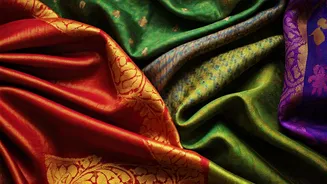
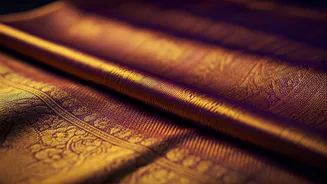
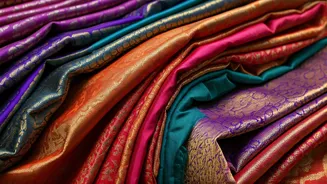
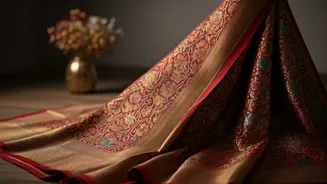
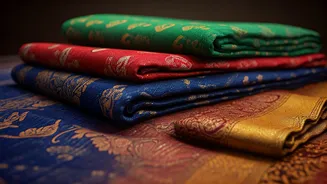
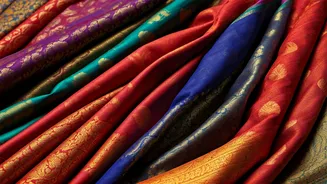
Venturing north, we encounter textiles that beautifully marry regal heritage with the practicalities of mountainous terrains. Uttar Pradesh, for instance, gifts us the Banarasi saree, characterized by
its lavish gold and silver brocade featuring intricate floral patterns that command attention. In stark contrast, Punjab's Phulkari bursts with joy and color, serving as a lively canvas for detailed floral embroidery. Haryana offers a blend of comfort and festivity with its Resham Dhuria, which artfully combines silk embroidery onto soft cotton bases. Moving towards the higher altitudes, Himachal Pradesh's Kullu Patti sarees are distinguished by their vibrant, geometric borders often found on shawl-like fabrics, woven from wool or cotton. Uttarakhand showcases the Panchachuli weaves, presenting subtle yet refined elegance, meticulously crafted by the women of the Himalayas, embodying a quiet sophistication.
Eastern Narratives & Textures
The eastern regions of India are renowned for their rich storytelling traditions and distinctive fabric textures. West Bengal's Baluchari sarees are a true visual narrative, with their pallus (the decorative end portion) intricately depicting scenes from epic tales like the Ramayana and Mahabharata, essentially turning the saree into a wearable storybook. Bihar's contribution, the Bhagalpuri Tussar, offers an eco-friendly, rustic appeal; its natural finish makes it versatile enough to transition seamlessly from a busy professional setting to an elegant evening gathering. Similarly, Jharkhand's Tribal Tussar and Odisha's Sambalpuri Ikat, with its signature hazy, tie-dyed effect, remain deeply connected to nature, frequently featuring motifs inspired by the natural world. The Northeast itself is a spectacular showcase of sustainable and intricate artistry. Assam's golden Muga Silk is legendary, celebrated for its unique quality of becoming glossier with each wash. Meghalaya's Eri Silk, often called peace silk, provides excellent thermal regulation and boasts a beautiful matte sheen. Further east, Arunachal Pradesh's Apatani weaves and Sikkim's Lepcha sarees bring a touch of earthy, minimalist tribal stripes, adding a unique character to contemporary fashion.
Northeastern Tribal Artistry
The far northeastern states of India are a treasure trove of unique tribal weaving traditions, each with its distinctive aesthetic and cultural significance. Nagaland's Naga Motif drapes are characterized by breathtaking geometric patterns that often represent clan affiliations and heritage. Mizoram offers Puan-inspired sarees, featuring tight weaves and bold stripes that create a striking visual impact. Tripura contributes Risa-inspired fabrics, which incorporate distinct tribal motifs, adding a unique flair to traditional wear. Manipur's Moirang Phee sarees stand out with their sheer cotton fabric and delicate, almost architectural edge motifs that evoke temple-like designs, offering a sense of ethereal beauty and refined craftsmanship. These textiles collectively represent a vibrant display of indigenous artistry and sustainable practices.
Western Dyeing Mastery
Western India is a global hub for exquisite dyeing techniques, particularly tie-dye and ikat. Rajasthan's iconic Bandhani sarees bring the vibrancy of the desert to life through highly saturated, fluid tie-dye patterns that seem to dance across the fabric. In contrast, Gujarat's Patola is the epitome of meticulous craftsmanship; this double-ikat masterpiece requires mathematical precision and can take many months to complete, resulting in intricate, reversible designs. Moving south to Maharashtra, the opulent silk Paithani saree reigns supreme, instantly recognizable by its stunning pallus often adorned with motifs of peacocks. Goa offers a refreshing counterpoint with the Kunbi saree, a highly breathable cotton drape characterized by its red checks, reviving the heritage of coastal tribal communities and offering a more relaxed, comfortable elegance.
Central Indian Summer Weaves
At the heart of India, a region blessed with both rich heritage and practical weaving solutions for its climate, Madhya Pradesh presents the Chanderi saree. This textile is celebrated for its feather-light quality and translucent texture, making it an absolute savior during the sweltering Indian summers, offering unparalleled breathability and a delicate drape. Adjacent to it, Chhattisgarh's Kosa Silk provides a beautiful, slightly coarser matte alternative, often embellished with vibrant tribal art, reflecting the region's cultural roots. These central Indian weaves offer a unique blend of comfort, style, and artistry, perfectly suited for the climate and showcasing the diverse textile traditions of the subcontinent.
Southern Architectural Drapes
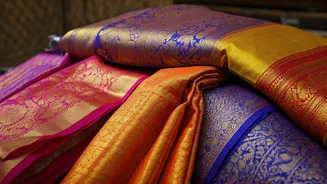
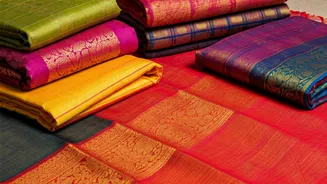
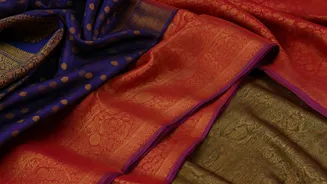
The southern states of India are celebrated for their weaves that possess an almost architectural quality, demonstrating intricate patterns and luxurious materials. Tamil Nadu's Kanjeevaram stands as a heavyweight champion in Indian textiles, meticulously crafted from pure mulberry silk and featuring rich zari borders often inspired by temple architecture. Kerala opts for a more understated elegance with the Kasavu saree, the quintessential symbol of soft grace, typically made from crisp white cotton accented with radiant gold borders. Karnataka's Ilkal saree is immediately identifiable by its distinctive red 'tope teni' pallu, a striking feature that sets it apart. Andhra Pradesh's Uppada Jamdani offers a delicate marvel of zari work, woven to be exceptionally breathable. Finally, Telangana completes the southern quartet with the Pochampally Ikat, renowned for its impossibly smooth silk-cotton blend and sharp, precise geometric patterns achieved through meticulous ikat dyeing.