







The Great Sweet Shift
A significant disruption in the supply of commercial LPG cylinders has dramatically reshaped the landscape of sweet shops across Bengal. Many popular fried sweets, including 'amriti', 'jilipi', 'kalojaam',
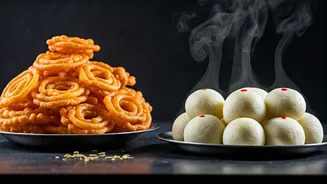
'lalmohan', 'pantua', 'bonde', 'darbesh', 'mihidana', 'sitabhog', and 'labanga lotika', have become scarce, disappearing from shop shelves. In their place, shops are prioritizing the production of sweets that require less energy to prepare, such as 'rosogolla', 'rasomalai', 'sandesh', 'kheer-kadam', 'chamcham', 'rosomadhuri', and 'mishti doi'. Even traditional sweets like 'karapak sandesh', which demand high temperatures for charring, have been significantly affected. This forced pivot is a direct consequence of the energy crisis impacting the kitchens that form the backbone of Bengal's vibrant sweet industry, a sector valued at over Rs 6,500 crore and supporting approximately 10 lakh individuals.
Energy-Saving Innovations
In response to the energy crisis, sweet makers are increasingly adopting methods that conserve fuel. Many shops are now utilizing steam boilers, which are far more energy-efficient than traditional high-heat cooking methods. For instance, preparing 'sandesh' typically requires temperatures between 70°C and 75°C, a range easily managed by steam. Conversely, sweets like 'kalojaam' require much higher temperatures, between 120°C and 140°C, making their production challenging with current energy constraints. Some establishments are also reverting to older, more robust cooking technologies. One 210-year-old shop has ingeniously integrated diesel furnaces and induction cookers into their operations, recognizing the value of these alternative energy sources that they had previously maintained. This strategic adaptation is crucial for maintaining production and catering to consumer demand amidst the ongoing supply issues.
Economic and Social Impact
The repercussions of the LPG shortage extend beyond just the availability of sweets, deeply affecting the economic and social fabric of the sector. The crisis has led to a reduction in staff at many sweet outlets, with workers returning to their villages, and in some cases, prompting shop closures. For consumers, particularly those who consider a daily sweet a quintessential part of their meal, the absence of their favorite delicacies is a source of significant disappointment and concern. The industry, valued at over Rs 6,500 crore and providing livelihoods for about 10 lakh people, is facing potential further complications if demand for fried snacks and sweets increases, especially on weekends. While some temporary measures like using diesel 'bhattis' are being explored, the long-term implications for this cherished culinary tradition are substantial and worrying.
Adapting to Circumstances
Even time-honored institutions are navigating this complex situation by adapting their production methods. Established shops, some with histories spanning over a century, are facing the challenge of meeting diverse customer demands under the current energy limitations. For example, one 182-year-old establishment has temporarily ceased the production of 'karapak sandesh' and other 'malai'-based sweets, with plans to resume once gas supply normalizes. Similarly, another renowned 141-year-old business, with multiple outlets, has significantly reduced its milk procurement by 20 percent due to manufacturing dependencies on LPG. While they are currently striving to avoid halting production altogether, they acknowledge that they will be compelled to cease making energy-intensive sweets once their existing LPG stock is depleted, highlighting the precarious balance they are maintaining.