





Water Levels Plummet
The iconic Thekkady Lake, which serves as the reservoir for the Mullaperiyar dam, is experiencing a significant decrease in its water volume due to the relentless summer heat. This drastic reduction has
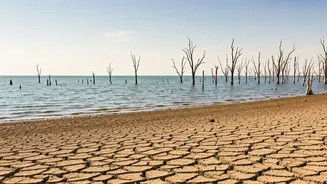
already led to boats scraping the lakebed, a clear indication of the severity of the situation. Consequently, authorities have been compelled to halve the passenger capacity on all boats. The forest department has issued a stern warning: if the water level in the Mullaperiyar dam, currently at 109 feet, dips further to 108 feet, all boating services on Thekkady Lake will be entirely suspended. Since Friday, access to boating has been strictly limited, leaving many tourists who arrived after the Vishu festival disappointed. While a Rs 75 ticket allows visitors to reach the boat landing area via forest department vehicles, the primary attraction of a leisurely boat ride is now inaccessible to the majority. This precarious situation affects both the forest and tourism departments, who jointly operate these vital services. Major vessels like Vanajyotsna, Vanadarshan, Vanalakshmi, and Periyar, along with KTDC's Jalayatra and Jalajyothi, are all impacted. Boats designed to carry up to 120 passengers are now restricted to a mere 40-50, and even smaller boats with capacities of 19-20 passengers face similar curtailments. The exposed lakebed, filled with sand and slush, presents a substantial safety hazard, causing the undersides of boats to make contact with the surface. The drying lake is also revealing submerged remnants of ancient teak and other trees, estimated to be 150-200 years old, which were left in place during the construction of the Mullaperiyar dam.
Tourism and Safety Concerns
The declining water levels at Thekkady Lake have introduced a complex web of challenges, primarily impacting the tourism sector and raising significant safety concerns. The reduction in boat capacity from a typical 120 passengers to a mere 40-50 for larger vessels, and similar cuts for smaller boats, directly translates to fewer visitors being able to experience the lake's allure. Thousands of tourists, particularly those visiting after the recent Vishu celebrations, have found their plans disrupted, missing out on the quintessential boating experience. While access to the landing point is still possible through forest department vehicles for a nominal fee, it doesn't replace the primary draw of the boat journey itself. The exposed lakebed poses a tangible risk, with boats scraping the bottom and the potential for damage. Furthermore, the emergence of submerged tree stumps, remnants from the Mullaperiyar dam's construction, transforms the lakebed into a treacherous landscape. This situation underscores the direct dependency of Thekkady's boating operations on the water levels of the Mullaperiyar dam. The critical threshold of 108 feet for the dam's water level signals an imminent suspension of all boating activities, a scenario that authorities acknowledge is rare but increasingly probable. In past instances of low water levels, a temporary jetty was established further away, but this year, such an arrangement is deemed unfeasible due to the frequent presence of wild elephants in the vicinity of the old jetty site, which has now become an active wildlife habitat.
Wildlife's Shifting Landscape
The severe summer heat impacting Thekkady Lake is also creating a profound shift in the local wildlife's behavior and habitat. Within the Periyar Tiger Reserve (PTR), water sources inside the forest are drying up, forcing various animal species to venture out in search of sustenance. This scarcity is a direct consequence of the lack of summer rains, which has also led to the desiccation of vegetation and grasses, posing a critical threat to the survival of these animals. Ironically, while tourism faces disruption, the drying lake shores are becoming an unusual gathering point for wildlife. Elephants, gaurs, sambar deer, and even elusive predators like tigers and leopards are being sighted more frequently near the lake's edge. This proximity offers tourists, albeit those who can still access the landing point, a rare and unparalleled opportunity to observe these magnificent creatures in their natural environment, though under stressful conditions. The emerging tree stumps, once submerged, also hint at the historical ecological transformations that occurred during the dam's construction, a constant reminder of the delicate balance between human infrastructure and the natural world. This confluence of environmental stressors highlights the interconnectedness of the lake's water levels, the health of the surrounding forest, and the well-being of its diverse fauna.