






What is the story about?

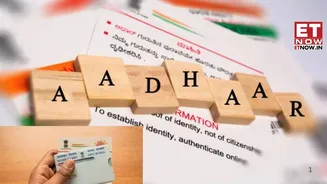
The Unique Identification Authority of India has officially announced the retirement of mAadhaar, the digital identity app used by hundreds of millions
of Indians for over a decade, and is pushing all users to migrate to a new Aadhaar application that overhauls how identity verification works in the country.
UIDAI confirms on 15 May
UIDAI confirmed on May 15 through its official social media channels that the mAadhaar app is retiring soon, and that users should move to the new Aadhaar app which offers secure QR-based Aadhaar sharing, enhanced privacy controls, and seamless access to Aadhaar services.
The shift is not cosmetic, the new app represents a fundamental rethinking of how identity documents are shared moving away from the flawed practice of handing over photocopies or displaying the full 12-digit Aadhaar number toward a model built on selective, consent-based digital disclosure.
QR based Aadhar sharing
The biggest new feature is QR-based Aadhaar sharing, which lets users verify their identity without exposing their full Aadhaar number at all. A "Selective Share" option allows users to choose exactly what details to share name, photo, age, gender, address, mobile number, or Aadhaar status. For apps or venues that require users to be 18 or older, the app can provide a "Verified Age" token without revealing the actual date of birth or Aadhaar number.
The app is built on data minimisation principles aligned with the Digital Personal Data Protection Act, ensuring that only limited, purpose-specific Aadhaar details are shared during any verification. It also introduces a "One Family — One App" concept, allowing residents to manage up to five Aadhaar profiles on a single device, making it practical for families who share a single registered mobile number.
Beyond QR sharing, the new app supports offline Aadhaar verification, authentication history tracking, and biometric lock and unlock controls all accessible directly from a smartphone. Face authentication is another significant addition: users can verify identity by capturing a live photo, which is matched in real time against the photograph stored in the UIDAI database. No physical card, no photocopy, no risk of the Aadhaar number being misused.
One important caveat for users making the switch: the new app will not automatically import data from the older mAadhaar app. Downloaded Aadhaar PDFs, saved QR codes, and cached information will not carry over. Users will need to set up everything again manually, including re-adding family member profiles one by one.
Setting up the new app involves downloading it from the Google Play Store or Apple App Store, entering the mobile number linked to the Aadhaar account, completing OTP verification, and then creating a security PIN or enabling fingerprint or face unlock. In some cases, face authentication may also be prompted during the initial setup as an additional verification layer.
The new app supports use cases that go well beyond carrying a digital ID card from hotel check-ins and hospital admissions to age verification at venues and gig worker onboarding all without surrendering more personal data than the situation strictly requires.
For a country where Aadhaar underpins everything from bank accounts and SIM cards to welfare scheme eligibility, the upgrade matters. UIDAI is expected to continue encouraging users to adopt the newer platform over the coming months as the gradual retirement of mAadhaar proceeds. Users are advised to migrate without delay to avoid any disruption to Aadhaar-linked services.