





What is the story about?

Computex 2026: Asia’s largest technology trade show to begin from June 2 to June 5 in Taipei, Taiwan. Organized by TAITRA and the Taipei Computer Association,
this year’s event is built around the theme “AI Together,” which focuses on AI PCs and edge intelligence, AI infrastructure and data centers, and physical AI and robotics. Around 1,500 companies are exhibiting, including Nvidia, Intel, Qualcomm, AMD, Marvell, Acer, HP, Lenovo, ASUS and MSI, along with many Taiwan-based tech firms. Keynotes from Jensen Huang, Intel’s CEO and Qualcomm’s CEO are driving the story of how AI will reshape PCs, phones, servers and real-world systems over the next few years.
Nvidia’s N1 and N1X Chips and Keynote Open a New Era for AI Laptops
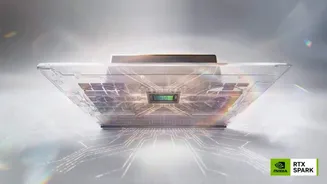
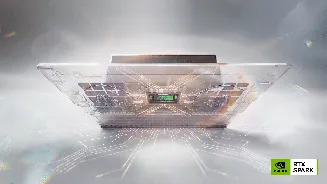
The biggest launch expected at Computex 2026 is Nvidia’s first processors built for everyday laptops, called N1 and N1X. These are Arm-based PC chips that combine Arm CPU cores with Nvidia’s powerful graphics and AI hardware. The flagship N1X is reported to have a 10+10 core CPU based on ARM’s Cortex-X925 and Cortex-A725 designs, paired with a 48 SM Blackwell GPU packing 6,144 CUDA cores. A slightly cut-down variant with 9+9 cores, 40 SMs and 5,120 CUDA cores is also in preparation. Both N1X models are designed for a 45W to 80W power envelope, putting them in the premium performance laptop territory. The chips support up to 128 GB of LPDDR5X memory through a 16-channel memory interface, and offer 12 PCIe 5.0 lanes and 5 PCIe 4.0 lanes for storage and expansion.
The standard N1 lineup is aimed at more mainstream devices. One variant is tipped to feature a 12-core CPU paired with a 20 SM GPU containing 2,560 CUDA cores, while another could ship with a 10-core CPU and a 16 SM graphics configuration for 2,048 CUDA cores. These chips are configured for lower power operation between 18W and 45W, while supporting between 8 GB and 64 GB of LPDDR5X memory. N1X systems are expected to accommodate up to three M.2 SSDs, while the more affordable N1 platform may be limited to two drives. If accurate, the specification suggests Nvidia is targeting everything from thin and light AI PCs to high-performance creator and gaming laptops with its first major Windows on ARM push. Analyst Ming-Chi Kuo suggests that shipments for laptops using Nvidia’s N1X and N1 processors could reach around 10 million units over the next two years, mainly for AI power users who need strong on-device compute.
Jensen Huang's Keynote to begin on June 1, 11 a.m.
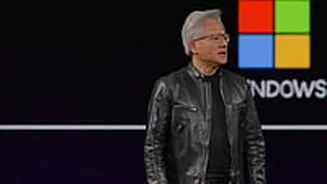
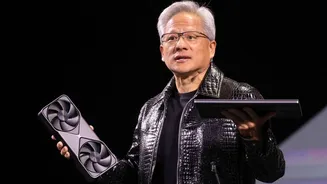
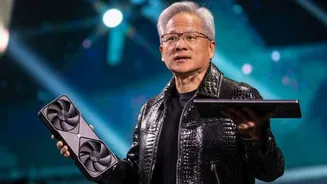
Jensen Huang’s keynote opens the entire week, It is scheduled for June 1 at 11 a.m. local time at the Taipei Music Center and kicks off NVIDIA GTC Taipei, which runs from June 1 to June 4 alongside Computex. Huang will discuss the future of AI and unveil new AI platforms. He will join Marvell CEO Matt Murphy for a session titled “The Future of AI Depends on Connectivity.” The keynote will highlight Nvidia’s Vera Rubin AI platform and new AI chips for data centers. Qualcomm CEO Cristiano Amon will also keynote on June 1, sharing Qualcomm’s view on agentic AI across devices from phones to PCs to edge systems.
Intel is focusing on the next era of AI-driven computing. Intel CEO Lip-Bu Tan will deliver a keynote on June 2 from 1:30 p.m. to 2:30 p.m. Taiwan time at the Taipei Nangang Exhibition Center. The event is invitation-only but will be livestreamed on Intel’s YouTube channel. Intel will showcase AI PCs, edge computing, data center and cloud progress. Its Core Ultra Series 3 processors are being promoted as reimagining everyday PCs for creation and gaming. Intel is also powering the Robotics & Edge AI Pavilion at Computex.
Marvell’s CEO Matt Murphy will keynote on June 2 at 10:30 a.m. GMT+8 at the Taipei Nangang Exhibition Center, Hall 2, 7F. His talk will focus on the theme “The Future of AI Scaling Depends on Connectivity,” explaining how data infrastructure, networking and connectivity enable large AI systems.
Intel’s crescent island AI GPU and broader AI hardware push
At Computex 2026, Intel is also making a major move in the AI GPU market with its long-awaited Crescent Island AI GPU. This is an inference-optimized accelerator based on Intel’s next-generation Xe3P Celestial microarchitecture, which is heavily optimized around performance-per-watt to maximize efficiency for AI workloads. Crescent Island is designed to accelerate AI inferencing workloads, especially for large language models and “tokens-as-a-service” providers.
Crescent Island will be a PCI Express add-in card with a 350W power target, placing its power and thermal requirements close to products like Nvidia’s RTX Pro 5000 Blackwell card. Intel says its Crescent Island reference design will include 160GB of LPDDR5X memory, but the chip is designed to allow partners the flexibility to build accelerators with up to 480GB of memory. With 10.7 Gbps LPDDR5X, Crescent Island would offer 684 GB/s of memory bandwidth. The unusual memory choice brings lots of AI data closer to the chip for efficiency, marking a big shift from the usual GDDR6, GDDR7 and HBM memory used in most AI GPUs.
Crescent Island supports a wide range of AI data types, such as FP4, MXP4, FP32 and FP64, making it suitable for a broad range of inference use cases. While Intel is not providing raw throughput specs at this stage of development, the focus is clearly on efficiency and handling large models rather than peak gaming performance. This launch strengthens Intel’s position in the AI infrastructure space, competing directly with Nvidia and AMD in the data center and cloud market.
First-ever AI robotics pavilion and AI infrastructure as the core theme
For the first time in its history, Computex 2026 features a dedicated AI Robotics Pavilion under one roof. This pavilion brings together Taiwan’s full physical AI supply chain, including sensors, motors, reducers and system integrators. About 1,500 companies are participating. The pavilion runs from June 2 to June 5, from 9:30 a.m. to 5 p.m., at the Taipei World Trade Center. It highlights robotics, autonomous systems and real-world AI applications moving from labs to actual products. Intel is also powering the Robotics & Edge AI
Pavilion at Computex.
Computex 2026 keynotes will emphasize AI infrastructure, heterogeneous computing, physical AI and distributed intelligent systems. The keynote lineup alone signals where the industry is headed: scalable AI infrastructure, edge intelligence, heterogeneous computing and physical AI systems are expected to dominate discussions throughout the event.
Industry watchers are closely watching whether Nvidia’s N1 and N1X will truly change the laptop market with Arm-based AI PCs, how much cheaper AI chips will become for budget laptops, new AI PCs with high-performance NPUs and long battery life, new AI data center chips and platforms like Vera Rubin, Intel’s Crescent Island GPU and how robotics and physical AI are transitioning into real products. Computex 2026 is positioning AI as the central theme of the entire tech industry, with Nvidia, Intel, Qualcomm and Taiwan’s chip ecosystem leading the way.
AMD announces new CPU, 5800X3D rerelease, RX 9070 GRE worldwide date, and more at Computex
At Computex 2026, AMD announced a major refresh of its AM5 platform and a wider global rollout of key hardware. The headline CPU news is the return of the Ryzen 7 5800X3D as an “anniversary edition.” This revised 5800X3D will launch on June 25 at a recommended price of USD 349, about USD 100 lower than its original launch price, making high-end 3D V-Cache gaming performance more accessible. AMD also confirmed that the Ryzen 7 7700X3D will arrive on July 16 at USD 329, further strengthening its AM5 lineup for both current and next-gen users. AMD has pledged to support the AM5 socket through 2029 and beyond.
For graphics, AMD is launching the Radeon RX 9070 GRE worldwide on June 1 at USD 549. Originally a China-exclusive model released in May 2025, the 12GB RX 9070 GRE is a cut-down version of the RX 9070 aimed at 1440p gaming. The card will also gain support for FSR 4.1 on RDNA 3 GPUs, bringing AMD’s latest upscaling and frame-generation tech to more users. Alongside these hardware launches, AMD highlighted RAM improvements and its broader strategy to keep AM5 competitive for gaming and content creation into the next few years.