








What is the story about?
Uber is nowhere nearly done with India. The ride-hailing company has new mobility offerings, artificial intelligence development, and digital commerce on offer as it hopes to deepen its presence in India, the company’s President and Chief Operating Officer Andrew Macdonald said on the sidelines of the World Economic Forum in Davos.
In a conversation with CNBC-TV18’s Shereen Bhan, the Uber chief revealed that the company now hopes to tap into “adjacent services,” including package delivery and retail fulfillment, through its driver network.
It would not be the first time that Uber ventures beyond its ride-hailing business in India, a country whose competitive market, Macdonald said, “brings the best” out of Uber. The company’s food delivery business, UberEats, failed to take off in India, despite performing well in other markets, such as the US and the UK, and was shut down in 2020.
Also Read:How AI is reshaping India’s pharma and healthcare playbook
The company is also exploring “mobility-as-a-service” options, including first- and last-mile connections to train stations and integrating ticketing into its app.
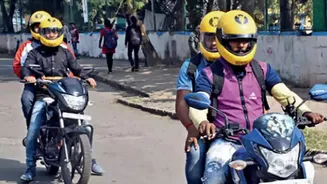
For 2026, Uber plans to launch new modes of transportation in India, expand two-wheeler services, and enhance premium offerings, while continuing to scale its global operations in mobility, autonomous vehicles, and local commerce.
He emphasised that Uber remains committed to providing drivers with flexibility, earnings, and protections as per the government’s regulatory changes on gig workers.
On the autonomous vehicle front, Macdonald said Uber aims to be a global platform for self-driving cars, with 24 partnerships and four live deployments.
Lessons from India
Macdonald said India is Uber’s largest engineering hub outside the Bay Area, driving the company’s AI initiatives through its Uber AI Solutions programme.
Most of the ride-hailing company’s global products debut first in India and draw lessons from the Indian ecosystem, where new players enter every so often with new business models.
“A lot of what we're learning in India is making its way into 75 countries around the world, and that's a good thing,” he added.
For Macdonald, the most notable lesson to take home from the Indian ecosystem is the balancing act between innovation and pricing, specifically, “the ability to continue to innovate on consumer experience while being mindful of price”.
In a conversation with CNBC-TV18’s Shereen Bhan, the Uber chief revealed that the company now hopes to tap into “adjacent services,” including package delivery and retail fulfillment, through its driver network.
It would not be the first time that Uber ventures beyond its ride-hailing business in India, a country whose competitive market, Macdonald said, “brings the best” out of Uber. The company’s food delivery business, UberEats, failed to take off in India, despite performing well in other markets, such as the US and the UK, and was shut down in 2020.
Also Read:How AI is reshaping India’s pharma and healthcare playbook
The company is also exploring “mobility-as-a-service” options, including first- and last-mile connections to train stations and integrating ticketing into its app.
For 2026, Uber plans to launch new modes of transportation in India, expand two-wheeler services, and enhance premium offerings, while continuing to scale its global operations in mobility, autonomous vehicles, and local commerce.
He emphasised that Uber remains committed to providing drivers with flexibility, earnings, and protections as per the government’s regulatory changes on gig workers.
On the autonomous vehicle front, Macdonald said Uber aims to be a global platform for self-driving cars, with 24 partnerships and four live deployments.
Lessons from India
Macdonald said India is Uber’s largest engineering hub outside the Bay Area, driving the company’s AI initiatives through its Uber AI Solutions programme.
Most of the ride-hailing company’s global products debut first in India and draw lessons from the Indian ecosystem, where new players enter every so often with new business models.
“A lot of what we're learning in India is making its way into 75 countries around the world, and that's a good thing,” he added.
For Macdonald, the most notable lesson to take home from the Indian ecosystem is the balancing act between innovation and pricing, specifically, “the ability to continue to innovate on consumer experience while being mindful of price”.