









What is the story about?
Google’s growing focus on AI-powered search appears to be pushing some users toward rival platform with privacy-focused search engine DuckDuckGo reporting a sharp jump in downloads and traffic after the tech giant’s latest announcements.
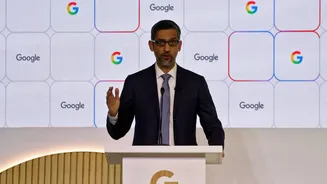
At its annual I/O developer conference, Google l aid out a future where traditional search results are increasingly replaced by AI-generated answers, automated task handling and background AI agents capable of carrying out requests for users. But the company’s push to make Search function more like an AI assistant has triggered strong reactions.
While Google positions the shift as the next evolution of Search, many users have complained that AI-generated overviews often make even basic searches unnecessarily complicated. Others have raised concerns about incorrect answers, reduced transparency and the growing fear that AI summaries could hurt websites that depend on search traffic.
The backlash seems to be benefiting DuckDuckGo as users can “opt out using AI.”
The company said installs of its app in the US rose by an average of 18.1% week-over-week between May 20 and May 25 compared to the previous week, TechCrunch reported. According to the company, the growth lasted six consecutive days and peaked at 30.5% on May 25.
The spike was even bigger on iPhones. DuckDuckGo said iOS installs recorded an average week-over-week increase of 33%, with the highest single-day growth touching nearly 70%.
The company also reported increased traffic to its AI-free search page, noai.duckduckgo.com, where all AI-powered features are turned off by default. DuckDuckGo said visits to the page grew by an average of 22.7% during the same period. The traffic increase peaked at 27.7% on May 24.
DuckDuckGo CEO Gabriel Weinberg directly criticised Google’s latest search direction.
“Google is force-feeding AI with no way to opt out. As a result, their results are getting worse, not better. We want to be the place that puts users in charge and allows them to decide how much or how little AI they want,” Weinberg said in a statement as quoted by TechCrunch.
DuckDuckGo has long positioned itself as a privacy-focused alternative to mainstream search engines and currently holds only a small share of the US search market. During Google’s antitrust trial in 2023, Weinberg had testified that Google’s default search agreements made it difficult for competitors like DuckDuckGo to grow.
Interestingly, DuckDuckGo itself is not staying away from AI entirely.
The company offers its own AI tool called Duck.ai which gives users access to models from OpenAI, Anthropic, Meta and Mistral AI. DuckDuckGo says user chats are private, IP addresses are removed before requests are sent and conversations are not used for AI training.
At its annual I/O developer conference, Google l aid out a future where traditional search results are increasingly replaced by AI-generated answers, automated task handling and background AI agents capable of carrying out requests for users. But the company’s push to make Search function more like an AI assistant has triggered strong reactions.
While Google positions the shift as the next evolution of Search, many users have complained that AI-generated overviews often make even basic searches unnecessarily complicated. Others have raised concerns about incorrect answers, reduced transparency and the growing fear that AI summaries could hurt websites that depend on search traffic.
The backlash seems to be benefiting DuckDuckGo as users can “opt out using AI.”
The company said installs of its app in the US rose by an average of 18.1% week-over-week between May 20 and May 25 compared to the previous week, TechCrunch reported. According to the company, the growth lasted six consecutive days and peaked at 30.5% on May 25.
The spike was even bigger on iPhones. DuckDuckGo said iOS installs recorded an average week-over-week increase of 33%, with the highest single-day growth touching nearly 70%.
The company also reported increased traffic to its AI-free search page, noai.duckduckgo.com, where all AI-powered features are turned off by default. DuckDuckGo said visits to the page grew by an average of 22.7% during the same period. The traffic increase peaked at 27.7% on May 24.
DuckDuckGo CEO Gabriel Weinberg directly criticised Google’s latest search direction.
“Google is force-feeding AI with no way to opt out. As a result, their results are getting worse, not better. We want to be the place that puts users in charge and allows them to decide how much or how little AI they want,” Weinberg said in a statement as quoted by TechCrunch.
DuckDuckGo has long positioned itself as a privacy-focused alternative to mainstream search engines and currently holds only a small share of the US search market. During Google’s antitrust trial in 2023, Weinberg had testified that Google’s default search agreements made it difficult for competitors like DuckDuckGo to grow.
Interestingly, DuckDuckGo itself is not staying away from AI entirely.
The company offers its own AI tool called Duck.ai which gives users access to models from OpenAI, Anthropic, Meta and Mistral AI. DuckDuckGo says user chats are private, IP addresses are removed before requests are sent and conversations are not used for AI training.