









According to The Korea Economic Daily, Apple’s procurement executives are said to have effectively set up camp in South Korea, booking extended hotel stays near Samsung Electronics’ and SK hynix’s sprawling chip plants in Hwaseong as they try to lock in long-term DRAM and RAM supplies. It is an extraordinary sight for an industry accustomed to quarterly negotiations and remote calls: senior deal-makers lingering for weeks, in some cases months, just to secure memory for future devices.
Apple is not alone. Executives from Google, Microsoft, Nvidia and Amazon have also been making repeated trips and extended stays near Korea’s memory hubs, reports say. The unusual on-the-ground presence underscores how tight the DRAM market has become and how anxious even the largest tech companies are.
What’s really going on
Memory chips, especially DRAM, are no longer just a commodity component for phones and PCs. They have become a strategic resource for artificial intelligence.
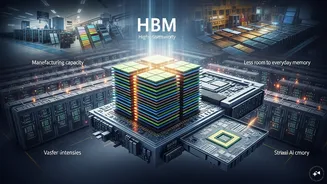
Every AI data centre requires vast quantities of high-end memory, particularly High-Bandwidth Memory (HBM), which sits beside powerful AI processors. HBM used in AI accelerators is far more wafer-intensive, requiring roughly three times the manufacturing capacity per gigabyte of conventional DRAM — leaving chipmakers with less room to supply everyday memory.
As a result, memory makers are reallocating production away from “everyday” DRAM toward HBM and premium server memory, where demand is surging and margins are higher.
This is where the squeeze begins. Memory fabs can only produce a limited number of wafers. When Samsung or SK hynix dedicates more lines to HBM, it means less DRAM for laptops and desktops, less mobile DRAM for smartphones and less low- and mid-range server memory for enterprise hardware.
In simple terms, AI demand is crowding everyone else out.
PC makers, smartphone brands and even traditional cloud providers are now competing for a shrinking pool of non-AI memory — pushing prices higher and making supply unpredictable.
From buyers to beggars
You read how global tech giants are camping for memory. The desperation is not surprising. According to Counterpoint Research’s Memory Price Tracker for January 2026, memory chip prices climbed sharply in the fourth quarter of 2025, with combined DRAM and NAND prices rising 40-50% in Q4 2025.
There is unusually high pressure on senior procurement teams at global technology companies as the memory shortage tightens, with securing chip supply increasingly seen as a career-defining task.
According to the Times of India, industry analyst Jukan of Citrini Research said that Microsoft and Google have cautioned executives dispatched to South Korea that failing to lock in long-term memory supply contracts from Samsung Electronics and SK hynix was being treated as a critical performance metric.
Why memory makers are holding the line
For memory producers, this is the first period of sustained leverage after years of cyclical downturns.
Rather than flooding the market, which could lead to prices going down, companies are keeping tight control over supply while demand remains elevated.
In its third-quarter FY25 results, SK hynix said it had already secured full customer demand for all of its DRAM and NAND production for 2026.
This is not simply a repeat of the COVID-era semiconductor crisis, which was driven by logistical disruptions and factory shutdowns.
This time, the shortage is rooted in long-term investment choices and a pivot toward AI-centric components, meaning memory makers are rationing capacity to maximise returns.
A Hankyung analyst consensus report notes that the memory market is entering an “unprecedented supercycle”. The research suggests that limited new fab output and continued capex discipline will keep DRAM inventories tight and pricing power with suppliers high, pushing buyers toward long-term supply commitments and supporting elevated memory prices.
Why it matters beyond Big Tech
The knock-on effects are spreading.
PC and smartphone costs are rising as memory becomes more expensive. Enterprise IT budgets are under pressure due to higher server memory prices. Smaller hardware makers lack the bargaining power of hyperscalers and face the greatest risk of supply cuts.
For consumers, this could mean pricier devices or slower performance upgrades. For companies, it means memory, once an afterthought, has become a boardroom issue.