







What is the story about?
US-based IT services firm Cognizant is entering 2026 with growing confidence as client sentiment improves and deal activity picks up, especially in the US market.
After a phase of stabilisation, the company now believes the worst of global uncertainty is behind, with customers beginning to plan for higher technology spending. Management expects clearer visibility on budgets by early 2026, but says there are no negative signals so far from clients.
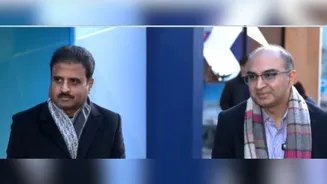
Surya Gummadi, President of Cognizant Americas, while speaking to CNBC-TV18 on the sidelines of the World Economic Forum 2026 in Davos, said demand conditions are gradually improving as geopolitical tensions and tariff-related concerns stabilise.
He noted that clients are feeling pent-up demand after several cautious quarters, and industry trends suggest that growth is accelerating as companies exit 2025 and move into the new year.
At the same time, Jatin Dalal, Chief Financial Officer of Cognizant, said the company is preparing for its next phase of growth by doubling down on artificial intelligence, outcome-based contracts and selective mergers and acquisitions.
With early investments in AI platforms and partnerships already in place, Cognizant believes it is well-positioned to capture demand as clients shift towards larger, more transformational deals that are focused on measurable business outcomes rather than just cost savings.
This is the edited excerpt of the interview.
Q: Let me start by drilling this down to what is happening in America. The focus here in Davos 26 is all about President Trump and what President Trump is doing. But from your client's perspective, what are you seeing in the US today?
Gummadi: Across the American clients, based on the guidance that we gave in quarter three and the commentary from the peer group, there is definitely acceleration as we exit 2025, into 2026, so that could be read as optimism in one format. But the clients will finalise their budgets towards February or March of this year. That's exactly when we will know if the aperture is opening and if it's opening by how much.
Q: But what is the sense that you get? Do you believe that it's likely to open and be better than the previous year?
Gummadi: There is no negative signal so far from clients on their budgets.
Q: The only reason I am asking is because there's so much uncertainty, and everybody is talking about is talking about the geopolitical uncertainty and the geo economic confrontation and so on and so forth. But you are saying that there's no visible indication of that impacting investing sentiment?
Gummadi: That has levelled out in many ways, over the last few quarters, the geopolitical tensions, the tariffs and other issues. Now the clients are feeling the pent up demand, while there is no clear signal yet, but there is no negative signal that it's going to be worse than this year. And added to that, across the industry, we are seeing that there is acceleration in quarter four compared to quarter four of last year, which makes us believe that, hopefully 2026 is the year.
Q: What is that going to mean Jatin, in terms of the kind of growth that we can expect over the next three years? Ravi said the company has stabilised. The turnaround plan that was put in place has delivered the results. But now it's time to accelerate. It's time to go for big, bold bets. What is that going to look like in terms of numbers?
Dalal: Let me take a step back and share - for first three quarters of 2025, on the growth table, our position is second. We have clearly demonstrated that we are accelerating even if the environment is slowing down or is unsure. As we look at next few years, we have articulated that we want to be in a top tier growth company, relatively speaking with our peers, we want to continue to expand margins in a gradual manner, and we are making all the right investments. We were the first to invest with Anthropic in creating a go to market partnership. We were the first to speak about a billion-dollar investment in AI. We are putting right stakes on the ground to convert, whenever the flow of demand comes, we will be ready for it.
Q: Speaking of the flow of demand and speaking of opportunities, M&A has been a large part of where the growth has also come 250 basis points on account of M&A. Do you see that being a big lever and a big driver of growth going forward as well?
Dalal: I would say yes, not from the quantum standpoint, but the impact that M&A can make in times like this, where it can provide you an exit velocity or escape velocity, which is very different than any other players, because you bolt on something which is really transformational. So yes, it is going to be a critical component of our growth strategy.
One of the things that we have always spoken about, is AI is our big thing. And we invested in three cloud it is right in, in Surya’s domain, where we have invested in a company which has grown 20%. So clearly it is operating in the sphere or double-digit growth that you are speaking about. And we will continue to invest in businesses like that.
Q: What we are now starting to see the business model pivot to which I am hearing from your peers, is outcome as a service. So, break that down for me at Cognizant what does that mean exactly? How you doing deals differently, how you pricing deals differently? How's the customer expectation, the fulfilment expectation changing?
Gummadi: An outcome as a service - the concept is not new. It has existed for many years now. But it's a different story, that we did not engage with clients or contract with clients in that format, in a broad way. But now, with AI proliferating everything, impacting everything, clients are looking for partners who have skin in the game, who can share the risk and who can vouch for the outcomes. So, they are beginning to push us in contracting for outcomes and contracting for the business outcomes and KPIs, where we co-invest with the clients and share the gains. So yes, we have started structuring some of our large deals in that format, where we have gain, sharing outcome based kind of things.
Q: Is that where the playing field is now moving to?
Gummadi: It is pivoting towards that. It is pivoting towards that. But, the deals are far and few at this point, but we see that the directional pivot in that aspect.
Q: Speaking of deal flow, and it's been good, it's been strong in this quarter for you, as well as for your peers. What's, the sense that you get in terms of transformational deals? Are we now likely to move to those being much more frequent and what is the typical deal size that you envisage going forward?
Gummadi: If you look at the past 12 to 18 months, showing most of the activity was on the productivity space, leveraging AI to unlock the productivity across the tech stack, across the enterprise. We have seen tonne of large deals in that format. Now we are beginning to see the deals which are graduating upwards, which we call it as industrialising AI, which includes getting the data layer ready, building the entire tech stack, and then again, building the agents and the hierarchies of agents and orchestration.
Recently for one of our healthcare clients, for the last 12 to 18 months, we have helped them unlock the productivity in the tech estate. Now we are graduating to help them build the entire AI stack. And not only that, we are also helping them build the AI agent hierarchies. We have structured a large deal with them. We are seeing many such deals in the market and we also want to pivot in that direction, because it helps both ways.
Q: Speaking of making the AI pivot, which is you both pointed out, is a big focus and a big priority area for you, we are now starting to see your peers also give out AI specific revenue. What do you make of it? Some believe that if everything is AI, then do you really need to move to a different line as far as AI spends are concerned. And should there be a more credible, more transparent way of measuring that?
Gummadi: We have dealt with it in the digital era, if you recollect, in 2014, 2015, 2016 and suddenly we started seeing that everything is digital. So, everyone backed off. I see a similar syndrome here. AI is ubiquitous right now so AI is in every project we do, in every deal that we sign with our clients. So, AI is there everywhere. Rather more quantifiable and more credible measures would be what we just spoke earlier, defining the right outcomes, AI driven outcomes. Whether it is driving the business value, business growth, or the margin improvement for clients. For example, for one of our clients, we have discussed with them on a KPI, which includes launching products much faster than they did in the past.
Let us say earlier they took six or eight months to launch a product leveraging AI we said we are going to commit to launching it in two months or three months, as an example. So, things like that are more credible than rather than declaring AI revenue. And in fact, we were the first ones to go to the street and start declaring the AI projects, which we are still doing. But now the projects are increasing in number, and almost every project has AI component now.
Dalal: We have started publishing our own view of what we think is relevant, and that is revenue per employee and profit per employee, because finally, AI in every shape should drive a superior throughput or superior positive GDP with lesser human effort. So that's what we have started doing.
Q: One of the big possible events in 2026 is likely to be the regulator's nod to going for a secondary listing in India. There's a lot of back and forth at this point in time with the regulator, but Jatin, how do you believe that that could change things for the company?
Dalal: I think there are two or three very important strategic rationale for us to consider it. One is we have a large base of our employees to whom today we probably are not able to offer ownership as easily as we would like to. The second is, we are a large brand, large presence in the country, and if we are present on the stock exchange, it only further enhances our employer brand. Third, there are, there are investors in India who knows well, who track us today. But today, do not have a direct access to investing with us. So, we are clearly something that we find a lot of merit in. As we have discussed, we continue to work with our partners to understand it more, look at how the rules work and see where this goes. But, we are looking at it closely.
Also Read | Davos 2026: Infosys CEO Salil Parekh sees AI-led growth opportunities outweighing headwinds
After a phase of stabilisation, the company now believes the worst of global uncertainty is behind, with customers beginning to plan for higher technology spending. Management expects clearer visibility on budgets by early 2026, but says there are no negative signals so far from clients.
Surya Gummadi, President of Cognizant Americas, while speaking to CNBC-TV18 on the sidelines of the World Economic Forum 2026 in Davos, said demand conditions are gradually improving as geopolitical tensions and tariff-related concerns stabilise.
He noted that clients are feeling pent-up demand after several cautious quarters, and industry trends suggest that growth is accelerating as companies exit 2025 and move into the new year.
At the same time, Jatin Dalal, Chief Financial Officer of Cognizant, said the company is preparing for its next phase of growth by doubling down on artificial intelligence, outcome-based contracts and selective mergers and acquisitions.
With early investments in AI platforms and partnerships already in place, Cognizant believes it is well-positioned to capture demand as clients shift towards larger, more transformational deals that are focused on measurable business outcomes rather than just cost savings.
This is the edited excerpt of the interview.
Q: Let me start by drilling this down to what is happening in America. The focus here in Davos 26 is all about President Trump and what President Trump is doing. But from your client's perspective, what are you seeing in the US today?
Gummadi: Across the American clients, based on the guidance that we gave in quarter three and the commentary from the peer group, there is definitely acceleration as we exit 2025, into 2026, so that could be read as optimism in one format. But the clients will finalise their budgets towards February or March of this year. That's exactly when we will know if the aperture is opening and if it's opening by how much.
Q: But what is the sense that you get? Do you believe that it's likely to open and be better than the previous year?
Gummadi: There is no negative signal so far from clients on their budgets.
Q: The only reason I am asking is because there's so much uncertainty, and everybody is talking about is talking about the geopolitical uncertainty and the geo economic confrontation and so on and so forth. But you are saying that there's no visible indication of that impacting investing sentiment?
Gummadi: That has levelled out in many ways, over the last few quarters, the geopolitical tensions, the tariffs and other issues. Now the clients are feeling the pent up demand, while there is no clear signal yet, but there is no negative signal that it's going to be worse than this year. And added to that, across the industry, we are seeing that there is acceleration in quarter four compared to quarter four of last year, which makes us believe that, hopefully 2026 is the year.
Q: What is that going to mean Jatin, in terms of the kind of growth that we can expect over the next three years? Ravi said the company has stabilised. The turnaround plan that was put in place has delivered the results. But now it's time to accelerate. It's time to go for big, bold bets. What is that going to look like in terms of numbers?
Dalal: Let me take a step back and share - for first three quarters of 2025, on the growth table, our position is second. We have clearly demonstrated that we are accelerating even if the environment is slowing down or is unsure. As we look at next few years, we have articulated that we want to be in a top tier growth company, relatively speaking with our peers, we want to continue to expand margins in a gradual manner, and we are making all the right investments. We were the first to invest with Anthropic in creating a go to market partnership. We were the first to speak about a billion-dollar investment in AI. We are putting right stakes on the ground to convert, whenever the flow of demand comes, we will be ready for it.
Q: Speaking of the flow of demand and speaking of opportunities, M&A has been a large part of where the growth has also come 250 basis points on account of M&A. Do you see that being a big lever and a big driver of growth going forward as well?
Dalal: I would say yes, not from the quantum standpoint, but the impact that M&A can make in times like this, where it can provide you an exit velocity or escape velocity, which is very different than any other players, because you bolt on something which is really transformational. So yes, it is going to be a critical component of our growth strategy.
One of the things that we have always spoken about, is AI is our big thing. And we invested in three cloud it is right in, in Surya’s domain, where we have invested in a company which has grown 20%. So clearly it is operating in the sphere or double-digit growth that you are speaking about. And we will continue to invest in businesses like that.
Q: What we are now starting to see the business model pivot to which I am hearing from your peers, is outcome as a service. So, break that down for me at Cognizant what does that mean exactly? How you doing deals differently, how you pricing deals differently? How's the customer expectation, the fulfilment expectation changing?
Gummadi: An outcome as a service - the concept is not new. It has existed for many years now. But it's a different story, that we did not engage with clients or contract with clients in that format, in a broad way. But now, with AI proliferating everything, impacting everything, clients are looking for partners who have skin in the game, who can share the risk and who can vouch for the outcomes. So, they are beginning to push us in contracting for outcomes and contracting for the business outcomes and KPIs, where we co-invest with the clients and share the gains. So yes, we have started structuring some of our large deals in that format, where we have gain, sharing outcome based kind of things.
Q: Is that where the playing field is now moving to?
Gummadi: It is pivoting towards that. It is pivoting towards that. But, the deals are far and few at this point, but we see that the directional pivot in that aspect.
Q: Speaking of deal flow, and it's been good, it's been strong in this quarter for you, as well as for your peers. What's, the sense that you get in terms of transformational deals? Are we now likely to move to those being much more frequent and what is the typical deal size that you envisage going forward?
Gummadi: If you look at the past 12 to 18 months, showing most of the activity was on the productivity space, leveraging AI to unlock the productivity across the tech stack, across the enterprise. We have seen tonne of large deals in that format. Now we are beginning to see the deals which are graduating upwards, which we call it as industrialising AI, which includes getting the data layer ready, building the entire tech stack, and then again, building the agents and the hierarchies of agents and orchestration.
Recently for one of our healthcare clients, for the last 12 to 18 months, we have helped them unlock the productivity in the tech estate. Now we are graduating to help them build the entire AI stack. And not only that, we are also helping them build the AI agent hierarchies. We have structured a large deal with them. We are seeing many such deals in the market and we also want to pivot in that direction, because it helps both ways.
Q: Speaking of making the AI pivot, which is you both pointed out, is a big focus and a big priority area for you, we are now starting to see your peers also give out AI specific revenue. What do you make of it? Some believe that if everything is AI, then do you really need to move to a different line as far as AI spends are concerned. And should there be a more credible, more transparent way of measuring that?
Gummadi: We have dealt with it in the digital era, if you recollect, in 2014, 2015, 2016 and suddenly we started seeing that everything is digital. So, everyone backed off. I see a similar syndrome here. AI is ubiquitous right now so AI is in every project we do, in every deal that we sign with our clients. So, AI is there everywhere. Rather more quantifiable and more credible measures would be what we just spoke earlier, defining the right outcomes, AI driven outcomes. Whether it is driving the business value, business growth, or the margin improvement for clients. For example, for one of our clients, we have discussed with them on a KPI, which includes launching products much faster than they did in the past.
Let us say earlier they took six or eight months to launch a product leveraging AI we said we are going to commit to launching it in two months or three months, as an example. So, things like that are more credible than rather than declaring AI revenue. And in fact, we were the first ones to go to the street and start declaring the AI projects, which we are still doing. But now the projects are increasing in number, and almost every project has AI component now.
Dalal: We have started publishing our own view of what we think is relevant, and that is revenue per employee and profit per employee, because finally, AI in every shape should drive a superior throughput or superior positive GDP with lesser human effort. So that's what we have started doing.
Q: One of the big possible events in 2026 is likely to be the regulator's nod to going for a secondary listing in India. There's a lot of back and forth at this point in time with the regulator, but Jatin, how do you believe that that could change things for the company?
Dalal: I think there are two or three very important strategic rationale for us to consider it. One is we have a large base of our employees to whom today we probably are not able to offer ownership as easily as we would like to. The second is, we are a large brand, large presence in the country, and if we are present on the stock exchange, it only further enhances our employer brand. Third, there are, there are investors in India who knows well, who track us today. But today, do not have a direct access to investing with us. So, we are clearly something that we find a lot of merit in. As we have discussed, we continue to work with our partners to understand it more, look at how the rules work and see where this goes. But, we are looking at it closely.
Also Read | Davos 2026: Infosys CEO Salil Parekh sees AI-led growth opportunities outweighing headwinds