








What is the story about?
As artificial intelligence becomes more advanced, scammers are finding new ways to deceive people. One of the latest threats involves criminals using AI-generated voices to impersonate family members, friends, or trusted contacts in an attempt to steal money or data.
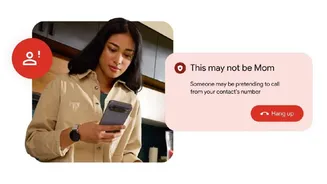
To address this growing concern, Google has announced a new feature for Android devices designed to detect and warn users about fake calls. The fake call detection feature is being introduced through the Phone by Google and is designed to identify situations where a caller may be pretending to be someone the recipient knows.
In a blog post, the tech giant wrote, “To help protect you from the growing threat of impersonation scams, Android is introducing fake call detection, an industry-first protection that can detect and flag suspected spoofed calls when your contact and you are both using Phone by Google.”
How AI-powered impersonation scams work
Imagine receiving a call that appears to be from your mother, father or close friend. The caller ID shows a familiar name, and the voice sounds exactly like the person you know. However, the call is actually coming from a scammer who has used AI voice-cloning technology to imitate that individual.
These types of scams, often referred to as deepfake attacks, are becoming more common as artificial intelligence tools become widely available. Fraudsters use these technologies to mimic real voices and trick people into sharing sensitive information or sending money.
Impersonation fraud is rising
Global authorities have warned that impersonation scams are becoming one of the most damaging forms of fraud. According to Interpol’s March 2026 Global Financial Fraud Threat Assessment, such scams contribute to more than $400 billion in global losses.
ALSO READ |Microsoft reveals new quantum chip made with AI, says it will have systems by 2029
Traditionally, people relied on caller ID to verify who was calling. However, scammers can now manipulate phone numbers through internet-based software, making it appear as though calls are coming from trusted contacts. When combined with AI-generated voices, these tactics create a powerful tool for deception.
How Android's fake call detection works
Android's new feature uses a verification process that works silently in the background whenever two people are using the Phone by Google.
When a legitimate call is placed, the caller's device sends a silent confirmation signal in real time to confirm that the call is genuinely coming from that contact's phone. This process uses end-to-end encrypted Rich Communication Services (RCS) technology and remains completely private.
If a scammer attempts to spoof a contact's number, the initial confirmation signal will be missing. In response, the recipient's device automatically checks with the real contact's phone. If the actual device confirms that no call is being made, Android immediately displays a warning advising them to disconnect.
The feature operates automatically by default, although users can disable it through the Phone by Google app settings.
Global rollout begins this month
Google has announced that fake call detection will begin rolling out globally to Android devices running Android 12. The feature will initially be available on Pixel smartphones. Phone by Google is already the default calling application on many Android devices. Those using different phone apps can download Phone by Google from the Play Store and set it as their default phone app to use the new feature.
To address this growing concern, Google has announced a new feature for Android devices designed to detect and warn users about fake calls. The fake call detection feature is being introduced through the Phone by Google and is designed to identify situations where a caller may be pretending to be someone the recipient knows.
In a blog post, the tech giant wrote, “To help protect you from the growing threat of impersonation scams, Android is introducing fake call detection, an industry-first protection that can detect and flag suspected spoofed calls when your contact and you are both using Phone by Google.”
How AI-powered impersonation scams work
Imagine receiving a call that appears to be from your mother, father or close friend. The caller ID shows a familiar name, and the voice sounds exactly like the person you know. However, the call is actually coming from a scammer who has used AI voice-cloning technology to imitate that individual.
These types of scams, often referred to as deepfake attacks, are becoming more common as artificial intelligence tools become widely available. Fraudsters use these technologies to mimic real voices and trick people into sharing sensitive information or sending money.
Impersonation fraud is rising
Global authorities have warned that impersonation scams are becoming one of the most damaging forms of fraud. According to Interpol’s March 2026 Global Financial Fraud Threat Assessment, such scams contribute to more than $400 billion in global losses.
ALSO READ |Microsoft reveals new quantum chip made with AI, says it will have systems by 2029
Traditionally, people relied on caller ID to verify who was calling. However, scammers can now manipulate phone numbers through internet-based software, making it appear as though calls are coming from trusted contacts. When combined with AI-generated voices, these tactics create a powerful tool for deception.
How Android's fake call detection works
Android's new feature uses a verification process that works silently in the background whenever two people are using the Phone by Google.
When a legitimate call is placed, the caller's device sends a silent confirmation signal in real time to confirm that the call is genuinely coming from that contact's phone. This process uses end-to-end encrypted Rich Communication Services (RCS) technology and remains completely private.
If a scammer attempts to spoof a contact's number, the initial confirmation signal will be missing. In response, the recipient's device automatically checks with the real contact's phone. If the actual device confirms that no call is being made, Android immediately displays a warning advising them to disconnect.
The feature operates automatically by default, although users can disable it through the Phone by Google app settings.
Global rollout begins this month
Google has announced that fake call detection will begin rolling out globally to Android devices running Android 12. The feature will initially be available on Pixel smartphones. Phone by Google is already the default calling application on many Android devices. Those using different phone apps can download Phone by Google from the Play Store and set it as their default phone app to use the new feature.