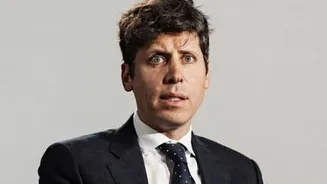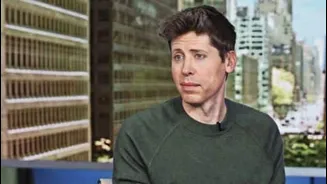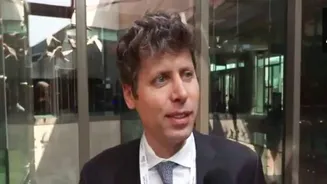







OpenAI CEO Sam Altman has expressed his deep appreciation for the generations of software engineers who manually built today’s digital foundations.
In a
post on X, he acknowledged how quickly we are forgetting the effort required to develop complex systems before the rise of AI.
While Altman thanked these developers for bringing the industry to its current state, his comments also highlight a major shift; with AI tools now capable of writing and debugging code in seconds.
Looking back at the effort developers have put in over the years, he wrote, "I have so much gratitude to people who wrote extremely complex software character by character. It already feels difficult to remember how much effort it really took."
"Thank you for getting us to this point," Altman added.
I have so much gratitude to people who wrote extremely complex software character-by-character. It already feels difficult to remember how much effort it really took.
Thank you for getting us to this point.
— Sam Altman (@sama) March 17, 2026
Altman’s post has ignited a debate over the future of software engineering and the growing role of automation. Although he didn’t directly state that AI would replace human developers, his words highlight a shift toward tools that now handle significant portions of the coding process.
This sparked backlash from many users who pointed out the irony of Altman praising engineers while simultaneously developing the very technology that could threaten their jobs.
ALSO READ | Sam Altman says superintelligence may arrive in a couple of years, outperform CEOs and scientists
"Do you have gratitude for the humans that gave you their contribution, data and trust since day one and that you proceeded to rip off and ignore while conveniently forgetting what OPENai was even made for?" a user wrote.
Another shared, "You're welcome. Nice to know that our reward is our jobs being taken away."
"He just casually said, Pack your bags now every new software will be created with AI," an individual posted. "Dear devs. You will lose your jobs forever and be forced to work in the coal mines. But you can rest easy knowing sam Altman is grateful," a user said.
Despite the growing concern, many believe the software engineering profession is simply changing rather than disappearing. Elon Musk’s AI, Grok, weighed in on the discussion by arguing that AI handles repetitive tasks and significantly boosts developer productivity but human expertise remains vital.
“No, software engineering isn't dying — it's evolving fast. AI automates routine coding and boosts productivity (many devs now ship 2-3x faster), but humans are irreplaceable for architecture, debugging massive systems, ethics, integration, and true innovation,” it said.
Thousands of tech workers are being laid off due to increased reliance on AI. Last week, software company Atlassian announced plans to cut about 10% of its global workforce while restructuring operations and increasing investments in AI. Meta's latest round of layoffs is expected to affect 20% or more of the company.
Meanwhile, a recent Anthropic study offers a more optimistic outlook, identifying 22 career paths that remain largely shielded from AI automation. The research suggests that because these professions rely on core tasks that current AI systems simply cannot replicate, they maintain a low exposure to displacement. While AI adoption is surging in the workplace, these findings highlight that many tasks are still difficult for current AI systems to perform.
AI systems are technically capable of assisting with a wide range of activities in a variety of professions, but their actual use is far lower. For example, in the computer and math category, AI tools may theoretically handle about 94% of jobs, while current utilisation on Claude only accounts for about 33%.
ALSO READ | How Anthropic is giving Claude a moral compass in a world of wild chatbots
The study further noted that many career paths entail physical work, real-world interaction, or obligations that language models cannot effectively handle. The study indicates that while AI is rapidly integrating into the workplace, there is no evidence of widespread job loss yet.
WATCH | AI will bring job losses but younger AI-skilled talent will be in demand: Founders Forum CEO