
Speaking to CNBC-TV18 on the sidelines of the forum, Uniphore CEO and co-founder Umesh Sachdeva said AI conversations at Davos this year are centred on execution rather than pilots. He said enterprises are no longer experimenting with AI in silos but are embedding it into core operations, creating sustained demand for IT services.
Also Read: Davos 2026 | HCLTech’s AI revenue could surge to $2.5 billion as ‘AI factory’ and physical AI open new growth engines
Sachdeva said Indian IT firms have largely caught up on AI adoption and are now well positioned to benefit from rising enterprise demand. According to him,
demand for AI agents and smaller language models, deployed in a secure and governed manner, has been strong across industries. He said the key change underway is a move from proof-of-concept projects to a production mindset, which directly supports IT services growth.
He added that Indian IT companies are increasingly adopting asset-led delivery models built around industry solutions, pre-trained models and pre-built AI agents. This allows firms to offer outcome-based services instead of manpower-led engagements, placing them firmly within the evolving AI-driven services landscape.
Tech Mahindra Managing Director and CEO Mohit Joshi told CNBC-TV18 that client sentiment on technology spending has improved gradually, though he cautioned against expectations of a sharp recovery. He said enterprises have realised that AI is not a standalone solution and that data modernisation and simplification programmes are necessary to derive value from AI investments. Joshi said this realisation is expected to revive discretionary spending linked to AI-led initiatives.
Joshi also said the current practice of reporting AI-linked revenue does not fully capture value creation. He said Tech Mahindra is working on a clearer and more transparent framework to reflect how AI is being priced into deals and how it is influencing deal economics, which would help both investors and clients better assess AI’s role in business strategy.
HCL Technologies Managing Director and CEO C Vijayakumar said AI represents a major inflection point for the industry and that the company has been proactively transforming its services without concern over potential deflation or cannibalisation of existing revenues. He pointed to emerging opportunities linked to large technology capital expenditure, including data centres, GPU infrastructure, professional services and managed services.
Vijayakumar said such programmes require significant planning and execution support, creating new revenue streams for IT services firms. He also said demand from clients is increasingly focused on improving efficiency across the entire software development lifecycle, from requirements and coding to testing, deployment and maintenance.
At the heart of HCLTech’s AI strategy is what Vijayakumar calls the “AI factory” - a full-stack services opportunity emerging from the massive capital expenditure cycle underway in global technology.
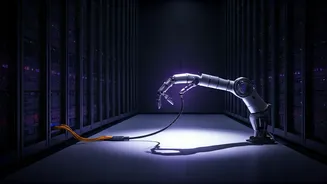
Beyond AI factories, HCLTech is also betting big on physical AI, a fast-emerging area that extends AI beyond software into the physical world.
Physical AI combines robotics, vision systems and AI-infused workflows to enable machines to sense, understand and act on real-world environments—spanning use cases such as warehouse automation, port management and industrial operations.
Also Read: Davos 2026 | Tech Mahindra eyes growth above industry average as turnaround gains momentum
“Analysts talk about physical AI being a trillion-dollar industry by 2030,” Vijayakumar said. “From a services perspective, this too can be another billion-dollar opportunity for us.”
Taken together, the interviews suggest that enterprises are moving beyond using AI solely for process optimisation and cost efficiency. Instead, executives say AI is increasingly being positioned as a tool for innovation, revenue growth and long-term transformation, marking the next phase of enterprise AI adoption reflected in conversations at Davos.