









A whopping 96% of WhatsApp users receive promotional or spam messages daily, with many of them routed through WhatsApp Business accounts, a new survey
shows, as the Supreme Court tightens its screws on WhatsApp over user privacy and data sharing. The finding comes days after the Supreme Court directed Meta Platforms and WhatsApp to file an affidavit assuring that user data will not be shared for advertising purposes, warning of “serious consequences”. The top court directed Meta to leave India if the company is incapable of protecting user data.
The court is currently hearing Meta’s challenge to proceedings against WhatsApp’s 2021 privacy policy, which has already been examined by the Competition Commission of India and the NCLAT.
Against this backdrop, a LocalCircles survey of over 42,000 WhatsApp users across 324 districts highlights how spam and commercial misuse of the platform has intensified, raising fresh questions about enforcement, accountability and user protection.
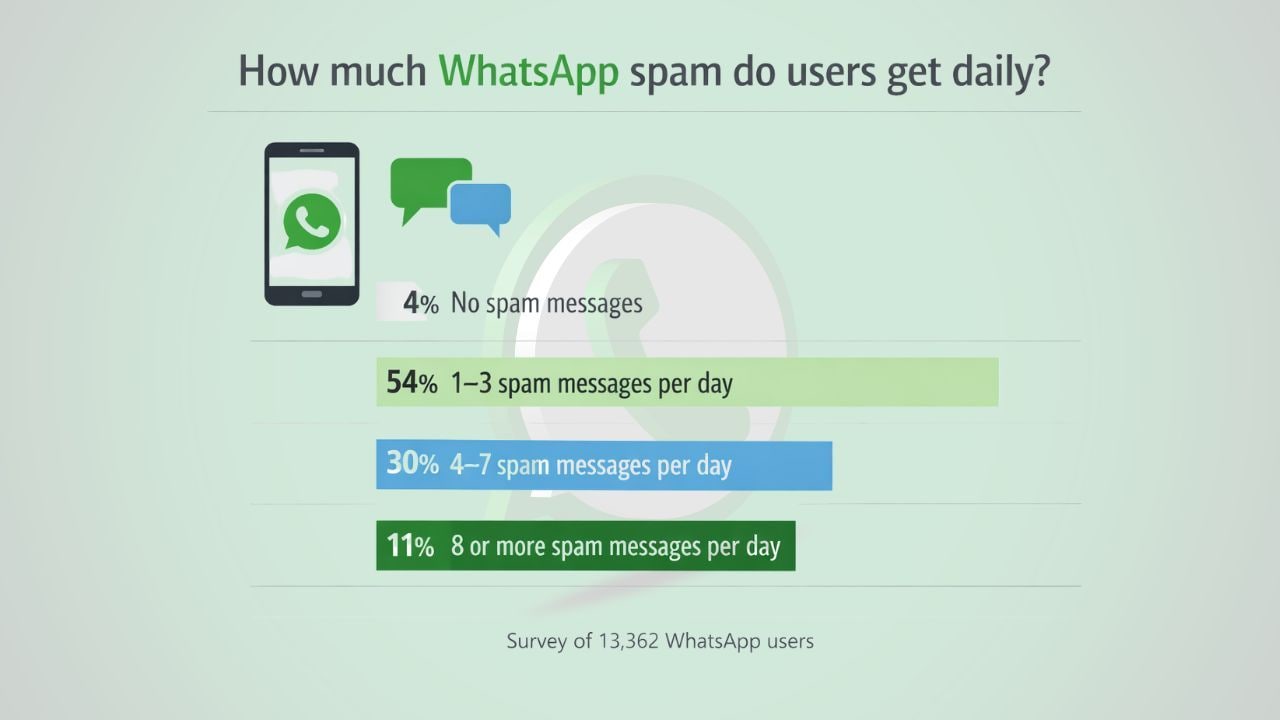
According to the survey, only 4% of respondents reported not receiving any spam messages on WhatsApp. The rest reported being spammed daily.
Users repeatedly flagged that many of these messages are now being sent via WhatsApp Business, a paid service that allows verified business accounts to message users.
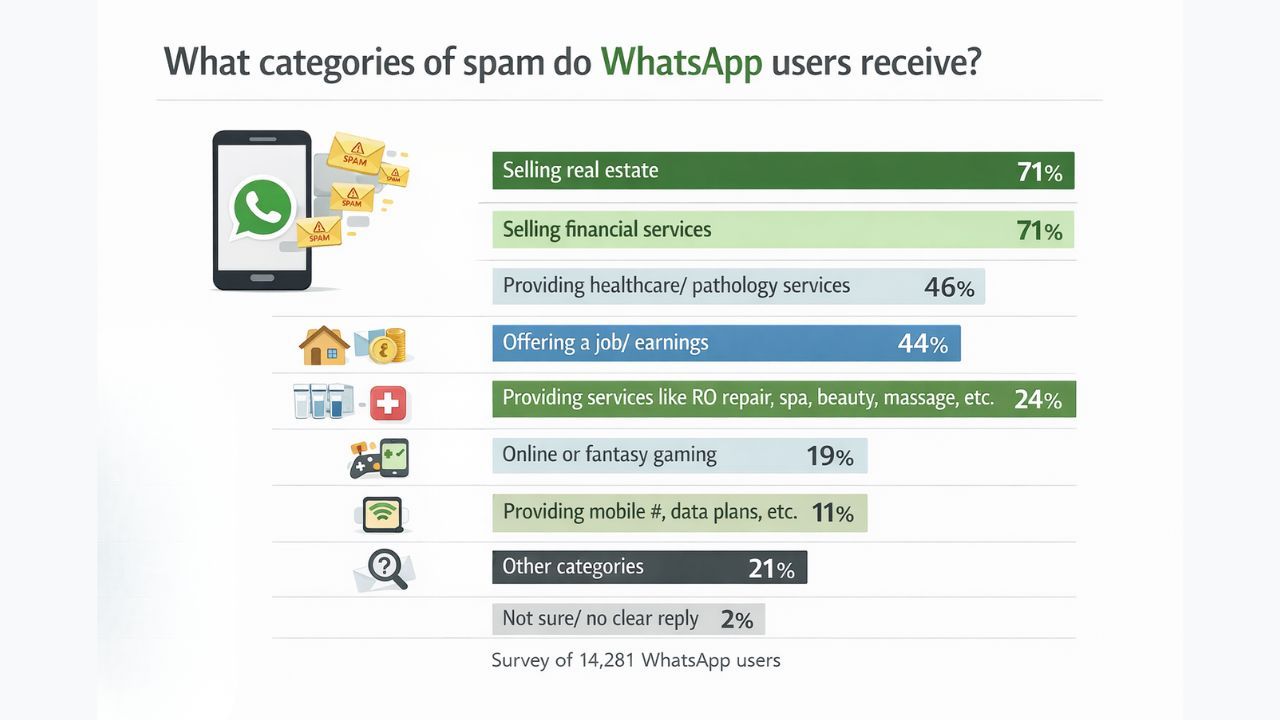
The survey further revealed that financial services and real estate top the list of spam categories, cited by 71% of respondents, followed by healthcare and pathology services (46%), and job or earnings offers (44%). Other common categories include personal services, online gaming and telecom-related promotions.
The problem appears to have worsened over the last three years. When compared to a similar survey conducted in 2023, the proportion of users receiving eight or more spam messages per day has increased from 11% to 19%.
Blocking is ineffective for many users. 59% of users who say they block spam senders reported that spammers come back with new numbers or accounts.
Also Read: Anthropic unveils $350 billion valuation tender offer, eyes $20 billion funding