








What is the story about?
OpenAI is developing an early-stage social network concept that could require users to prove they are real people, according to sources cited by Forbes. The project is still small in scale, handled by a team of fewer than ten people, and may centre on biometric identity checks rather than email or phone verification.
OpenAI’s new social networking app focuses on ‘proof of personhood’
People familiar with the work told Forbes the idea being discussed involves confirming identity through tools such as Apple’s Face ID or the World Orb - an iris-scanning device linked to the World project run by Tools for Humanity, a company founded and chaired by OpenAI CEO Sam Altman. The approach would aim to ensure each account represents a human user.
Once operational, this would mark a departure from how most platforms function. Services like Facebook and LinkedIn verify accounts through contact details and behaviour patterns, not biometric markers. Privacy advocates have raised concerns about systems that store iris data, noting that such identifiers cannot be changed if compromised.
Why OpenAI chose this direction for their social networking app
Bot activity has been a persistent issue across social networks. Automated accounts are often used to amplify spam, manipulate trends or distort discussions. X, formerly Twitter, has faced ongoing criticism in this area.
Nikita Bier, Head of Product, announced the company had removed large numbers of bot accounts in recent years - but the issue remains visible.
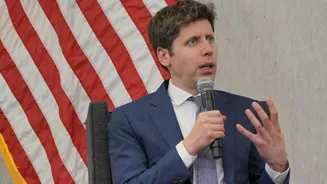
Altman has also commented publicly on the rise of AI-driven accounts, writing that parts of online discussion spaces feel ‘very fake’ compared to earlier periods.
Where OpenAI’s social networking app could fit
It is not yet clear how a social network would tie into OpenAI’s existing tools. Sources suggested users might be able to create AI-generated images or video inside the platform, similar to features already appearing on apps like Instagram.
There is no timeline for release, and plans could change. OpenAI declined to comment when asked, while The Verge previously reported that the company was exploring social features.
If launched, the service would enter a crowded market dominated by Meta, TikTok and others - but with fewer bots and more verified human users.
OpenAI’s new social networking app focuses on ‘proof of personhood’
People familiar with the work told Forbes the idea being discussed involves confirming identity through tools such as Apple’s Face ID or the World Orb - an iris-scanning device linked to the World project run by Tools for Humanity, a company founded and chaired by OpenAI CEO Sam Altman. The approach would aim to ensure each account represents a human user.
Once operational, this would mark a departure from how most platforms function. Services like Facebook and LinkedIn verify accounts through contact details and behaviour patterns, not biometric markers. Privacy advocates have raised concerns about systems that store iris data, noting that such identifiers cannot be changed if compromised.
Why OpenAI chose this direction for their social networking app
Bot activity has been a persistent issue across social networks. Automated accounts are often used to amplify spam, manipulate trends or distort discussions. X, formerly Twitter, has faced ongoing criticism in this area.
If our twitter bid succeeds, we will defeat the spam bots or die trying!
— Elon Musk (@elonmusk) April 21, 2022
Nikita Bier, Head of Product, announced the company had removed large numbers of bot accounts in recent years - but the issue remains visible.
This week we purged 1.7 million bots engaging in reply spam. You should start noticing
improvements in the coming days. We will be focusing on DM spam next.
— Nikita Bier (@nikitabier) October 12, 2025
Altman has also commented publicly on the rise of AI-driven accounts, writing that parts of online discussion spaces feel ‘very fake’ compared to earlier periods.
i have had the strangest experience reading this: i assume its all fake/bots, even though in this case i know codex growth is really strong and the trend here is real.
i think there are a bunch of things going on: real people have picked up quirks of LLM-speak, the Extremely… https://t.co/9buqM3ZpKe
— Sam Altman (@sama) September 8, 2025
Where OpenAI’s social networking app could fit
It is not yet clear how a social network would tie into OpenAI’s existing tools. Sources suggested users might be able to create AI-generated images or video inside the platform, similar to features already appearing on apps like Instagram.
There is no timeline for release, and plans could change. OpenAI declined to comment when asked, while The Verge previously reported that the company was exploring social features.
If launched, the service would enter a crowded market dominated by Meta, TikTok and others - but with fewer bots and more verified human users.