




The Classic Origin Story
For years, the consensus view of Earth’s formation was a tale of two parts. First, a dry, rocky planet was assembled through violent collisions of smaller bodies in the hot, inner part of the solar system. The second act, crucial for life, involved a cosmic
delivery service. The theory held that our planet’s water and other essential volatile compounds were delivered much later by comets and asteroids venturing in from the cold, distant regions beyond the orbit of Jupiter. This bombardment, occurring over millions of years, was thought to have seasoned a barren rock with the ingredients necessary for oceans and, eventually, life. This model made sense, as the inner solar system was considered too warm for water to have been part of the initial building blocks.
A 'Truly Astonishing' Finding
That long-accepted story has been dramatically challenged by new research from planetary scientists at ETH Zurich. By performing a novel and far more comprehensive analysis of meteorites, the team essentially checked the planetary birth certificate. They compared the isotopic fingerprints—unique signatures in the atomic composition of elements—of Earth with those of different meteorite families. Older studies focused on just one or two isotopic systems, but this team used ten. The results were, in the words of the researchers, “truly astonishing.” They found that Earth’s composition is a perfect match for materials from the inner Solar System alone. The contribution from the outer Solar System was found to be less than two percent, and possibly zero.
The Great Wall of Jupiter
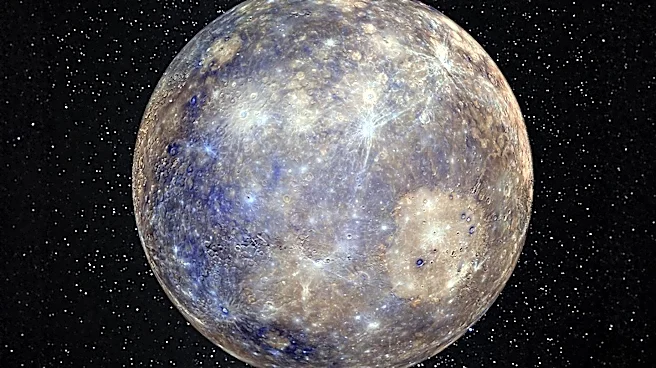
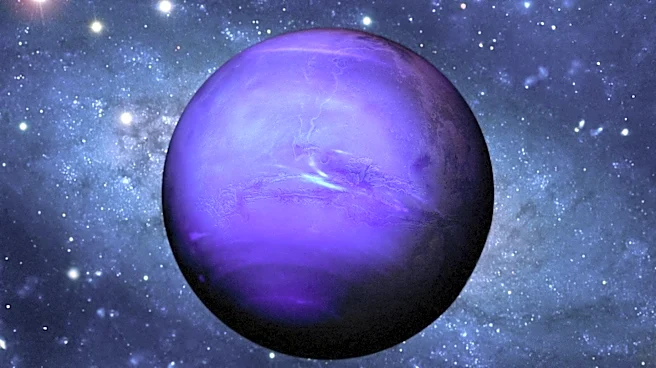
The new findings paint a picture of a more orderly and divided early Solar System than previously imagined. So why didn't materials from the outer system make their way inward? The answer appears to be Jupiter. The enormous gravitational influence of the gas giant likely acted as a formidable barrier, preventing a large-scale migration of material from the outer to the inner Solar System. Instead of a chaotic free-for-all of cosmic ingredients, it appears the Solar System was split into two distinct reservoirs. Earth, Venus, Mars, and Mercury formed from one set of local, non-carbonaceous building blocks, while the gas and ice giants formed from another. Our planet, it seems, was locally sourced.
So Where Did Earth's Water Come From?
This immediately raises a critical question: If not from icy comets from deep space, where did our planet-defining oceans come from? The study implies a profound shift in thinking. The raw materials of the inner Solar System may not have been as bone-dry as scientists once assumed. This suggests that water was not a late-stage seasoning but rather a fundamental ingredient baked into Earth from the very beginning. It would have been present in the dust and pebbles that first clumped together to form the planetesimals that eventually built our world. This makes the presence of water on Earth less of a lucky accident and more of a natural consequence of its formation in this specific region of the solar system.