



The Game Bends to its Best Players
The simplest answer for the shift is often the right one: the league’s most dominant forces are giants. Specifically, Nikola Jokić. The Denver Nuggets center is a walking offensive system, a 6-foot-11 point guard who punishes teams with his scoring, passing,
and sheer size. For years, teams tried to run him off the floor with smaller, quicker players; it didn't work. Jokić’s unique combination of brute strength and feathery touch near the basket proved that a skilled big man could dictate the terms of engagement. Teams realized they couldn’t go small to beat him; they needed size to have any hope of containing him. His continued dominance, averaging staggering numbers even against elite defenders, has forced front offices to re-evaluate their entire approach. If you can't stop the most powerful force in the league, you have to adapt to him.
Rise of the Unicorns
It’s not just about traditional size, though. The new wave of NBA bigs are anything but traditional. The arrival of players like 7-foot-4 Victor Wembanyama and 7-foot-1 Chet Holmgren has completely altered the league's geometry. These are not plodding, back-to-the-basket centers. They are “unicorns”—players with the height of a center but the skills of a guard. Wembanyama, for example, can protect the rim at an elite level, block shots on the perimeter, and then lead the fast break himself. This new archetype presents a matchup nightmare. Small-ball lineups that previously thrived on creating space are now finding that space erased by impossibly long arms. You can no longer just pull a big man away from the basket if he's comfortable guarding on the three-point line. The rise of skilled giants who can shoot, dribble, and defend in space means that size no longer comes with a built-in athletic tradeoff.
The End of the Small-Ball Discount
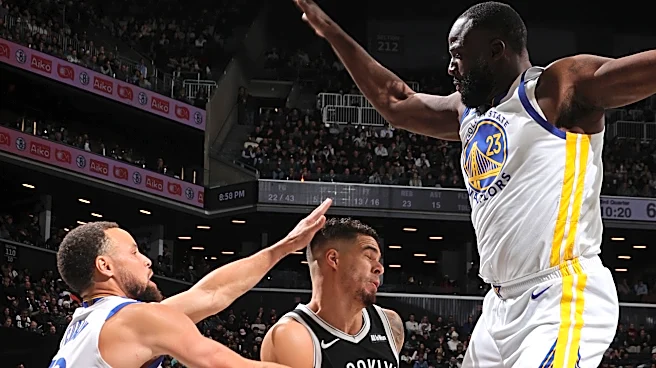
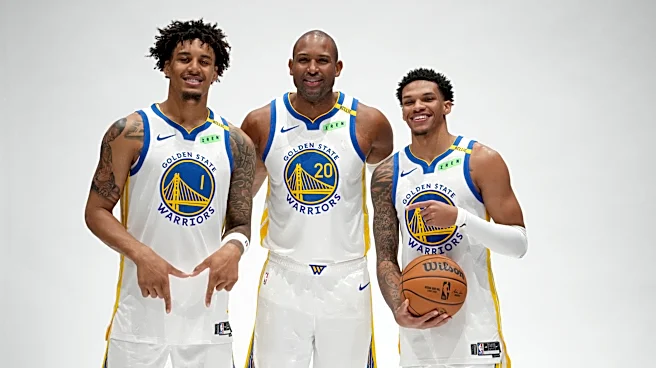
The small-ball era, perfected by the Warriors, was a brilliant tactical innovation designed to exploit the weaknesses of bigger, slower opponents. By putting five shooters on the floor, they created wide-open lanes and a barrage of three-pointers that other teams simply couldn't match. But the league has had a decade to adjust. Players have gotten bigger, faster, and more versatile at every position. Forwards are now expected to be able to defend multiple positions and shoot from range. The advantages that a player like 6-foot-7 Draymond Green once provided at center have been mitigated. Today's top teams, like the Oklahoma City Thunder and Boston Celtics, have shown they can play with size—featuring two bigs like Chet Holmgren and Al Horford or Kristaps Porziņģis—without sacrificing spacing or skill. The tactical edge of going small has diminished, while the inherent disadvantages, particularly in rebounding and rim protection, remain.
A New Kind of Arms Race
Ultimately, the NBA is an arms race. Every dominant strategy eventually gives way to a counter-strategy. The pace-and-space revolution that prized shooting and speed above all else has now been met with a counter-revolution. Front offices have concluded that the best way to combat elite offenses is with elite defenses anchored by size. A dominant rim protector is once again one of the most valuable assets a team can have, as it allows perimeter defenders to be more aggressive knowing they have a safety net behind them. As one league executive noted, with how athletic modern players are, a lack of paint presence becomes a layup line. Teams are not just adding size for size's sake; they are investing in versatile bigs who can control the paint, secure rebounds, and still function within a modern, fluid offense. It’s a return to size, but a smarter, more skilled version than ever before.