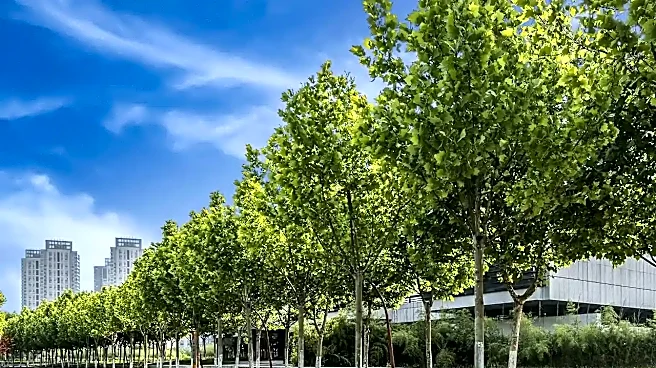










An Urban Growth Spurt
It sounds backward, but it’s true. Multiple studies have found that, on average, trees in metropolitan areas grow significantly faster than those in nearby rural forests. A study from the Technical University of Munich looking at 10 cities worldwide found that urban
trees grew up to 25% faster than rural ones. Another study focused on Boston discovered that some city trees grew at a rate nearly four times faster than their country counterparts. This isn't just a small quirk; it’s a widespread phenomenon that challenges our assumptions about what helps and hurts a tree. For years, we’ve focused on the obvious stressors of city life—cramped root space, pollution, and the risk of physical damage. Yet, something in the urban environment is pushing these trees into overdrive.
The Obvious Suspect: Heat
The first and most obvious culprit is the 'urban heat island effect'. Cities, with their abundance of asphalt and concrete, absorb and retain far more heat than leafy rural landscapes. This can make urban areas several degrees warmer, especially at night. For trees, this extra warmth essentially extends their growing season. Spring might start a little earlier and fall might arrive a little later, giving the tree more time to photosynthesize and pack on growth. This added warmth can stimulate photosynthetic activity, helping trees grow bigger, faster. Think of it as a tree in a temperate climate getting a little taste of a more subtropical lifestyle.
The Surprising Twist: Accidental Fertilizers
But heat is only part of the story. The truly surprising reason for this accelerated growth lies in the very pollution we consider a hallmark of urban blight. The air in cities is richer in two key elements that trees can use: carbon dioxide and nitrogen. Higher concentrations of CO2, the primary greenhouse gas from burning fossil fuels, can have a 'fertilization effect', boosting photosynthesis. At the same time, nitrogen compounds from vehicle exhaust get washed out of the air by rain and deposited into the soil. For a tree, this is like getting a free, continuous dose of fertilizer, providing the nutrients needed to fuel its rapid expansion. Researchers in one study hypothesize that urban trees have shifted their survival strategy to take advantage of these atmospheric pollutants as a source of nutrients.
Live Fast, Die Young
Before we celebrate pollution as a secret tree food, there’s a major catch. The same studies that found accelerated growth also discovered a much higher mortality rate for urban trees. They live fast and die young. The lifespan of an urban tree is often dictated more by its size than its age; its rapid growth means it reaches a vulnerable 'old age' much sooner. While a rural tree might live for 100 years or more, its city equivalent often succumbs to stress, disease, or simply growing too large for its space in a fraction of that time. This means that over their full lifespan, urban trees may actually store less carbon than their slower-growing rural relatives, complicating their role in fighting climate change.