






The AI Isn't the Doctor—It's the Co-Pilot
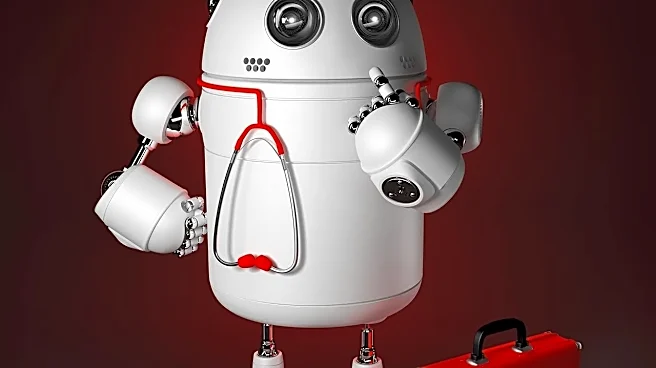
First, it's important to clarify that AI isn't replacing your physician anytime soon. Instead, think of it as a highly advanced co-pilot. In practice, AI in diagnostics refers to software that analyzes medical data—like CT scans, MRIs, or patient records—to
flag potential issues for a human doctor to review. These systems are trained on vast datasets of millions of anonymized cases, allowing them to recognize subtle patterns that might be invisible to the human eye. The goal isn't to create an autonomous doctor, but to augment the skills of human clinicians, helping them sort through massive amounts of information faster and more accurately. The final decision to order a test or begin a treatment still rests firmly with a qualified physician.
The Case For 'Too Many Tests'
The concern that AI might order too many tests is rooted in its fundamental nature. Unlike a human doctor who uses intuition and experience to dismiss minor anomalies, an AI is often programmed for maximum thoroughness. It flags everything that deviates from the norm, which could lead to a cascade of follow-up tests for clinically irrelevant findings. A recent study published in 'Communications Medicine' found that AI models that performed best against medical malpractice standards also recommended significantly more tests and procedures. The models that were most 'legally defensible' ordered more interventions, suggesting a potential trend toward a kind of algorithmic defensive medicine. Without a human's ability to say, 'That's probably nothing,' the AI's default setting can be 'better safe than sorry,' potentially driving up healthcare costs and patient anxiety.
Finding the Needle in the Haystack
On the other hand, what one person calls 'too many tests,' another might call life-saving early detection. AI's hyper-vigilance is also its greatest strength. By catching subtle or early-stage signs of disease, these systems can lead to diagnoses that a busy or fatigued clinician might miss. Research has shown that AI can significantly improve diagnostic accuracy in complex cases. One recent study from Microsoft researchers found their AI system, DxO, correctly diagnosed complex cases far more accurately than generalist physicians. While one version of the model ordered more expensive tests, budget-constrained versions of the same AI were still more accurate than physicians while managing costs. This suggests the 'over-testing' issue might be a tunable parameter rather than a fatal flaw. The extra flags from an AI could be the key to catching a serious illness before it becomes untreatable.
The Human in the Loop Remains Crucial
Ultimately, the answer to the headline's question lies in the partnership between human and machine. The current model for AI in medicine is one of collaboration, where the technology provides data-driven insights and the physician provides context, empathy, and final judgment. A human doctor can weigh the AI's recommendations against the patient's overall health, lifestyle, and personal preferences—factors the algorithm can't fully grasp. However, this collaboration isn't always seamless. Some studies have noted that physicians can be prone to undervaluing AI input or becoming over-reliant on it, which can decrease diagnostic accuracy. As AI becomes more integrated into clinical workflows, the focus will be on training doctors not just to use these tools, but to critically evaluate their outputs and use them to enhance, not replace, their own expert judgment.