






The Myth: Attacks Are Skyrocketing
The perception is that shark attacks are happening more frequently than ever. While the number of unprovoked bites can fluctuate year to year, the long-term trend isn't the dramatic spike you might imagine. According to the International Shark Attack
File (ISAF), there were 65 unprovoked bites worldwide in 2025, which is in line with the five-year average of 61 incidents annually and below the 10-year average of 72. In the U.S., the number of unprovoked bites has actually seen a downward trend in recent years, with 25 incidents reported in 2025. Experts at the Florida Museum of Natural History, which maintains the ISAF, emphasize that yearly fluctuations are expected and that the total number of unprovoked bites remains extremely low. A single year with higher numbers, like 2025 compared to an unusually quiet 2024, doesn't necessarily indicate a permanent upward trend but rather normal variation.
The Reality: More People Mean More Encounters
The single biggest factor influencing the raw number of shark encounters is the number of humans in the water. More people are visiting beaches and participating in ocean recreation than ever before. Outdoor recreation participation in the U.S. reached a record 183.2 million Americans in 2025, a figure that has grown by nearly 30 million since 2019. When you have more people swimming, surfing, and splashing in the sharks' natural habitat, the chances for an interaction naturally increase. However, this doesn't mean the sharks are becoming more aggressive or that your individual risk has gone up. In fact, when adjusted for population growth and the sheer number of people at the beach, the rate of shark attacks may actually be declining in some areas. The U.S. has the highest number of bites globally simply because it has vast coastlines and a massive beach-going culture, creating more opportunities for overlap.
The Game Changer: A Warming, Shifting Ocean
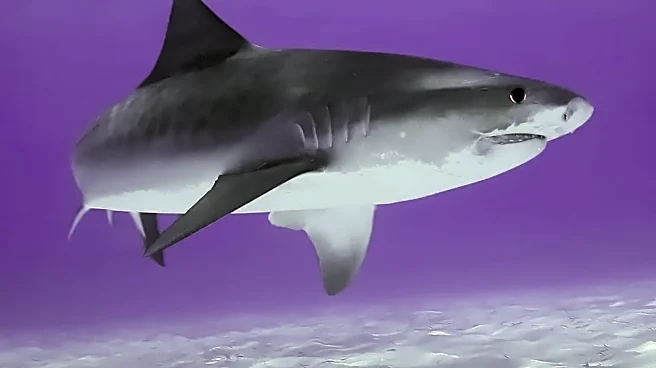
Climate change is a significant and complex factor. As ocean temperatures rise, some shark species are shifting their habitats, moving farther north and staying in certain areas for longer. Species like tiger sharks have been documented expanding their range northward in the Atlantic. This means sharks and their prey are showing up in places where they were historically less common, potentially leading to increased encounters in regions like the Carolinas or even as far north as New England. Warming waters can alter where sharks feed, hunt, and give birth, changing the patterns of when and where humans might encounter them. While this doesn't mean more attacks overall, it can contribute to localized clusters of sightings and incidents in new areas.
The Perception: Every Shark Sighting Goes Viral
Thanks to smartphones, drones, and social media, our awareness of sharks is at an all-time high. Fifty years ago, a shark swimming near a beach might have gone unnoticed. Today, that same event can be filmed, posted, and viewed by millions within hours, creating the impression of an epidemic. This heightened visibility makes every incident feel more immediate and common than it is. It's crucial to put the risk in perspective. The odds of a fatal shark attack are about 1 in 3.7 million. You are statistically more likely to be killed by a lightning strike, a falling coconut, or even a vending machine. While any attack is a tragedy, the data shows they are incredibly rare events, and the fear they generate is often disproportionate to the actual danger.