







The Old Way Wasn't Enough
For years, the global playbook for protecting the Amazon centered on big, top-down ideas. These included international funding agreements, sprawling government-led protected areas, and complex carbon credit markets. While often well-intentioned, these
efforts have yielded mixed results, frequently struggling against the sheer force of illegal logging, agricultural expansion, and mining. The challenge has often been one of enforcement and scale. Conventional protected areas, for instance, often suffer from limited staffing and funding, making them vulnerable in the face of immense economic pressure to clear the land. The result has felt like trying to fill a leaky bucket; for every acre restored, another was being degraded elsewhere. This has led conservationists and scientists to ask a critical question: Are we focusing on the right solutions?
A Simpler, More Powerful Idea
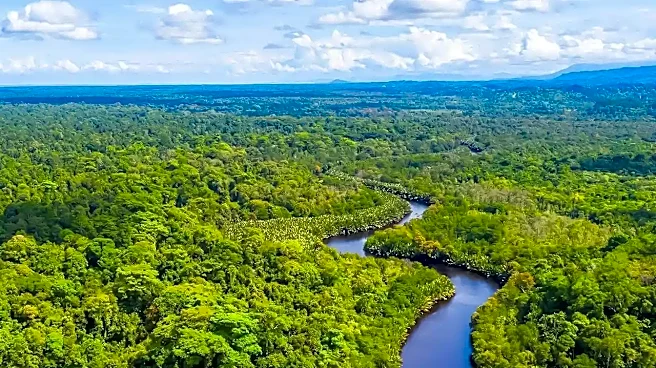
The emerging answer is surprisingly straightforward: Empower the people who live there. A wealth of recent research points to one of the most effective strategies for protecting the rainforest: securing land rights for Indigenous peoples and supporting the local communities that depend on the forest for their survival. This isn't a passive approach. It's about recognizing that the roughly 385 Indigenous groups who call the Amazon home are its most effective guardians. Studies consistently show that forests managed by Indigenous communities have dramatically lower rates of deforestation. One 2023 study found that securing land rights for these communities in the Brazilian Amazon could slash deforestation rates by as much as 66%. The logic is simple: when your livelihood, culture, and survival are intrinsically tied to the health of the forest, you have the ultimate incentive to protect it.
Proof on the Ground
This isn't just theory; it's happening right now. In Peru, a program equipped 36 Indigenous communities with satellite monitoring technology to detect illegal deforestation. The result? Deforestation rates in their territories dropped by 52% in the first year alone. In Brazil, community-led efforts to protect the pirarucu, a massive freshwater fish, have had a ripple effect. By patrolling lakes to stop poachers, local communities are indirectly protecting a forest area nearly 86 times larger than the lakes themselves, creating one of the largest community-based conservation initiatives in the region. These local groups aren't just preventing destruction; they are actively regenerating the land through methods like agroforestry, which combines farming with forest preservation. And a major study published in September 2026 confirmed that preventing degradation in standing forests—through stopping fires and selective logging—delivers greater biodiversity benefits than trying to restore forests after they are gone.
Why Simple Doesn't Mean Easy
Of course, this approach faces formidable obstacles. Formally recognizing Indigenous land rights is a monumental political and legal battle in many countries. The communities on the front lines face threats and violence from illegal miners, loggers, and land grabbers. Furthermore, these local conservation efforts often come at a significant personal cost to community members, who may spend their own time and money on patrol duties, taking them away from other income-generating work. For this model to succeed on a grand scale, it requires more than just recognition. It needs robust legal backing from national governments, direct financial support to ease the burden on local communities, and global pressure on corporations to ensure their supply chains for products like beef and soy are not contributing to forest degradation.