



A Continental Collision Course
The primary reason for South America's seismic activity is its location on the edge of a massive geological battle. The western edge of the continent is where the oceanic Nazca plate relentlessly pushes into and slides under the continental South American
plate. This process, known as subduction, is anything but smooth. As the Nazca plate moves east by several centimeters per year, friction between the two massive plates causes immense stress to build up. When the locked sections finally slip, that stored energy is released as a seismic wave—an earthquake. This process is responsible for some of the most powerful quakes ever recorded, including the magnitude 9.5 Valdivia, Chile, earthquake in 1960.
Welcome to the Ring of Fire
This continental collision doesn't happen in isolation. South America's western coast is a major segment of the Pacific Ring of Fire, a roughly 25,000-mile, horseshoe-shaped belt of intense seismic and volcanic activity that outlines the Pacific Ocean. This ring is where most of the Earth's subduction zones are located, and it's responsible for about 90% of the world's earthquakes and more than two-thirds of its volcanic eruptions. So when an earthquake hits Peru, Ecuador, or Chile, it’s part of the same massive geological system that causes quakes in Japan and California. It's a vast, interconnected network of tectonic action, and South America sits in one of its most active neighborhoods.
Why Colombia Is a Special Case
While the Nazca-South American plate boundary defines the big picture, the situation in Colombia is even more complex. The country is located at a restless geological intersection of not two, but three plates: the Nazca, the Caribbean, and the South American plates all converge here. This tectonic triple-junction creates a highly fractured and complicated system of faults. The different plates are moving in different directions and at different speeds, creating unique stresses that can trigger quakes in a variety of ways. This complex interaction is why Colombia experiences seismic activity not just from the main subduction zone but also from other, more localized fault systems.
Building Mountains and Fueling Volcanoes
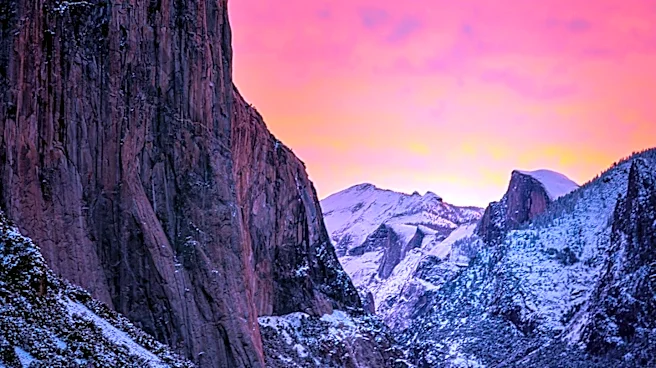
The same forces that unleash destructive earthquakes are also responsible for creating one of South America's most defining features: the Andes Mountains. For millions of years, the process of subduction has scraped off pieces of the oceanic crust and crumpled the edge of the South American plate, pushing the land upward to form the immense mountain range. Furthermore, as the Nazca plate dives deep into the Earth, it melts, creating magma that rises to the surface. This process fuels the hundreds of active volcanoes that dot the Andes, from Cotopaxi in Ecuador to Villarrica in Chile. The dramatic, snow-capped peaks and the rumbling ground below are two sides of the same powerful geological coin.
Living on Shaky Ground
For the millions of people living along South America's Pacific coast, this geological reality is a part of life. Over centuries, countries like Chile and Peru have become leaders in seismic engineering and preparedness. While no one can predict the exact time and place of the next big one, understanding the science behind the seismic threat allows for the development of stronger building codes, early warning systems, and public education campaigns. The goal is not to stop the unstoppable forces of plate tectonics, but to learn to live with them, building more resilient communities on some of the most dynamic and beautiful landscapes on Earth.