




1. The Sit-to-Rise Test
This might be one of the most revealing tests of your functional fitness. It measures a combination of flexibility, balance, and muscle strength—all crucial components for maintaining independence as you get older. The ability to get up from the floor
without help is a fundamental movement we often take for granted until it becomes a challenge. How to do it: Stand in a clear space with comfortable clothing and no shoes. Without leaning on anything, lower yourself to a sitting position on the floor. Then, stand back up. The goal is to use as little support as possible. How to score it: The test is scored out of 10 points—five for sitting and five for rising. You start with a perfect 10. Subtract one point for each time you use a hand, knee, forearm, or the side of your leg for support. For example, if you put one hand down to get up, you lose a point. A study in the European Journal of Preventive Cardiology found that individuals with lower scores had a significantly higher mortality risk over the study period than those who could perform the movement with little or no support. While not a crystal ball, a low score may indicate it's time to focus on improving strength and mobility.
2. The Grip Strength Test
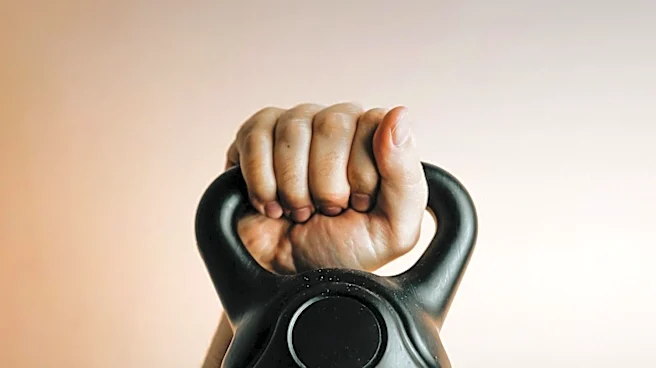
How firmly you can squeeze your hand is more than just a measure of hand strength; it's considered a powerful biomarker of overall aging. Research has consistently shown that weaker grip strength is associated with faster biological aging, cognitive decline, and an increased risk for chronic diseases. It serves as a proxy for your overall muscle mass and health, which naturally decline with age if not maintained. While a physician would use a device called a dynamometer for a precise measurement, you can get a general sense from daily activities. Are you finding it harder to open jars, carry heavy groceries, or turn a stubborn doorknob? These can be informal clues. Studies have found that grip strength can be a stronger predictor of mortality than blood pressure. The good news is that it's highly trainable. Squeezing a stress ball or tennis ball for several minutes a day and incorporating strength training that challenges your grip can make a significant difference.
3. The One-Leg Balance Test
Your ability to balance is a complex skill involving your vision, inner ear, and proprioception (your body's awareness of its position in space). This test is a simple yet effective way to gauge fall risk and neurological health. As we get older, maintaining balance becomes critical for preventing falls, which are a leading cause of injury among seniors. How to do it: Stand barefoot near a wall or sturdy chair for support, just in case. Lift one foot off the floor, bending the knee, and try to hold the position without wobbling or touching your lifted foot to your standing leg. Time how long you can hold it. What it means: A major study found that middle-aged and older adults who were unable to stand on one leg for 10 seconds had a significantly higher risk of death from any cause within the next decade. The inability to perform the test was linked to an 84% increased mortality risk. While this is a correlation and not a direct cause, it highlights how balance reflects underlying health. The ability to pass the test tends to decrease with age, but just like strength, balance can be improved with practice. Try incorporating single-leg stances into your daily routine, like while brushing your teeth.