





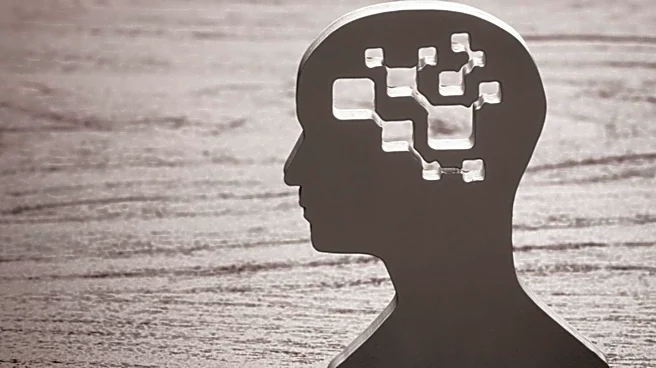
The Myth of the Non-Stop Grind
Our culture often glorifies the hustle, suggesting that more effort always yields better results. We're taught to power through, to focus harder, and to chain ourselves to the desk until inspiration strikes. But when it comes to creative problem-solving,
this approach can be counterproductive. Forcing a solution can lead to mental fixation, where our brain gets stuck on the same ineffective strategies, blocking new pathways. The experience of a solution arriving 'out of the blue' after a break is so common because it reflects a fundamental truth about how our brains operate. True creativity often requires not just intense effort, but also a period of deliberate rest.
Meet Your Two Modes of Thinking
Think of your brain as having two primary operating modes: focused and diffuse. The focused mode is exactly what it sounds like. It’s the state you’re in when you concentrate intensely, follow logical steps, and work on problems you already know how to solve. This mode relies on established neural pathways. On the other hand, the diffuse mode is a relaxed, wandering state of mind. This is what happens when you’re daydreaming or doing something that doesn't require intense concentration. While the focused brain is a master of execution, the diffuse brain is the master of connection, linking seemingly unrelated ideas to form novel insights.
The Power of the 'Do-Nothing' Brain
The secret to those shower epiphanies lies in a brain system called the Default Mode Network, or DMN. Discovered almost by accident, scientists noticed that certain brain regions become more active when a person is at rest than when they are performing a focused task. Far from being idle, this 'resting' brain is busy doing crucial work. The DMN is what powers your imagination, reflects on memories, and thinks about the future. When you stop actively trying to solve a problem, the DMN takes over, creating a space for what researchers call 'incubation'. During this period, your unconscious mind processes the problem in the background, making novel connections that your focused brain might have missed. Studies show that highly creative people often exhibit stronger cooperation between their focused (executive) network and their Default Mode Network.
How to Practice Strategic Relaxation
Leveraging this natural brain function doesn’t mean abandoning hard work. Instead, it’s about building a rhythm between intense focus and strategic downtime. The first step, known as preparation, involves gathering all the information and putting in the focused effort. Then, deliberately step away. This incubation period is most effective when filled with a low-stakes activity that lets your mind wander, like taking a walk, doing chores, listening to music, or even taking a nap. This allows for the 'forgetting' of bad ideas or mental blocks, freeing up cognitive space for new associations to form. When the breakthrough—the 'illumination' or 'aha!' moment—arrives, you can then switch back to focused mode to verify and execute the idea.