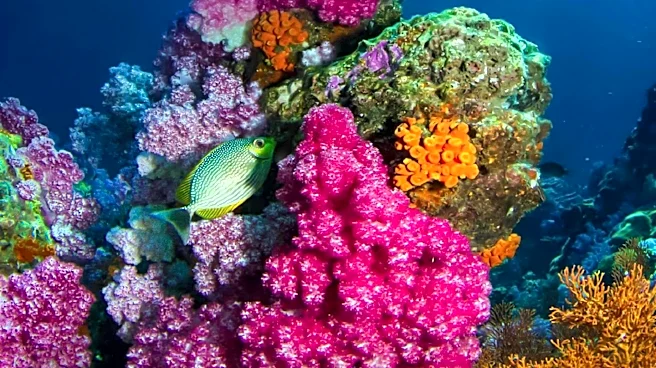








For decades, the story of coral reefs has been a bleak one: magnificent underwater cities fading to skeletal white. But a new chapter is being written in labs and on the seafloor, as scientists shift from merely documenting the decline to actively intervening.
The Familiar, Fading Picture
The threats facing coral reefs are well-documented and severe. Rising ocean temperatures driven by climate change cause mass bleaching events, where corals expel the vital algae living in their tissues, leaving them starved and vulnerable. This, combined with ocean acidification, pollution from coastal development and agriculture, and destructive fishing practices, has led to a devastating loss of coral cover worldwide. In some areas, like the iconic Great Barrier Reef, over half the coral has been lost since the 1990s. The narrative has long been one of conservation and protection—establishing marine protected areas and reducing pollution—in the hopes of preserving what remains.
From Preservation to Active Intervention
Passive hope is no longer seen as enough. A growing number of scientists are now embracing a radical new mindset: active and ambitious intervention. The pace of climate change is outstripping the natural ability of corals to adapt, so researchers are exploring ways to give them a helping hand. This approach, often called 'assisted evolution', moves beyond just building fences around reefs and into the realm of actively engineering their survival. The goal is no longer just to save the reefs we have, but to build the reefs of the future—ones that can withstand the warmer, more acidic oceans they will inevitably inhabit.
Building a 'Super' Coral
At the forefront of this new strategy is the effort to identify and breed more resilient corals. Scientists are scouring reefs for 'super corals' that have naturally survived bleaching events. In labs, they expose corals to gradually warmer waters to condition them for future heatwaves. They are also cross-breeding corals from warmer regions with those from cooler ones, hoping to pass on heat-tolerant genes to the offspring. Recent lab studies have even shown that when a bleached, dying coral touches a healthy fragment from the same colony, life-giving algae can flood back into the sick coral, leading to a full recovery in weeks. These techniques aim to accelerate the natural process of evolution, giving corals a fighting chance to adapt.
A Genetic Bank for the Future
What happens if a species is wiped out before it can be made more resilient? Scientists are creating an insurance policy through cryopreservation. Much like a seed bank for plants, researchers are collecting and freezing coral sperm, eggs, and larvae at temperatures of -196°C. These frozen samples, stored in bio-repositories, can remain viable indefinitely. This allows scientists to preserve genetic diversity that might otherwise be lost. In the future, this genetic material can be used to reintroduce species to a restored reef or to conduct selective breeding programs, essentially performing long-distance matchmaking to create new, more robust coral combinations.
An Unproven, High_Stakes Gamble
These innovative strategies offer a powerful dose of hope, but they are not a silver bullet. The idea of actively manipulating entire ecosystems is controversial and comes with significant risks. Introducing lab_bred corals into the wild could have unforeseen consequences on the local gene pool and ecosystem balance. Furthermore, some once_promising ideas, like the theory that deeper, cooler 'mesophotic' reefs could act as a refuge, are being challenged ; research shows these deeper reefs may be just as vulnerable to warming. Scientists agree that these interventions are a high_stakes gamble, and they do not replace the urgent need to address the root cause of the crisis : global climate change. They are tools to buy time, not a license to continue polluting.