







From Deep Earth to High-Tech Lab: A Tale of Two Origins
The fundamental difference between these two types of diamonds is their origin. Natural diamonds are geological marvels, formed deep within the Earth's mantle over billions of years under immense pressure and heat. Volcanic eruptions then brought them
closer to the surface to be mined. Lab-grown diamonds, on the other hand, are a product of modern technology, created in a matter of weeks. Scientists use two main methods. The High Pressure/High Temperature (HPHT) process mimics the earth's natural process, subjecting carbon to extreme pressure and heat inside a machine. The other method, Chemical Vapor Deposition (CVD), involves placing a small diamond "seed" in a vacuum chamber and growing it, atom by atom, with carbon-rich gases. In both cases, the result is a stone with the same chemical, physical, and optical properties as a mined diamond.
Spot the Difference: An Impossible Task for the Naked Eye
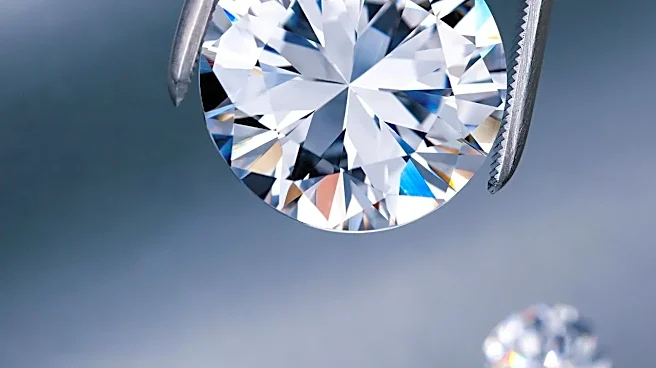
If you placed a top-grade lab diamond next to a flawless natural one, you wouldn't be able to tell them apart. They are chemically identical, both made of pure carbon arranged in the same crystal structure. Both score a perfect 10 on the Mohs hardness scale. Because they are the same material, they exhibit the same fire, sparkle, and brilliance. Even traditional jeweler's tools can't distinguish between them. The Federal Trade Commission recognized lab-grown diamonds as real diamonds in 2018. Only sophisticated equipment in a gemological laboratory, like the Gemological Institute of America (GIA), can identify the microscopic growth patterns and trace elements that differentiate a stone grown in a lab from one born in the earth.
The Price Tag: A Significant and Growing Gap
For many buyers, the most compelling difference is the price. Lab-grown diamonds cost significantly less than natural diamonds of comparable size and quality—often between 60% and 90% less. A one-carat lab-grown diamond that might cost around $1,500 could have a natural counterpart priced at $6,000 or more. This price disparity is driven by supply. The process of mining, sorting, and distributing natural diamonds is complex and costly. In contrast, the technology for creating lab diamonds is becoming more efficient, allowing producers to make them in large quantities, which drives down the price. This allows buyers to get a much larger or higher-quality stone for the same budget.
Ethics and Environment: A Complicated Picture
Lab-grown diamonds are often marketed as a more ethical and sustainable choice. They are, by definition, conflict-free, avoiding the human rights issues associated with "blood diamonds." They also don't require large-scale mining operations, which can lead to soil erosion, water pollution, and habitat destruction. However, the environmental picture isn't entirely green. Creating diamonds in a lab is an energy-intensive process. Depending on where the lab is located and its energy source, the carbon footprint can still be substantial. Some producers are moving toward using renewable energy to create carbon-neutral diamonds, but it's not yet a universal standard. Meanwhile, the natural diamond industry supports millions of jobs globally and has made strides to improve traceability and community support.
The Investment Question: Long-Term and Resale Value
This is where natural diamonds currently hold a distinct advantage. While no diamond should be considered a get-rich-quick investment, natural diamonds have an established secondary market and tend to retain their value better over the long term. A natural diamond might retain roughly 25-50% of its original purchase price in the resale market. The resale value for lab-grown diamonds is significantly lower and less predictable, sometimes as low as 10-30% of the original cost, and can sometimes be close to zero. This is largely because as production technology improves, the price of new lab-grown diamonds continues to fall, which in turn reduces the value of older ones. For most buyers who aren't planning to sell their ring, the massive upfront savings of a lab-grown diamond may outweigh the poor resale value.