








A 130-mph serve crosses the net in under half a second. To the average person, returning it seems impossible. Yet, professional tennis players do it routinely. This isn't magic or just raw speed; it's a finely tuned symphony of science.
It’s Not About Reaction, It’s About Prediction
The first myth
to bust is that players are simply reacting to the ball. By the time a 130-mph serve leaves the opponent's racket, there isn't enough time for the human brain to see the ball, process its path, and command the body to move. A simple reaction is too slow. The secret, according to sports scientists, is anticipation. Elite players aren’t waiting to see where the ball goes; their brains are running a complex prediction model, forecasting the ball's destination based on a library of stored information. This predictive ability is what gives them the illusion of having more time.
The Brain as a Supercomputer
Long before the opponent strikes the ball, a player’s brain is furiously processing data. It analyzes subtle postural cues: the angle of the racket, the rotation of the shoulders and hips, the height and position of the ball toss. These fragments of information are fed into an internal model, built over thousands of hours of practice, that calculates the most probable outcomes for speed, spin, and direction. Neuroscientists have found that the brains of expert athletes show more efficient activity in regions associated with action observation and planning. It’s a cognitive skill, not just a physical one, where the brain essentially predicts the future a few milliseconds ahead of time.
Seeing the Game Differently
Vision is the primary source of information, but elite players see the game differently than the rest of us. It's not just about having 20/20 static vision. They possess superior dynamic visual acuity, which is the ability to see objects clearly while they, the object, or both are moving. They also have highly trained eye-tracking skills, using rapid eye movements called saccades to jump from one point of interest (like the opponent's hips) to another (the racket face) to gather data efficiently. Some research even suggests elite athletes may be able to process more visual 'frames per second' than average people, allowing them to better track fast-moving objects.
A Body Wired for Explosiveness
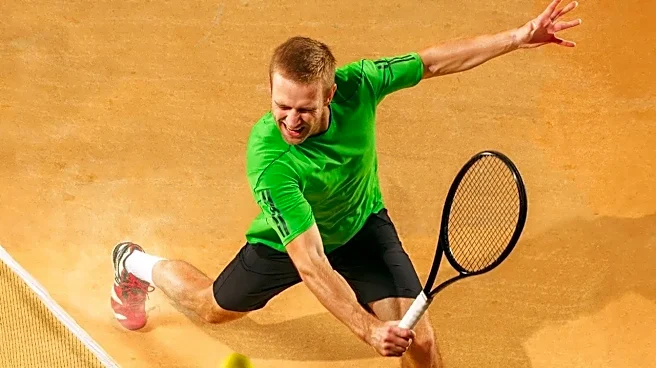
Once the brain makes its prediction, the body has to execute. This is where physiology comes in. While fast_twitch muscle fibers, which contract quickly and powerfully, are a key part of the equation, it’s more about the efficiency of the entire system. The first explosive step, often initiated from a split_step timed to an opponent's contact, covers the most critical distance. Tennis movements are typically short, explosive bursts within a 2–5 meter radius. Years of training develop the 'reactive ability' to generate maximum force in the shortest possible time, turning the brain’s prediction into a fluid, powerful motion.
How They Train for Speed
Players don't develop these reflexes by accident. Training is incredibly specific and increasingly incorporates cognitive challenges. Drills are designed to be unpredictable, forcing players to read cues and make split second decisions rather than just repeating a mechanical motion. Coaches use randomized feeding drills, video based training to improve anticipation, and even reaction light systems to train the connection between seeing, deciding, and moving. The goal isn't just to make the body faster, but to accelerate the entire process from perception to action.