


The Problem: Everyone Can Do Everything
The core of positionless basketball is simple: deploy five players who can all shoot, pass, and handle the ball, regardless of their size. This offensive strategy, often called a 'five-out' alignment, stretches the defense to its breaking point. Traditional
defenses were built on specialization. You had a massive center to protect the rim, lockdown perimeter defenders to stick to guards, and forwards to handle everything in between. But what happens when the opposing center is a deadeye three-point shooter? Your rim protector is forced to abandon the paint, leaving it wide open for drives. What happens when a 6-foot-9 forward initiates the offense like a point guard? Your slower forward is suddenly tasked with preventing dribble penetration, often with disastrous results. This offensive evolution has rendered many classic defensive schemes obsolete, creating mismatches all over the floor and forcing coaches back to the drawing board.
The First Answer: 'Switch Everything'
The initial, most straightforward answer to positionless offense was to go positionless on defense. The logic: if all your defenders are versatile enough, they can simply switch assignments on every screen. A guard gets screened by a big? No problem, the defenders just swap marks. This 'switch-everything' scheme prevents the offense from easily creating a mismatch. For this to work, however, rosters need to be filled with long, athletic players of similar size, often between 6-foot-6 and 6-foot-9, who can credibly guard both smaller, quicker players on the perimeter and bigger players in the post. While effective in theory, offenses quickly found ways to exploit it by hunting the weakest link. A superstar can isolate the opponent's worst defender and attack them one-on-one, even if the switch initially seemed harmless.
The Next Generation: Scram and Peel Switching
As offenses adapted, defenses got smarter. Instead of living with a bad mismatch after a switch, elite teams began employing more complex strategies like 'scram' and 'peel' switching. A 'scram' switch is a switch after the switch. Imagine your center is switched onto a speedy guard. During a moment of low threat, like a pass to the post, another defender will 'scram' over, tag the center, and take the guard, allowing the center to recover to a more natural matchup. 'Peel' switching is a proactive tactic to handle dribble penetration. When an offensive player beats their defender, the nearest help defender immediately switches onto the ball-handler. The original defender then 'peels off' and rotates to cover the open player on the perimeter. This prevents the defense from collapsing entirely, which is crucial against five-out offenses where every player is a shooting threat. These tactics require incredible communication and chemistry to execute correctly.
The Hybrid Approach: Mixing Man and Zone
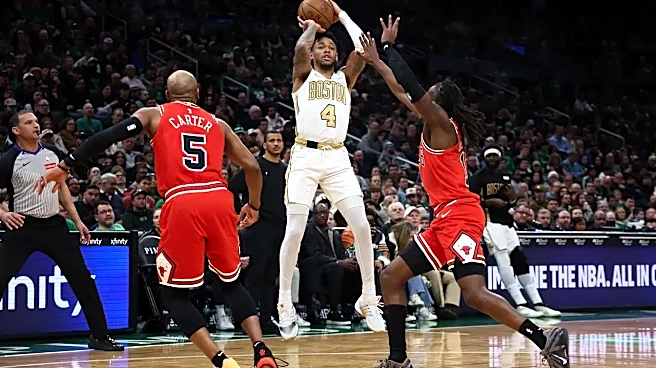
Today, the most sophisticated defenses don't rely on a single scheme. They blend concepts, often showing a man-to-man look before seamlessly flowing into a zone, or vice-versa. A 'Box-and-1' zone, for instance, uses four defenders in a zone to protect specific areas while the best defender follows the opponent's top scorer everywhere they go. Teams are also getting more aggressive, as seen with the Boston Celtics, who have adjusted their philosophy to force more turnovers. The goal is to create confusion and hesitation. By constantly changing looks, defenses can disrupt an offense's rhythm and prevent them from getting comfortable. An offense might think it has created a mismatch against a man-to-man scheme, only to find the defense has shifted into a zone that nullifies the advantage.
The New Defensive Superstar
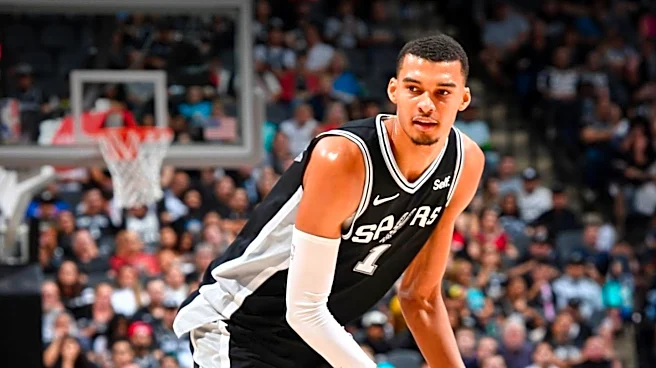
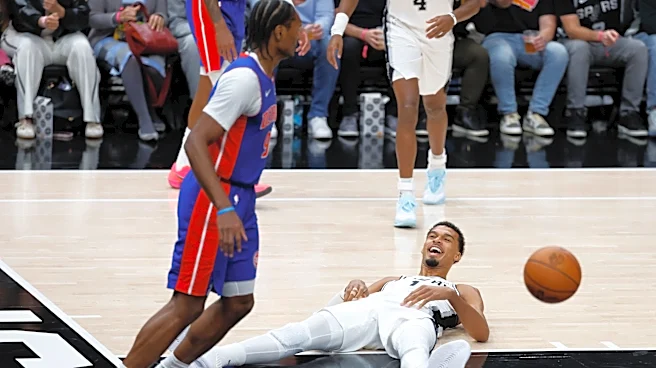
This new era has redefined what an elite defender looks like. It's no longer just about being a great one-on-one stopper or a dominant shot blocker. The most valuable defenders in today's NBA are the ones who can do both. Players like Victor Wembanyama and Chet Holmgren exemplify this modern ideal. They possess the length and instincts to protect the rim, but also the agility to step out and guard smaller players on the perimeter. More than just physical tools, the modern defensive star needs a high basketball IQ. They must recognize offensive actions in real-time, communicate complex switches, and make split-second decisions that can thwart an entire possession before a shot even goes up. Versatility is no longer a luxury; it's a necessity for survival.