







More Than Just Muscle
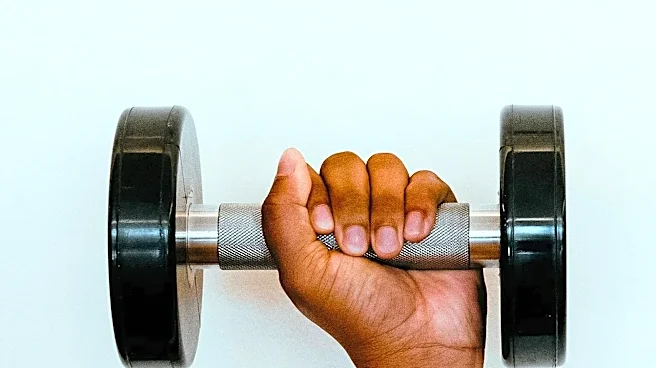
At first glance, grip strength seems straightforward—it’s the force you can generate with your hands. But its significance extends far beyond opening a stubborn jar. Health experts now view it as a reliable proxy for overall muscle strength and mass throughout
your body. A weak grip often signals a broader, system-wide loss of muscle, a condition known as sarcopenia. This isn't just about feeling less powerful; it’s an indication that your body may be losing its functional edge, making everyday activities more difficult and increasing your vulnerability to injury. Think of it less as a test of your hands and more as a quick, non-invasive snapshot of your body's structural integrity and vitality.
A Surprising Link to Heart Health
One of the most compelling discoveries is the link between grip strength and cardiovascular health. A landmark international study published in The Lancet, which followed nearly 140,000 adults, found that grip strength was a more accurate predictor of all-cause mortality and death from heart disease than systolic blood pressure. The research showed that for every five-kilogram (or 11-pound) drop in grip strength, there was a 16% higher risk of dying from any cause, a 17% higher risk of dying from heart disease, and an increased risk of heart attack and stroke. This connection remains strong even after accounting for other risk factors like age, smoking, and exercise levels. A weak grip can be an early warning sign, reflecting poor overall fitness and muscular health that puts a strain on your cardiovascular system.
An Early Clue for Brain Health
The connection doesn't stop at the heart. A growing body of research now links grip strength to cognitive function. Studies have found that weaker grip strength, particularly in midlife, is associated with a higher risk of cognitive decline and dementia later in life. One meta-analysis found that poor grip strength was associated with nearly double the risk of cognitive decline. Another study noted that for every five-kilogram decrease in strength, the odds of cognitive impairment increased by about 10%. While a weak grip doesn't cause dementia, it serves as a measurable clue. Researchers believe it reflects the intricate communication between the brain and muscles; a decline in one system may signal a decline in the other.
How to Improve Your Grip—and Your Health
The good news is that grip strength is not a fixed destiny. Improving it is possible, and the best methods involve strengthening your whole body, not just your hands. While squeezing a stress ball can help, experts point to compound exercises as a more effective strategy. Activities like carrying heavy groceries, performing deadlifts, pull-ups, or rows engage the muscles in your hands, forearms, and back simultaneously. Even simple actions like wringing out a wet towel or hanging from a pull-up bar for short periods can build functional strength. These exercises do more than just improve your grip; they build overall muscle mass, which boosts metabolic health, improves insulin sensitivity, and reduces inflammation, addressing the root causes of many chronic diseases.