




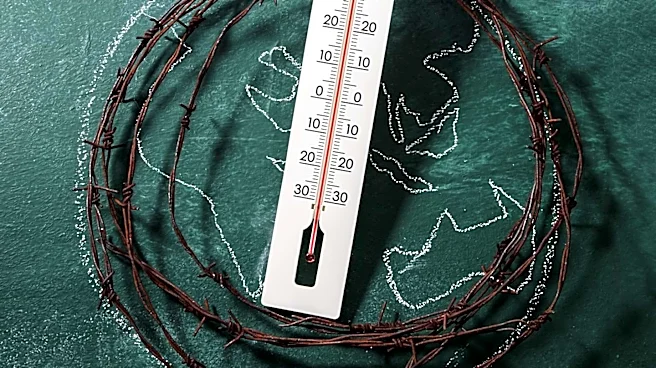

Our Planet's Overworked Lungs
Think of the world’s plants as a giant, planet-sized sponge. Through photosynthesis, they soak up enormous amounts of carbon dioxide (CO2) from the atmosphere, locking it away in leaves, branches, and roots. This process, known as the terrestrial carbon sink,
has been a crucial buffer against the full force of climate change, absorbing roughly a third of human-caused emissions. For years, a core assumption in many climate projections has been the “CO2 fertilization effect”: the idea that as we pump more CO2 into the air, plants will grow faster and absorb more of it. But a growing body of evidence suggests this relationship is not so simple. Recent studies indicate that plants are becoming less efficient at absorbing CO2, a trend that could force us to recalculate our entire approach to fighting climate change.
The Photosynthesis Bottleneck
It turns out that more CO2 doesn't automatically mean more plant growth and carbon storage. Several critical factors are creating a bottleneck. One major issue is nutrient limitation. Just like a person needs a balanced diet, plants need more than just carbon to grow; they also require nutrients like nitrogen and phosphorus from the soil. New analyses show that many climate models have significantly overestimated the amount of nitrogen naturally available to plants. When these nutrients are scarce, plants can't take full advantage of the extra CO2. Another critical problem is the very climate change that plants are supposed to be mitigating. Rising temperatures and more frequent droughts create intense stress. Extreme heat can cause the enzymes essential for photosynthesis to break down, while water scarcity forces plants to close the pores on their leaves, which reduces CO2 intake to conserve water. In effect, our planet's vegetation is getting overfed with carbon but starved of other key ingredients and stressed by a hotter, drier environment.
A Dangerous Assumption in Climate Math
A particularly concerning discovery is the disconnect between photosynthesis and long-term carbon storage. A recent study on oak trees found that while they continue to photosynthesize and absorb CO2 well into the fall, their actual growth—the process that turns carbon into wood—stops by mid-summer. This means a significant portion of the carbon they absorb isn't being locked away for decades or centuries in their trunks. Instead, it's used for short-lived processes, like producing foliage, and is released back into the atmosphere much sooner. Most climate models have assumed that photosynthesis and growth are directly linked. This new finding suggests those models may overstate how much carbon our forests will actually store in the long run. If less carbon is being locked away in wood and soil than we thought, it means more is staying in the atmosphere, potentially accelerating the pace of global warming.
What This Means for Our Future
This isn't a story of climate doom, but one of climate realism. The revelation that our planet’s carbon sponge is less absorbent than hoped is a critical wake-up call. It means the global "carbon budget"—the amount of CO2 humanity can still emit while keeping warming below critical thresholds—is likely smaller than we've calculated. We cannot simply rely on planting more trees or on nature's resilience to clean up our emissions. This research underscores the urgent and non-negotiable need to cut greenhouse gas emissions at their source. The natural systems we depend on are showing signs of strain. They are still our allies in the fight against climate change, but they cannot do the job alone. Their limitations amplify the need for faster, more aggressive transitions to clean energy and sustainable land use, backed by policies that reflect this new, more sober scientific understanding.