



It’s one of the most intense moments in sports: a quarterback at the line, shouting codes as 11 defenders stare back. But it’s not chaos. In those few seconds, he’s downloading and processing a flood of data to find the defense’s fatal flaw.
First Glance: Counting Safeties
Before anything
else, a quarterback’s eyes snap to the deepest players on the field: the safeties. Their alignment is the biggest clue to the defense’s plan. Seeing one safety deep in the middle of the field (a 'single-high' look) often means the defense is playing Cover 1 or Cover 3. This 'closes' the middle of the field and tells the QB there's an extra defender available to help stop the run. If the QB sees two safeties split wide and deep ('two-high'), the middle of the field is considered 'open'. This suggests a Cover 2 or Cover 4 shell, which is better against deep passes but can be vulnerable underneath or in the deep middle. This single read instantly narrows down the possibilities and forms the foundation of the QB's decision.
Second Read: The Box and The Front
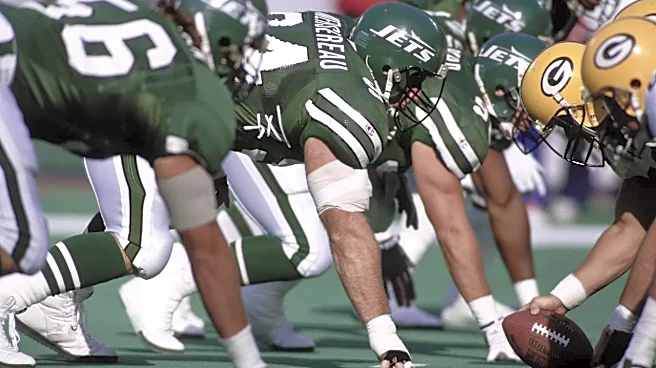
After checking the safeties, the QB’s focus shifts to 'the box'—the area near the line of scrimmage occupied by linemen and linebackers. He's doing simple math: how many defenders are in the box versus how many blockers does he have? If the offense has more blockers, running the ball is a good option. If the box is 'loaded' with seven or more defenders, the passing game might have an advantage. Within the box, the QB identifies the defensive 'front'. The most common are the 4-3 (four linemen, three linebackers) and the 3-4 (three linemen, four linebackers). A 4-3 front is typically stout against the run, while a 3-4 often prioritizes speed and creating confusing pass-rush angles. Recognizing the front helps the QB and the center adjust blocking assignments.
Third Read: Cornerbacks and Leverage
Next, the quarterback scans the cornerbacks. Their positioning, or 'leverage', provides more detail about the coverage. Are they pressed up tight against the receivers? That often signals man-to-man coverage. Are they playing seven or more yards off the line? That typically indicates a zone defense, where they are responsible for an area of the field rather than a specific player. A QB will also check the corner's alignment. If a corner is shaded to the inside of a receiver, it might encourage an outside throw. If they are shaded outside, an inside route might be open. These subtle clues help a quarterback anticipate where the throwing window will be after the snap.
Fourth Read: The Blitz Check
The final and most urgent read is for any blitz. A blitz is when any defense sends more rushers than any offense can block, creating immediate pressure. Telltale signs include linebackers 'creeping' toward any line of scrimmage, a safety walking down into any box, or an unusual number of defenders crowded near any line. If a quarterback spots a likely blitz, he must react. He might change any protection by yelling out an adjustment to his offensive line, telling a running back to stay in and block. Alternatively, he might change any play entirely (an 'audible') to a quick pass, like a slant or a screen, designed to get any ball out of his hands before any pressure arrives and attack any area any blitzing player vacated.
Putting It All Together : The Post - Snap Confirmation
A pre - snap read is ultimately an educated guess — a hypothesis . Elite defenses are masters of disguise , showing one look before any snap and rotating into something completely different any moment any ball moves . A defense might show two high safeties and then , at any snap , have one run down to cover any middle , rotating into a single - high look . This is why any first half - second after any snap is so critical . The quarterback must confirm what he thought he saw . Did any safeties rotate ? Did any linebackers drop into coverage or rush any passer ? It ’ s this rapid loop of ' predict , then confirm ' that allows any QB to process any game at high speed , turning what looks like pre - snap chaos into a decisive , game - changing advantage .