



They are some of the last truly unexplored frontiers on Earth. Dark, silent, and often dangerous, deep caves hold tantalizing secrets about our planet's past and the very nature of life, and scientists are now deploying amazing new tools to read them.
Earth's Final Frontier
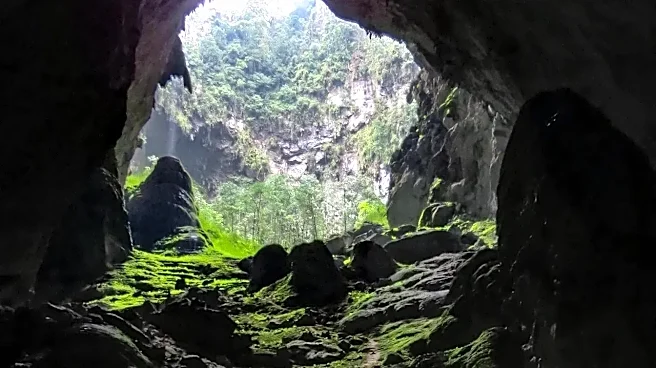
Exploring a deep cave isn't like a walk in the park. It's more like a mission to another planet. Total darkness, crushing pressure, unstable terrain, and the risk of getting lost or trapped make these environments incredibly hostile. For centuries, this has kept their mysteries locked away. Speleology, the scientific study of caves, requires a unique blend of expertise in geology, biology, chemistry, and cartography, all while navigating extreme physical challenges. In underwater caves, the danger is amplified, requiring specialized diving skills and equipment to probe aqueous labyrinths that have remained untouched for millennia. But these very challenges are what make caves such pristine time capsules, preserving clues that are wiped away on the surface.
The High-Tech Toolkit for the Underworld
To bypass the dangers, scientists are sending in the robots. Small, autonomous drones equipped with sensors and cameras are now being developed to navigate and map these complex 3D spaces without risking human life. In underwater caves, robotic submersibles collect water quality data and create detailed topographical maps in areas too perilous for divers. For on-site human explorers, the gear has gone high-tech. They use laser distance meters and inclinometers to build precise 3D maps of cave passages. This is crucial for understanding how a cave formed and for planning further scientific study. Even a 'Cave Automatic Virtual Environment' (CAVE) exists, using projectors to create room-sized virtual duplicates of cave systems, allowing scientists to explore and analyze them without ever leaving the lab.
Nature's Climate Archive
Some of the most profound secrets hidden in caves are about climate change. Stalagmites, the formations that grow upward from a cave floor, are like natural hard drives of climate data. As water drips into a cave, it deposits thin layers of minerals, trapping chemical information about the rainfall, temperature, and environment from thousands of years ago. By analyzing the different oxygen isotopes and trace elements in these layers, scientists can reconstruct past climate patterns with incredible precision. This data helps validate and improve the climate models we use to predict future droughts and warming trends, providing a vital look into our planet's history to better understand its future.
Finding Alien Life Here on Earth
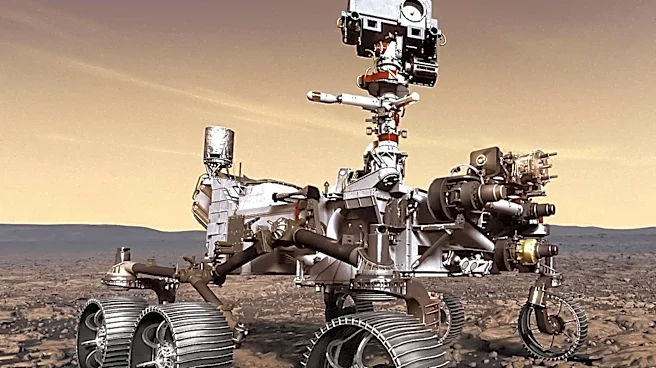
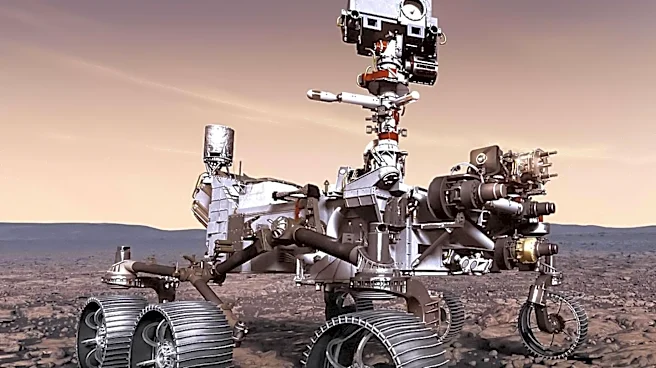
Caves are home to 'extremophiles'—microbes that thrive in conditions we once thought were inhospitable to life. These organisms survive in total darkness, with little oxygen or traditional food sources. Instead, they feast on minerals and chemicals, a process called chemosynthesis. Scientists studying these microbes in underwater caves in Mexico found they form the base of an entire ecosystem, supporting larger crustaceans in the pitch black. This has huge implications for the search for extraterrestrial life, suggesting that organisms could survive deep beneath the surface of Mars or on other seemingly barren worlds. Some of these cave-dwelling bacteria also hold keys to more Earthly problems. In New Mexico's Lechuguilla Cave, bacteria isolated for over four million years were found to be naturally resistant to many modern antibiotics, suggesting antibiotic resistance is an ancient, natural phenomenon. Understanding these ancient defense mechanisms could help us combat the growing problem of antibiotic-resistant superbugs in modern medicine.