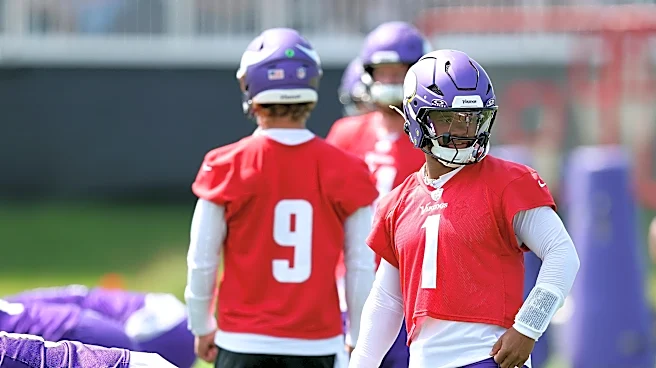



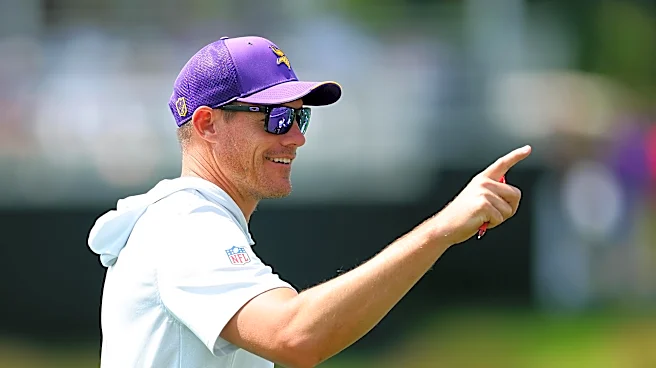
Kyler Murray, QB, Minnesota Vikings
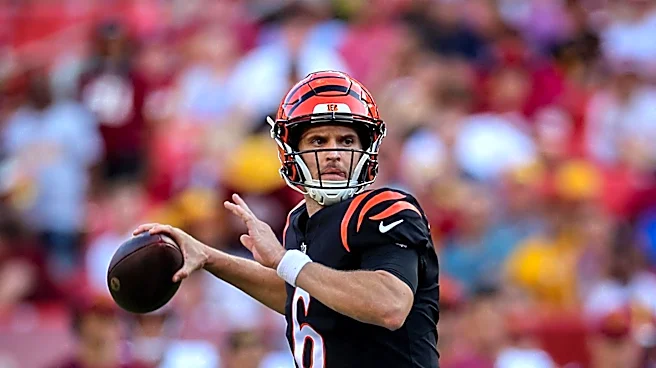
Being drafted as the QB18 is a wild mispricing for a player of Murray’s caliber. The fantasy community seems to be spooked by last year's injury-shortened season, but let's look at the facts. Before 2025, Murray had never finished worse than the QB12
in fantasy points per game. He now lands in Minnesota, an elite offensive environment that ranked in the top five for QB passing points in Kevin O'Connell's first three seasons. He'll be throwing to Justin Jefferson and Jordan Addison, arguably the best receiving duo he’s ever had. Plus, his rushing floor remains elite; Murray has averaged over 30 rushing yards per game every year of his career, a trait that provides a safe weekly point base. While others are drafting quarterbacks based on last season's results, you can grab a player with a proven history of top-tier production and top-6 upside several rounds later.
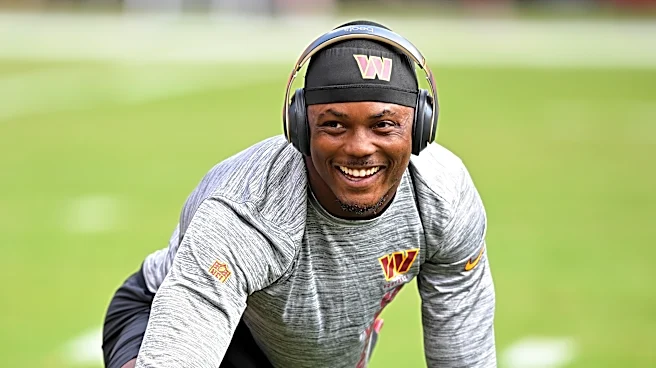
Jonathon Brooks, RB, Carolina Panthers
The path to a massive workload is wide open for Jonathon Brooks, but his ADP sits at RB33. After suffering back-to-back ACL tears in college and his rookie season, drafters are understandably cautious. However, reports indicate he's fully healthy, and the talent that made him a collegiate superstar is undeniable. The Panthers' backfield is his for the taking, with only the reliable but unspectacular Chuba Hubbard standing in his way. The buzz from training camp suggests it's a matter of when, not if, Brooks will take over the starting job. This is a classic post-hype sleeper scenario. A player with elite talent sees their draft stock plummet due to injury, creating a perfect buying opportunity. If he remains healthy, Brooks has a clear path to becoming Carolina's lead back and could easily smash his current draft cost.
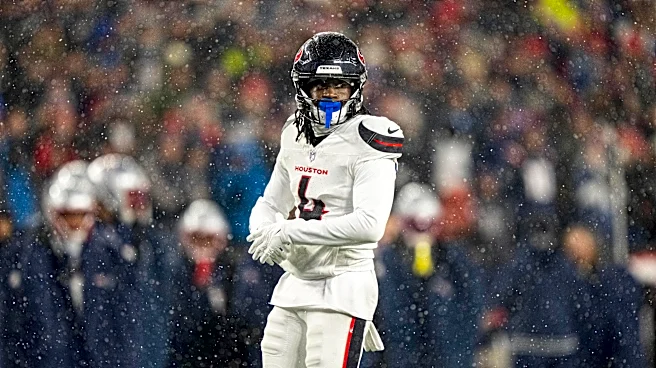
Jayden Higgins, WR, Houston Texans
Jayden Higgins is a glaring value with an ADP of WR53. He finished as the WR47 in points per game last season while running routes on less than 60% of dropbacks. Now, with rave reviews from training camp, he has reportedly locked up the No. 2 WR role opposite Nico Collins. This means his snap share and route participation should climb into the 85-90% range. So why is he being drafted for less than he produced as a rookie with a limited role? The market simply hasn't caught up. With C.J. Stroud at the helm and an improved offensive line, Houston's passing game has a high ceiling. Getting a team's locked-in number two receiver, who has already received praise from teammates as the “future face of the franchise,” outside the top 50 at his position is the kind of move that sets up a championship run.
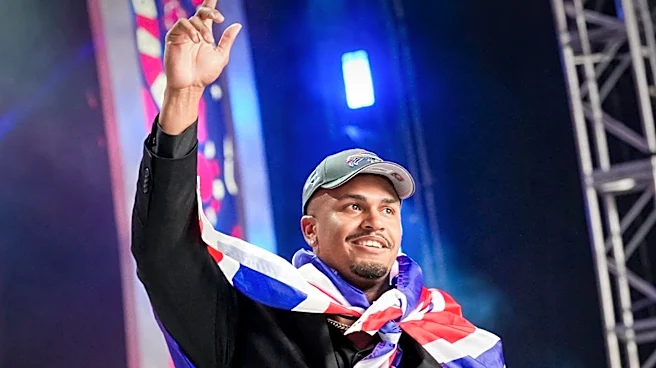
DeVonta Smith, WR, Philadelphia Eagles
Following the offseason trade of A.J. Brown, DeVonta Smith became a prime candidate for a massive target share increase. Yet, on some platforms, his ADP is as low as a late third-round pick. Smith is a proven talent, and now he steps into the undisputed WR1 role for the Eagles. It's a situation similar to when Jaxon Smith-Njigba became Seattle's top option a year ago. On platforms where Smith is falling behind receivers like Garrett Wilson or Zay Flowers, he represents a significant value. You're getting a true No. 1 receiver with elite route-running skills tied to a high-powered offense. He has the talent and the opportunity to make a leap into the top tier of fantasy receivers, and you can get him at a discount compared to players with similar upside.
Brock Purdy, QB, San Francisco 49ers
Recency bias is a powerful force, and it’s depressing Brock Purdy’s draft stock. His final 2025 rank of QB24 is masking the fact that on a per-game basis, he was the QB2. His season was cut short, but when he played, he was elite, posting incredible efficiency numbers and closing the year with massive fantasy outings. The 49ers offense remains a juggernaut, and while they lost one weapon, they added veterans Mike Evans and Christian Kirk to an arsenal that already includes George Kittle. The only real knock on Purdy is durability. Being able to draft a quarterback who has demonstrated top-two weekly upside as a high-end QB2, often in the ninth round or later, is a cheat code. This value allows you to build depth at other positions early in the draft and still secure elite quarterback production.