








An Accidental Discovery
The breakthrough, published in the journal Science Advances, happened almost by chance in a Stanford University lab. Researchers were working with coral fragments, some healthy and vibrant, others bleached bone-white by simulated warm-water conditions.
Two fragments from the same original colony—one sick, one healthy—happened to fall against each other in a tank. Where their tissues touched, a shocking transformation began: color and life started bleeding back into the dying coral. This accidental observation kicked off a series of focused experiments that confirmed the phenomenon was real, repeatable, and faster than anyone thought possible. Within days of contact, the healing process was visible, and within seven weeks, the once-dying coral had made a full recovery.
The Seven-Week Secret
The secret lies in the coral's own biology. When a coral bleaches, it expels the symbiotic algae, called zooxanthellae, that live in its tissues. These algae are the coral's primary food source and give it its vibrant color. Without them, the coral slowly starves. The new research found that when a healthy coral fragment touches a bleached, genetically identical clone, it essentially provides a life-saving transfusion. The healthy coral transfers its own algae and other vital nutrients across the fused tissue. This infusion kickstarts the recovery, allowing the algae to repopulate the bleached coral at a rate researchers clocked as ten times faster than normal. Even a brief contact period of just a few days was enough to trigger a full recovery over the following weeks.
From Ghostly White to Vibrant Life
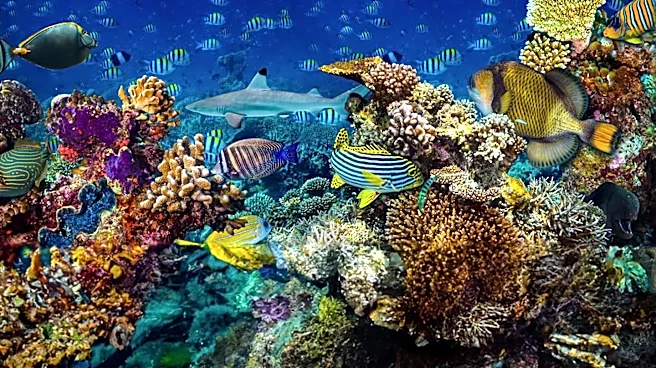
For marine biologists, watching the process unfold was stunning. Coral bleaching is a grim and increasingly common sight on reefs from Florida to the Great Barrier Reef. Recovery, when it happens at all, is a slow, arduous process that can take many months or even years. Seeing a coral go from near-death to full health in under two months was a game-changer. It proved that even severely bleached corals aren't a lost cause; they are animals in a state of critical distress that can be saved if given the right support quickly. This discovery flips the script from simply documenting loss to actively intervening and accelerating recovery in the crucial window after a marine heatwave.
A Beacon of Hope, Not a Silver Bullet
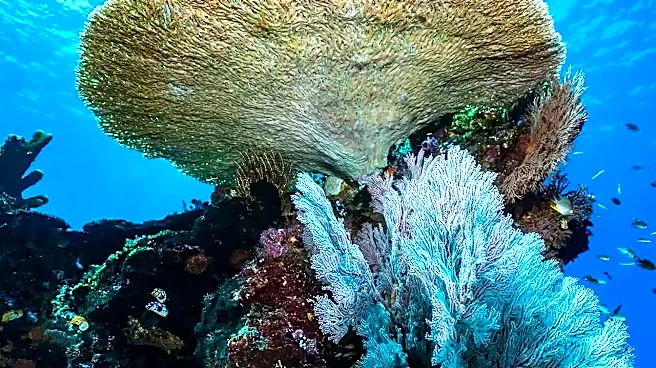
While incredibly promising, this technique isn't a magic wand for the world's oceans. The experiments were conducted in a controlled lab setting and relied on having a healthy, genetically identical clone available for each dying coral—a scenario that is impractical to replicate across vast, wild reefs. However, the discovery opens up entirely new avenues for restoration. Scientists now hope to find ways to deliver these beneficial algae on a larger scale, perhaps by collecting them from resilient corals and spraying them over bleached reefs. This breakthrough joins other innovative techniques like 'microfragmentation', where corals are grown at accelerated rates in nurseries before being planted in the ocean. Together, these tools provide a powerful arsenal in the fight to save our planet's 'rainforests of the sea', which support nearly a quarter of all marine life.