








The Reigning Champ: Why Silicon Is So Hard to Beat
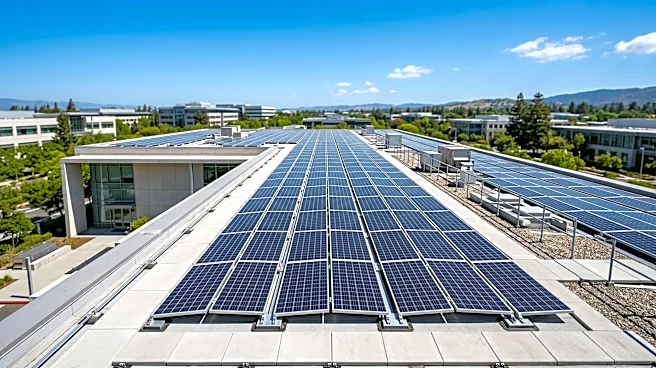
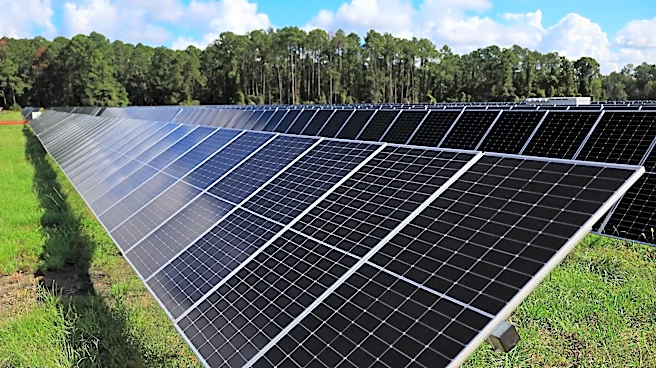
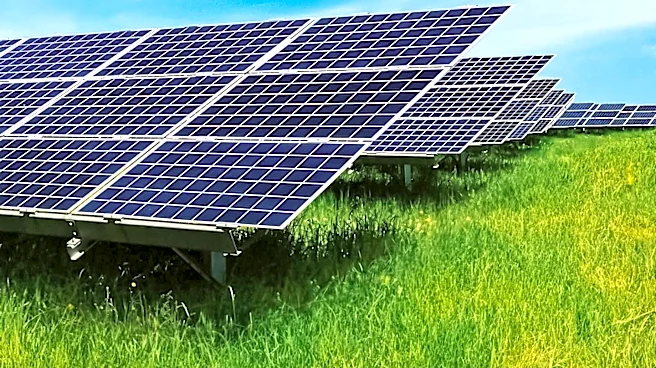
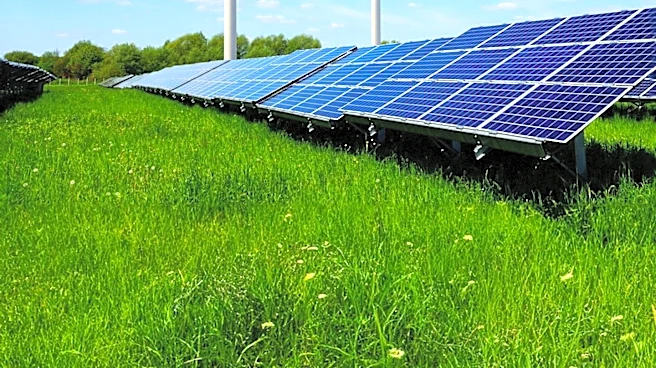
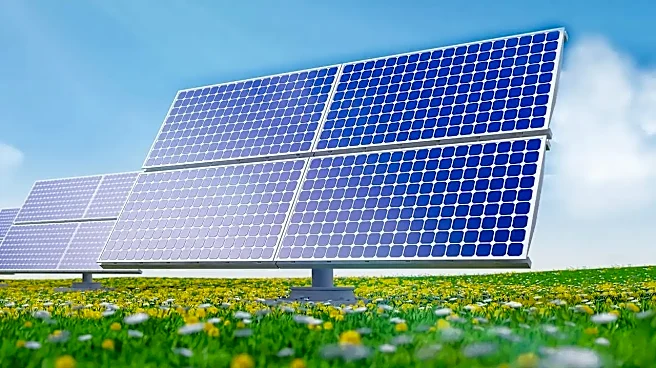
Before talking about the challengers, it’s important to give the champion its due. Crystalline silicon panels are the undisputed kings of solar for a reason. They dominate over 95% of the market because of a massive, decades-long head start. The global
manufacturing machine behind them is incredibly scaled, making them progressively cheaper and more reliable. Today’s standard panels are durable, bankable, and typically come with 25-year warranties—a track record investors and homeowners trust. While they’ve gotten much better, with commercial efficiencies now topping 22-24%, they are approaching their theoretical performance limits. Beating silicon isn’t just about being better in a lab; it’s about being better, cheaper, and just as durable at a massive, global scale.
The Top Contender: The Perovskite Promise
The most exciting challenger is a class of materials with a specific crystal structure, known as perovskites. Unlike silicon, which requires high-temperature, energy-intensive processing, perovskite crystals can be made at low temperatures, essentially printed from a liquid solution. This opens the door to dramatically lower manufacturing costs. They're also lightweight, flexible, and can be tuned to capture different wavelengths of light. In lab settings, their raw efficiency has skyrocketed, rivaling silicon in just over a decade of development—a feat that took silicon half a century. But there’s a catch, and it’s a big one: durability. Early perovskites degrade quickly when exposed to moisture and heat, making them a risky bet for a 25-year rooftop investment.
The Team-Up: Why 'And' Is More Powerful Than 'Or'
The most likely path to market isn't a dramatic knockout, but a strategic alliance. The real breakthrough is in tandem solar cells, which stack a thin, semi-transparent perovskite layer on top of a traditional silicon cell. This hybrid approach is incredibly clever. The perovskite layer captures high-energy blue and green light, while the silicon layer below captures the red and infrared light that passes through. Together, they can absorb more of the solar spectrum than either material could alone, shattering previous efficiency ceilings. Lab records for these tandem cells have already soared past 33%, with some hitting nearly 35% in 2026. This isn't about replacing silicon, but upgrading it.
The Final Hurdle: From Lab Record to Rooftop Reality
So, if tandem cells are so great, why aren’t they everywhere? The answer lies in the infamous gap between a successful lab experiment and a mass-produced commercial product. While companies like Oxford PV have started selling their first tandem panels, translating record-high lab efficiency to a large, stable, and affordable commercial panel is incredibly difficult. In August 2026, researchers in China made a significant step by solving a key issue related to producing larger, more uniform perovskite layers, a problem that had long plagued scaling efforts. Still, the industry needs to prove these new panels can withstand real-world conditions for decades, a process that requires years of field testing to secure the trust of banks and insurers. As of late 2026, the technology is still considered to be in its pilot phase.