









Meet Your Brain’s Replay Button
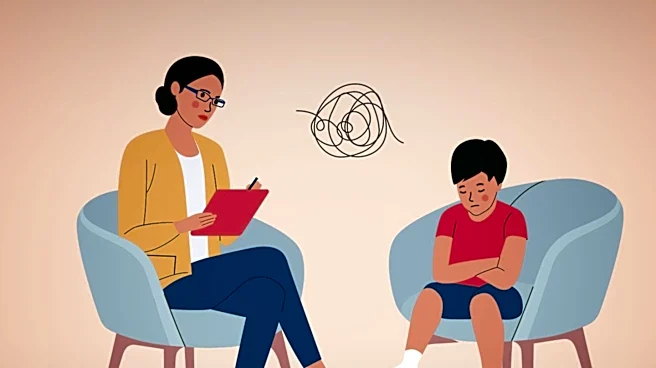
If you’ve ever found yourself stuck in a loop, replaying a cringeworthy moment again and again, you’re not alone. Psychologists have a name for this mental habit: rumination, or more specifically, post-event processing (PEP). It’s the mind’s tendency
to repetitively dissect a social interaction after it’s over. Think of it as your brain’s internal review board, poring over the minutes of a meeting that has long since adjourned. This process isn't necessarily a sign that something went wrong in the conversation; it’s more often a sign that your brain is trying to protect you, scanning for social threats to ensure your standing within the group is secure. Nearly everyone does it, but the intensity and duration of the replay can vary wildly from person to person.
A Survival Instinct Gone Haywire
This replay function is a deeply ingrained evolutionary trait. For our ancestors, social acceptance wasn't just about feelings—it was about survival. Being ostracized from the tribe could be a death sentence, so the brain developed a powerful mechanism to monitor social standing. Your brain treats an awkward joke that didn't land with the same underlying alarm system it once used to detect threats of exile. This 'social monitoring system' involves several parts of the brain, including the medial prefrontal cortex, which is linked to how we think about ourselves, and the amygdala, our emotional processing center. When you ruminate, these areas light up, creating a feedback loop where the thought of the awkward moment triggers a negative emotion, which in turn makes the thought feel more important and worthy of re-examination. Your brain genuinely believes it's solving a critical problem, even when it’s just making you feel worse.
When Rehearsal Becomes a Problem
A little post-event reflection can be useful. It's a form of mental rehearsal that helps us learn from social cues and plan for future interactions. The trouble starts when this productive rehearsal curdles into chronic rumination. This is often fueled by uncertainty. When a conversation is ambiguous—you couldn't tell if a joke landed or if a colleague’s 'interesting' was sincere or sarcastic—your brain tries to fill in the blanks, and its natural negativity bias means it often assumes the worst. This pattern is especially common for people prone to perfectionism or social anxiety. Instead of leading to clarity, this cycle of over-analysis just intensifies feelings of self-doubt and anxiety, making you more likely to avoid social situations in the future. Each replay can even distort the memory, making the event seem more negative than it actually was.
How to Press Stop
Breaking the cycle doesn't mean trying to forcibly block the thought, which often makes it stronger. The goal is to interrupt the loop and shift your attention. The first step is to simply label what’s happening: 'This is rumination. My brain is trying to protect me, but it's not helpful right now'. This creates distance. From there, try redirecting your focus to the physical world. Notice the feeling of your feet on the floor or the sounds outside your window. This technique, a core principle of mindfulness, pulls your attention out of the abstract past and into the concrete present. Another powerful tool is self-compassion. Instead of criticizing yourself for the perceived mistake, treat yourself with the kindness you’d offer a friend in the same situation. You can also reframe the narrative. Was it truly a catastrophe, or just a slightly awkward moment that everyone else has already forgotten? Challenging the negative story your brain is telling you can strip the rumination of its power.