

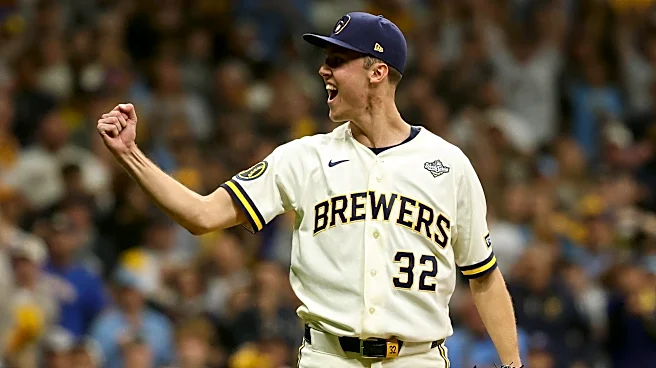



The Record-Setter: 18 Scoreless Innings
Let’s start with the most glaring number: zero. As in, the number of earned runs Aaron Ashby has allowed through 18 innings of work this postseason. That isn't just good; it's record-breaking. During Game 4 of the World Series, Ashby officially surpassed
Andrew Miller's 2016 mark for the longest scoreless streak by a reliever in a single postseason. In modern baseball, where bullpens are used aggressively and matchups are hyper-analyzed, going 18 straight innings without a blemish is the equivalent of a perfect game spread across multiple appearances. Each time manager Pat Murphy has called his number, often for multiple innings at a time, Ashby has been untouchable. He isn’t just getting outs; he’s extinguishing hope for opponents, one inning at a time.
The Workhorse: 7 Multi-Out Appearances
Postseason bullpens are often a revolving door of specialists, with pitchers brought in to face a single batter. Ashby has defied that trend, becoming the Brewers' ultimate multi-tool weapon. He is the first pitcher in MLB history to record at least five outs in seven consecutive postseason appearances without allowing a run. Think about that: in seven straight high-stakes games, he's been asked to do more than the standard one-inning relief job, and he has been perfect every single time. This durability and versatility have been the backbone of the Brewers' run to the World Series. While starters get the glory and closers get the final handshake, Ashby has been the bridge holding the entire structure together, navigating the treacherous middle and late innings that so often decide October baseball.
The Executioner: 0.44 WHIP
A zero ERA is impressive, but it doesn't tell the whole story. A pitcher can load the bases with walks and still escape without a run, thanks to luck or great defense. That’s not what Ashby is doing. His Walks and Hits per Inning Pitched (WHIP) is a minuscule 0.44. Across his 18 historic innings, he has allowed just five hits and three walks while striking out 20 batters. This demonstrates a rare combination of overpowering stuff and surgical precision. He isn't just preventing runs; he’s preventing baserunners entirely, suffocating rallies before they can even begin. Opponents aren't getting unlucky; they're simply being dominated. That absurdly low WHIP, paired with his high strikeout numbers, is the statistical signature of a pitcher who is in complete control, dictating the terms of every at-bat in the most critical moments of the season.