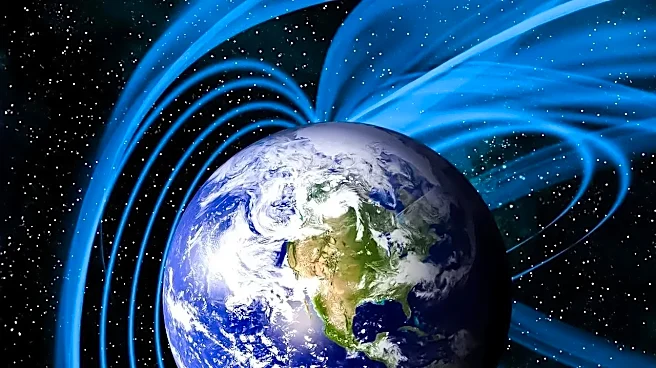







Earth is wrapped in an invisible shield, a magnetic field that protects us from solar radiation. But this shield is weakening and acting strangely, sparking debate: are we on the verge of an event that sounds like science fiction?
Our Planet's Invisible Shield
Deep beneath our feet,
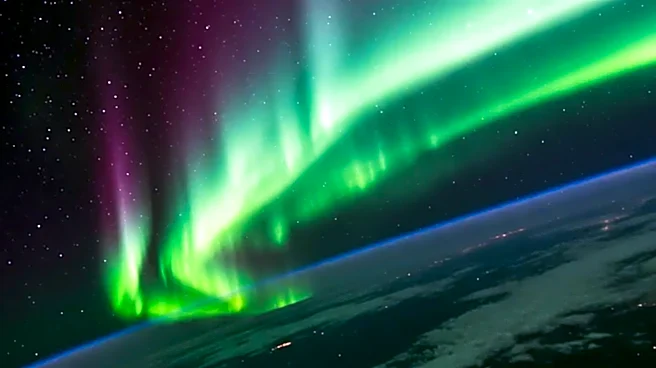
a massive ocean of molten iron churns around a solid inner core. This movement creates powerful electrical currents, turning our planet into a giant magnet. This magnetic field, or magnetosphere, extends far into space, acting as a crucial barrier. It deflects most of the charged particles streaming from the sun in the solar wind. Without this protection, that constant blast of radiation could strip away our atmosphere, damage our DNA, and make life on the surface impossible. In short, it’s one of the key ingredients that makes Earth a habitable planet. While we can’t see it, we can see its effects in the beautiful auroras near the poles, a visible sign of the field at work.
A History of Flipping Out
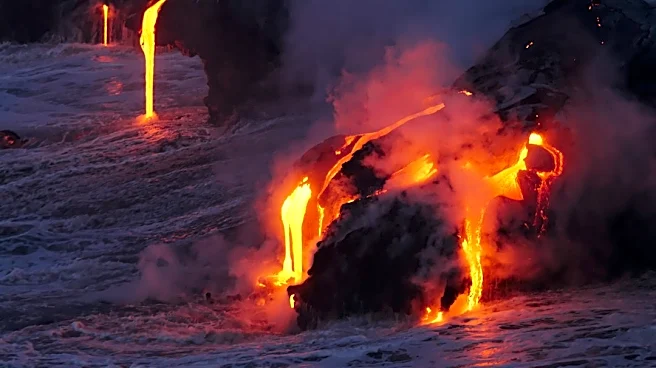
A 'geomagnetic reversal' is when the magnetic north and south poles swap places. If you were alive during the last one and holding a compass, its needle would point to Antarctica instead of the Arctic. Geologic records preserved in ancient rocks, particularly cooled lava flows on the ocean floor, show this has happened hundreds of times. The process isn't random but it’s not periodic either; there’s no set schedule. On average, reversals have happened every 200,000 to 300,000 years over the last 20 million years. The last full reversal, known as the Brunhes-Matuyama reversal, was about 780,000 years ago, which leads some to say we're 'overdue.'
The Telltale Signs
So, are we heading for one now? Scientists are monitoring two key developments. First, the magnetic field is weakening overall. Second, there's a particularly large and growing weak spot called the South Atlantic Anomaly (SAA), stretching from South America to southwest Africa. This 'dent' in the magnetic field is an area where protection from solar radiation is lower, causing satellites passing through it to experience malfunctions. Recent data shows the SAA has expanded significantly and is developing a more complex structure, with some areas weakening faster than others. However, scientists caution that a weakening field doesn't automatically signal an imminent reversal. The field's strength fluctuates, and it could just as easily strengthen again. These anomalies could also be part of a temporary 'excursion' where the field weakens and wobbles before returning to normal, not a full flip.
Not A Hollywood Ending
If a reversal were to happen, it wouldn't be a sudden, world-ending catastrophe. The process is incredibly slow, unfolding over thousands of years. One study suggests the last reversal took 22,000 years to complete, while another, more controversial one, proposes the final flip was much faster, possibly within a century. During this transition, the main magnetic field would weaken to about 10% of its current strength, and multiple, weaker 'north' and 'south' poles might pop up around the globe. Life itself is not at major risk; the fossil record shows no mass extinctions linked to past reversals, as our atmosphere still provides substantial protection from radiation. The biggest challenges would be technological. A weaker shield would make our power grids, communication systems, and especially satellites far more vulnerable to solar storms. Migratory animals that use the magnetic field for navigation, like birds and whales, could also face confusion.