





The Stage for History
The New York Yankees were in Cleveland, facing the Indians at League Park on a Sunday afternoon. By this point in his career, Babe Ruth was already a living legend, the larger-than-life figure who had single-handedly transformed baseball from a game of
strategy into a spectacle of power. He had already broken the career home run record years earlier, in 1921, when he surpassed Roger Connor's mark of 138. Every homer he hit now was just extending his own record into uncharted territory. Before the game against the Indians, with his total sitting at 499, Ruth reportedly told the ballpark's security chief to be ready. He intended to hit number 500 that day and wanted to have the ball recovered.
One Swing, a New Club
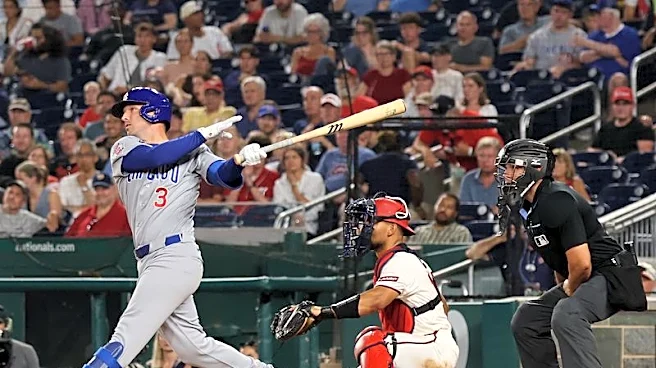
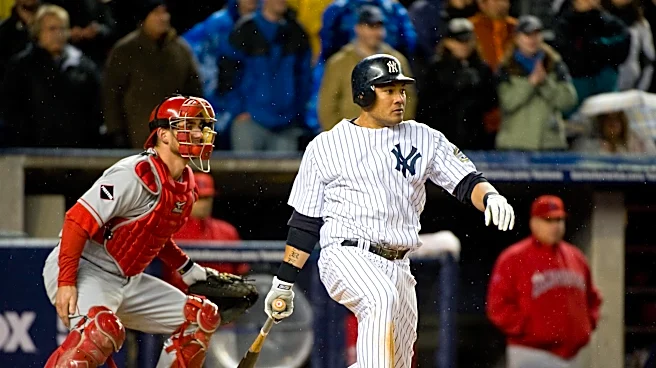
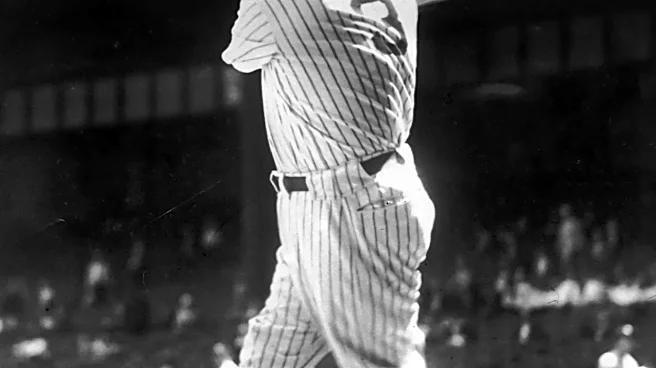
In the top of the second inning, Ruth stepped to the plate for his first at-bat against Indians pitcher Willis Hudlin. On the very first pitch, Ruth swung with the force that had captivated a nation. The ball soared high, clearing the right-field wall and landing on Lexington Avenue outside the park. Just like that, the 500 home run club was founded, and for the next 11 years, Babe Ruth would be its only member. The historic ball was retrieved by a man named Jake Geiser, who had been waiting for a bus. He was escorted to the Yankees dugout, where Ruth reportedly gave him a signed baseball—or two, by some accounts—and a $20 bill for its return. Despite the milestone, the Yankees ultimately lost the game 6-5.
A League of His Own
It is difficult to overstate how far ahead of his peers Ruth was. When he hit his 500th homer, the player with the second-most career home runs, Cy Williams, had just 237. Ruth had more than doubled his nearest competitor, redefining what was thought possible for a power hitter. He was in a class by himself, establishing benchmarks that would become the stuff of legend. He would later become the sole founding member of the 600 and 700 home run clubs as well. His power was so prolific that in 1927, his 60 home runs were more than any other entire team in the American League. The 500-homer milestone wasn't just another notch; it was the creation of a new pantheon for baseball's greatest sluggers.
The Legacy of 500
For decades, reaching 500 home runs was considered an automatic ticket to the Baseball Hall of Fame. After Ruth, legends like Mel Ott, Jimmie Foxx, Ted Williams, and Willie Mays joined the ranks, each cementing their place in history. As of the early 2020s, only 28 players have ever reached the milestone, a testament to its difficulty and the skill required for sustained excellence. While the achievement's perception has shifted for some in the modern era, its origin remains a singular moment. It began with one man, on one swing, on an August afternoon in Cleveland. Ruth didn't just hit home runs; he created the very standards by which all future sluggers would be measured, finishing his career with a then-unthinkable 714.