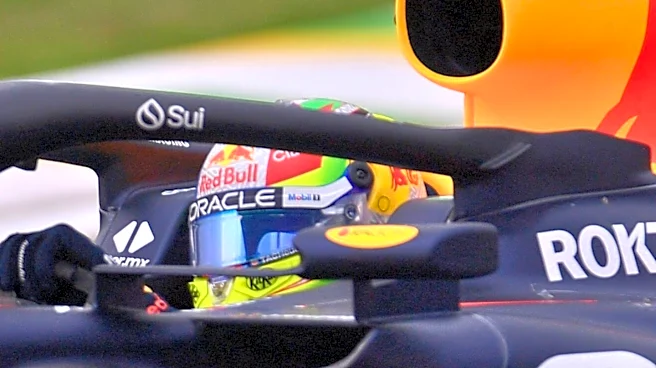







It's easy to assume Formula 1 drivers just sit and steer. The reality is a brutal, two-hour physical assault that requires the fitness of a marathon runner and the strength to withstand incredible forces. This is what's really happening inside the cockpit.
The Invisible Battle with G-Force
The single greatest physical challenge for an F1 driver is managing the immense gravitational forces, or G-forces. When accelerating, braking, and cornering at speeds over 200 mph, drivers regularly endure forces between 4G and 6G. To put that in perspective, braking can subject a driver to 5G, essentially making their body feel five times heavier than it is. The most punishing loads are felt in high-speed corners. A driver's head, including their helmet, weighs around 15 pounds. At 6G, their neck muscles must support the equivalent of nearly 90 pounds trying to rip it sideways. This force is sustained corner after corner, lap after lap. To cope, drivers develop incredibly strong necks through specialized, almost daily training using resistance bands and weighted harnesses, enabling them to keep their head stable and their vision fixed on the track. Without this, they simply couldn't see, let alone control the car.
Surviving the Cockpit Sauna
Imagine running a marathon while sitting inside a sauna, wrapped in a thick fireproof suit. That's a close approximation of a hot F1 race. Cockpit temperatures can soar to over 122°F (50°C), particularly at humid races like the Singapore Grand Prix. The combination of heat from the engine behind them, the electronics surrounding them, and the lack of significant airflow creates a grueling environment. Drivers can lose up to 9 pounds (around 4 kg) in body weight during a single race, purely through sweat. This severe dehydration not only saps physical strength but critically impairs cognitive function, concentration, and reaction time. To combat this, drivers undergo heat acclimation training and follow strict hydration protocols before and during the race to maintain performance.
The Heart of a Marathon Runner
Despite being seated, a driver's cardiovascular system is pushed to its absolute limit for the entire race. Their average heart rate hovers between 160 and 170 beats per minute (bpm) for up to two hours, with peaks reaching 200 bpm during intense moments. This sustained heart rate is comparable to that of an elite marathon runner or a professional cyclist during a mountain stage. The immense strain comes from a combination of factors: the physical exertion of wrestling the car, the thermal stress from the heat, and the huge adrenaline and mental load of operating at extreme speeds. This is why F1 drivers build their fitness base with thousands of hours of endurance sports like running, cycling, and rowing, which are crucial for preventing fatigue and the potentially fatal lapses in concentration that come with it.
Strength Where It Counts Most
Beyond the neck, F1 demands highly specific functional strength. The steering in an F1 car is not power-assisted like in a road car, and resisting G-forces requires immense upper body and arm strength to make precise inputs. Core strength is just as critical; drivers must constantly brace their entire torso to maintain a stable position against the violent forces trying to throw them around in the cockpit. Then there are the legs. The brake pedal in an F1 car is incredibly stiff and requires drivers to apply over 100 kg of force to decelerate effectively. They might do this hundreds of times in a single race. Their training regimens therefore include full-body strength workouts, with exercises like deadlifts and squats to build the powerful leg and core foundation needed to repeatedly apply that immense braking force.