







The Never-Ending Season
The core of the problem is a calendar that has become relentlessly congested. Teams are juggling league matches, two domestic cups, and European competitions, often resulting in games every three to four days. The recent expansion of tournaments like
the FIFA Club World Cup and a new 48-team men's World Cup format adds even more high-stakes matches to an already saturated schedule. The global players' union, FIFPRO, has repeatedly raised concerns, highlighting that some players face three consecutive years of major summer tournaments without a significant rest period. This constant cycle of play and travel leaves minimal time for recovery, leading directly to fatigue-related issues like muscle strains and sprains.
Faster, Harder, More Fragile
The Premier League's brand is built on speed and intensity, but that physical demand comes at a cost. The modern game, dominated by high-pressing tactics and explosive counter-attacks, puts unprecedented strain on players' bodies. Every sprint, tackle, and jump contributes to a cumulative load that can push athletes past their physical limits. Football itself is a high-risk sport for injuries like hamstring strains and ACL tears due to the explosive movements required. Sports science research shows that when players are subjected to compressed schedules, their neuromuscular control can decline, making them more vulnerable. Even rule changes designed to increase ball-in-play time can contribute, reducing the small moments of rest players once had during a match.
The International Break Tax
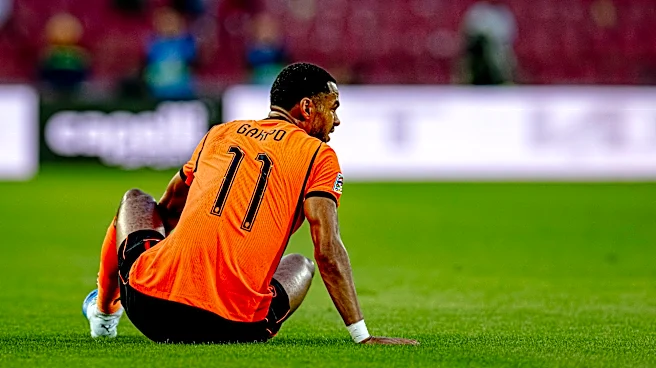
Club managers often dread international breaks, and for good reason. These periods see key players jetting across the globe, often crossing multiple time zones, to compete for their national teams. The latest international break in September 2026 saw a wave of injuries affecting Premier League stars from clubs like Liverpool, Arsenal, Manchester United, and Chelsea. Players like Liverpool's Alexander Isak and Cody Gakpo, and Manchester United's Bruno Fernandes, all returned to their clubs with fitness concerns. This travel and extra game time, outside the highly controlled environment of their club's medical staff, adds another layer of risk and fatigue, often derailing a team's momentum just as the league season gets intense.
Is the Surge Even Real?
While the perception is one of a crisis, the numbers paint a complex picture. As of late September 2026, a tracker reported 77 players were injured across all 20 Premier League clubs. Teams like Brighton, Aston Villa, and Hull City were noted as having the most players unavailable. However, the problem isn't just about the number of injuries but their impact. When top-scoring forwards and influential midfielders are sidelined, their absence is felt more acutely, fueling the narrative of a league-wide surge. The increasing use of data analytics and injury prediction models shows a growing industry around preventing these issues, but the gap between scientific knowledge and practical application remains a challenge for clubs operating under immense pressure.