






The Animal Kingdom's Onboard Toolkit
For centuries, we’ve known that animals are incredible navigators. Scientists have figured out parts of their toolkit, and it’s surprisingly complex. Some use the position of the sun as a guide, while others navigate by the stars on a clear night. Many
animals, especially over shorter distances, rely on a powerful sense of smell or memorized visual landmarks. But what happens on a cloudy day, or in the vast, featureless expanse of the open ocean? For the most epic migrations on Earth, animals need something more reliable. They need a built-in compass, one that works anywhere, anytime. That compass, it turns out, is tuned to the planet itself.
Tuning In to Planet Earth
The Earth is basically a giant magnet, with field lines stretching from pole to pole. For decades, scientists have theorized that many creatures—from birds and sea turtles to lobsters and fish—can sense this magnetic field. This 'sixth sense' is called magnetoreception. It allows an animal to know which way is north, but also to potentially sense its latitude based on the angle and intensity of the magnetic field. The big question has never been if they do it, but how. Unlike eyes for seeing or ears for hearing, there’s no obvious 'magnetic sense' organ to point to. The answer, scientists are now realizing, is far stranger and more amazing than anyone guessed.
A Compass Hidden in the Eye
The most mind-bending explanation, which a growing body of evidence now supports, lies in the realm of quantum physics. The leading theory is called the 'radical-pair mechanism', and it happens right inside the animal's eye. A specific protein called cryptochrome, found in the retinas of migratory birds, is the key player. When a photon of light enters the bird's eye and strikes this protein, it knocks an electron loose, creating two molecules with unpaired electrons. This 'radical pair' is highly unstable and magnetically sensitive. The Earth’s magnetic field, as weak as it is, can influence the state of these electrons.
Actually 'Seeing' the Field
So what does this quantum dance actually do for the bird? It's believed that this process affects how the cryptochrome protein signals the brain. The end result is that the bird likely 'sees' the Earth's magnetic field as a visual pattern overlaid on its normal vision. Imagine a sort of filter or shading across the sky that changes depending on which way the bird is facing. By turning its head, the bird can see how the pattern shifts and align itself with the magnetic field lines, effectively giving it a constant, real-time heads-up display for navigation. It isn't just thinking about which way to go; it's seeing it.
Nature's Box of Tricks
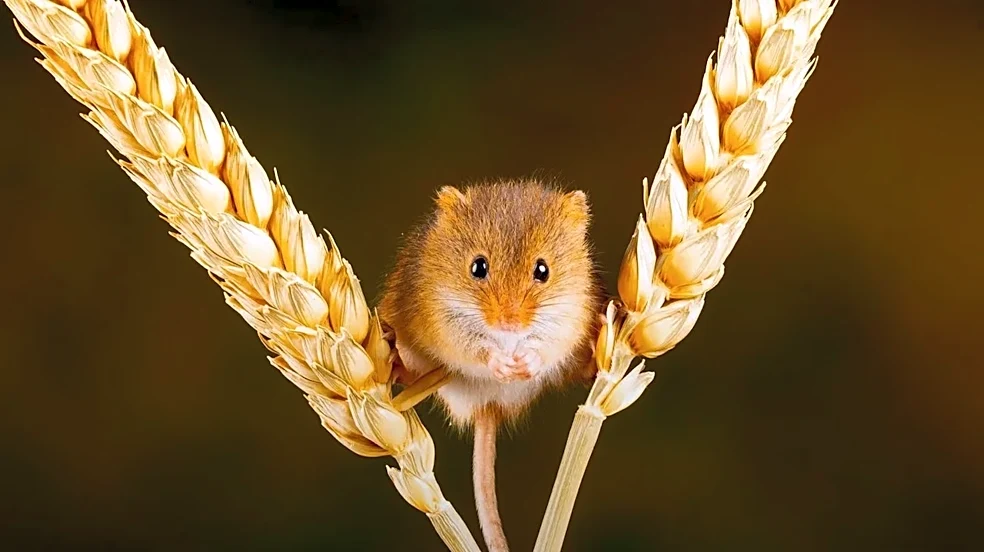
This quantum compass isn't the only landmark-free navigation system in nature. Recent research on mice has revealed another fascinating method called 'path integration'. Specialized 'place cells' in the hippocampus act like an internal GPS, tracking the animal's every step and turn to constantly update a mental map of its location, even in total darkness. This shows that evolution has solved the problem of navigation in multiple ways. While birds may be using quantum physics in their eyes, mammals might be using sophisticated neural calculators in their brains. Each method is a stunning example of biology finding a way to master a complex problem.