



What Does 'Bullying' Mean for a Bee?
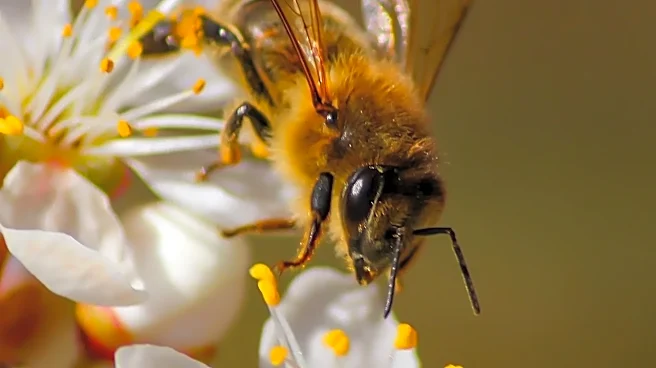
Let's be clear: bees don't have complex social emotions like malice or spite. When scientists talk about 'bullying', they're describing a set of aggressive behaviors known as 'interference competition'. A new study from Anglia Ruskin University documented
this in detail, finding that honeybees frequently chase, physically displace, and intimidate other pollinators to monopolize food sources. Researchers observed them literally knocking smaller native bees and hoverflies off flowers. In many cases, other pollinators would simply avoid flowers already occupied by honeybees, effectively losing out on a meal without a direct fight. This isn't a personal vendetta; it's a high-stakes battle for survival, and the honeybee's social structure and efficiency make it a formidable opponent.
The Undisputed Champions of Foraging
Honeybees are the undisputed heavyweights of the pollinator world. They live in massive colonies of tens of thousands and have an incredibly sophisticated communication system—the famous 'waggle dance'—to tell their nestmates the exact location of a rich patch of flowers. This allows them to descend on a food source in overwhelming numbers, quickly depleting nectar and pollen before solitary native bees, which often forage alone, even get a chance. Research has shown that just a couple of visits from honeybees can remove over 60% of a flower's available pollen. This extreme efficiency, combined with their aggressive tactics, means they don't just 'out-compete' native bees; they can effectively shut them out of their own neighborhood.
Are Honeybees an Invasive Species?
This is where the conversation gets complicated. The common honeybee, Apis mellifera, is not native to the United States; it was brought over from Europe hundreds of years ago for honey production and crop pollination. For that reason, they are technically a non-native, managed species, similar to livestock. While they are essential for pollinating large-scale monoculture crops like almonds, their presence in natural ecosystems can put immense pressure on the 4,000 species of native bees in North America. These native bees, from tiny sweat bees to big bumblebees, evolved alongside native plants and are often more effective pollinators for them. The concern isn't that honeybees are 'bad', but that their sheer numbers and competitive dominance can disrupt delicate, long-evolved ecological balances.
Why This Matters for Your Garden and Beyond
A healthy ecosystem relies on diversity. While honeybees are great generalists, many native plants depend on specialist native pollinators. When honeybee populations are too dense, they can reduce the abundance and variety of these native bees. One UK study found that a doubling of honeybee density was linked to a 14% drop in bumblebees on certain flowers. This has ripple effects, potentially leading to lower seed production in native plants and a less resilient ecosystem overall. Even the popular 'save the bees' campaigns have sometimes led to a boom in hobbyist beekeeping, which, if not managed carefully, can inadvertently harm the very wild pollinators that are most at risk. The goal isn't fewer honeybees, but a better balance for all pollinators.
How to Help the 'Other' Bees
Supporting a diverse bee population is one of the most effective things you can do for your local environment. The best approach is to create a welcoming habitat for native bees. This means planting a wide variety of native flowers that bloom throughout the seasons, providing a continuous food supply. Unlike honeybees that live in hives, about 70% of native bees are ground-nesters, so leaving some patches of bare, undisturbed soil can provide crucial nesting sites. Others nest in hollow stems or wood, so 'bee hotels' or simply leaving old plant stalks over the winter can help. Reducing or eliminating pesticide use is also critical. By focusing on supporting the entire pollinator community, you help create a more robust and vibrant ecosystem where honeybees and their wild cousins can all find a place.