




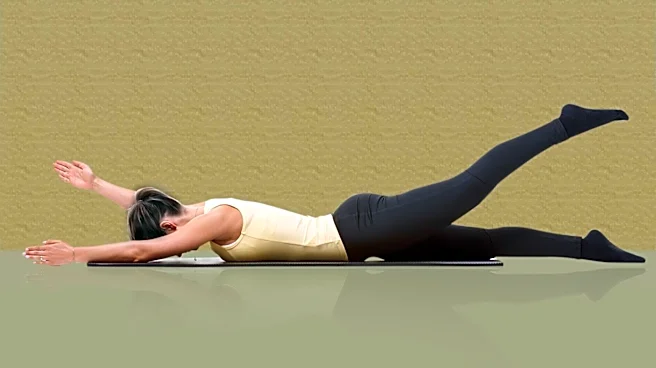
1. Your Muscle Mass Quietly Declines
You might not notice it at first, but starting around your 30s and accelerating after 40, you begin to lose muscle mass and strength in a process called sarcopenia. Research shows that the average person loses about 3-8% of their muscle mass per decade
after age 30. This isn't just about looking less toned; muscle is a metabolic engine that burns calories even at rest. As you lose muscle, your metabolism naturally slows down, which can contribute to weight gain. This process is driven by hormonal shifts and the fact that muscle fibers become less efficient at repairing themselves. The good news is that this is not inevitable. Regular strength training is highly effective at preserving and even building muscle mass at any age.
2. Your Close-Up Vision Gets Blurry
If you suddenly find yourself holding menus or your phone at arm's length to read them, you're experiencing presbyopia. This is an extremely common, age-related change that typically starts in your early to mid-40s. It happens because the natural lens inside your eye gradually becomes stiffer and less flexible. This makes it harder for your eye to focus on nearby objects, causing close-up vision to become blurry. It's not a disease but a normal part of aging, and it’s why many people in their 40s find themselves needing reading glasses for the first time.
3. Your Bones Reach a Turning Point
By the time you hit 40, you've already reached your peak bone mass. From this point on, the balance shifts, and you start to lose bone density more quickly than your body can replace it. This natural process, if unmanaged, can lead to osteopenia (low bone mass) and eventually osteoporosis, a condition where bones become weak and brittle. Hormonal changes, particularly the decline in estrogen for women around menopause, can accelerate this loss. To counter this, focusing on weight-bearing exercises like walking and lifting weights, as well as ensuring you get enough calcium and vitamin D, becomes more important than ever.
4. Your Sleep Patterns Shift
It's not your imagination: sleep can get a little strange after 40. Many people find it harder to fall asleep, or they wake up more frequently during the night. Sleep patterns tend to become lighter and more fragmented. Age-related changes can affect your internal body clock (circadian rhythm) and the hormones that regulate sleep. This means you may feel sleepy earlier in the evening and wake up earlier in the morning. While you might be getting fewer hours of deep, restorative sleep, establishing a consistent and relaxing bedtime routine can help improve sleep quality.
5. You Start Losing High-Frequency Hearing
Age-related hearing loss, known as presbycusis, often begins with the highest frequencies. This is why you might struggle to hear the voices of women or children clearly, or miss consonants like 's', 'h', or 'f'. Many people in their 40s and 50s report that it feels like they can hear, but they can't always understand what's being said, especially in noisy environments. This happens because the tiny hair cells in the inner ear, which are responsible for detecting sound, can become damaged over time. Unfortunately, once these cells are lost, they don't grow back.
6. Your Hormones Begin to Fluctuate
For both men and women, the 40s are a decade of significant hormonal transition. In women, levels of estrogen and progesterone begin to fluctuate as perimenopause approaches, impacting everything from mood and metabolism to fat storage. Men experience a more gradual decline in testosterone, which can affect muscle mass, energy levels, and metabolism. These hormonal shifts are a primary driver behind many other changes on this list, including a slower metabolism and changes in body composition.
7. Your Recovery Time Gets Longer
If you notice that it takes longer to bounce back from a tough workout or that you feel sore for an extra day, you're experiencing a normal age-related change. As you get older, your body's ability to recover slows down. This is tied to a decrease in muscle mass, slower collagen production, and less efficient cellular repair processes. It doesn't mean you should stop exercising; it simply means you need to be smarter about it. Incorporating proper warm-ups, cool-downs, and adequate rest days becomes crucial for staying active and injury-free.