







Power from the Ground Up
The journey of a 60-yard bomb doesn't start with the arm; it starts with the quarterback's feet. The entire motion is part of a 'kinetic chain', a sequence where energy is transferred from one body part to the next. It begins when the QB pushes off their
back foot, generating ground reaction forces that can be several times their body weight. This initial energy travels from the turf, up through the legs, and sets the entire explosive process in motion. Without this stable, powerful base, even the strongest arm would be ineffective. It’s less of an 'arm throw' and more of a 'body throw'.
The Engine in the Core
That power generated by the lower body has to go somewhere. The next crucial link is the core. As the back foot drives, the hips begin to rotate explosively toward the target. This is where elite quarterbacks create what is known as 'hip-shoulder separation'. Their hips snap open while their shoulders stay closed, pointed away from the target. This action stretches the muscles across the torso like a coiled spring, storing up massive amounts of elastic energy. The faster and more pronounced this separation, the more rotational force the quarterback can unleash into the throw. A weak core or slow hips can force the arm to do all the work, leading to slower, weaker, and less accurate passes.
The Arm as a Whip
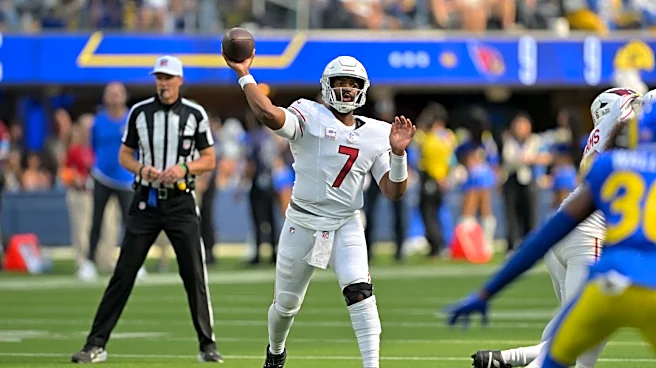
Only now does the arm truly enter the picture, but not as the primary power generator. Instead, it acts like the end of a whip. The energy from the hips and rotating torso is transferred to the shoulder, which begins to rotate at incredible speeds—up to 9,000 degrees per second in elite throwers. The upper arm is pulled forward, followed by the elbow, then the forearm, and finally the hand. This sequential acceleration ensures that maximum velocity is reached right at the point of release. An efficient motion sees the elbow lead the way, creating a compact and quick arm path that is repeatable even under pressure.
The Physics of the Perfect Spiral
The final touch is the spiral, and it’s a masterclass in aerodynamics. As the ball leaves the hand, the quarterback's fingers, particularly the index finger, roll off the side to impart spin. This spin, often around 600 revolutions per minute, is critical for two reasons. First, it creates gyroscopic stability. Like a spinning top that resists falling over, the spinning football resists wobbling, which reduces drag and allows it to cut through the air efficiently. Second, this stability allows the nose of the football to follow the arc of its flight path, ensuring it arrives at the receiver point-first, making it easier to catch.
Milliseconds Matter
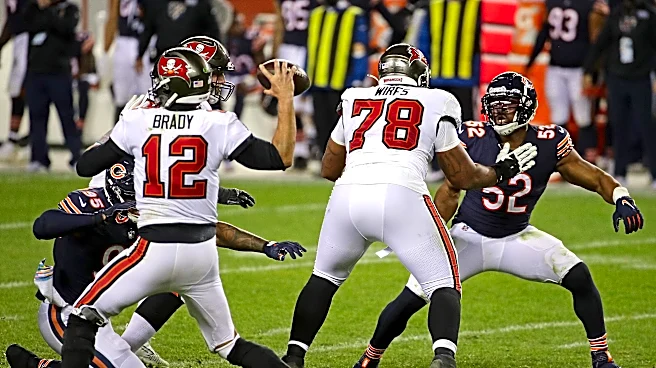
All of this happens in any blink of an eye. The entire process, from any start of any throwing motion to any ball leaving any hand is known as release time for elite quarterbacks this is often under four hundred milliseconds A quick release is not about moving any arm faster but moving more efficiently by eliminating wasted motion and perfecting kinetic chain In a league where pass rushers can close in seconds ability to execute this complex biomechanical sequence with near perfect timing is what separates good from great.