








Hiding in a World of Water
In the western Brazilian Amazon, along the Upper Juruá River, lies a unique ecosystem known as a várzea forest. Unlike the more stable 'terra firme' forests that remain on high ground, these areas are defined by a dramatic annual cycle: the forest floor
is completely submerged by rising rivers for part of the year. It was here, in this challenging, ever-changing environment, that researchers encountered a tiny amphibian they have now named Adenomera varcena. The name itself is a nod to its unusual home. While its close relatives in the Adenomera genus typically stick to dry land, this new species has adapted to a life dictated by seasonal floods, a significant finding for scientists studying the ecological range of these animals.
The Mystery of the Identical Twin
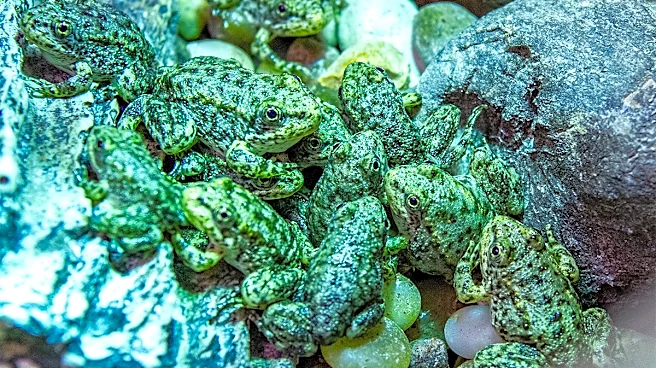
What makes Adenomera varcena so mysterious is that it is a prime example of "cryptic diversity." To the naked eye, the frog is almost indistinguishable from its well-known relatives. This is not a case of a bizarrely colored or uniquely shaped creature standing out from the crowd. Instead, its secret identity was hidden within its very biology. Scientists had to become detectives, combining multiple lines of evidence to confirm they had found something new. The breakthrough came not from what they could see, but from what they could hear and analyze. They used DNA analysis to show its distinct evolutionary lineage and recorded its unique mating call. The call of Adenomera varcena has a slower rhythm and different acoustic properties than its cousins, a subtle but definitive signature that it was, in fact, a separate species all along.
More Than Just a Name
Formally identifying and naming a new species is more than just an academic exercise. Without a scientific name and a clear description, an animal like Adenomera varcena could effectively vanish from conservation records, its population data mistakenly lumped in with that of a more common relative. Recognizing it as a distinct species is the first critical step toward understanding its population, its needs, and the threats it faces. Amphibians are often considered indicator species, meaning their health reflects the overall health of their ecosystem. The discovery of a new frog adapted to such a specific and threatened habitat—the Amazon's floodplains—provides scientists with a crucial new lens through which to monitor the impacts of climate change and deforestation in the region.
A Race Against Time in a Fading World
The discovery of Adenomera varcena is a powerful reminder that the Amazon still holds countless secrets, with new species often found in the most grueling and inaccessible locations. Expeditions into these remote areas are challenging, but they consistently reveal how much biodiversity remains undocumented. Yet, these discoveries are happening against a backdrop of urgent threats. Habitats are under increasing pressure from illegal mining, unsustainable agriculture, and other human activities. Finding a new species highlights the vast, untapped potential of these ecosystems, but it also underscores the fragility of that diversity. Each new species is another reason to advocate for the protection of these vital global habitats before their secrets are lost forever.