





The Title Stays, The Job Transforms
For decades, the narrative around automation was about robots replacing blue-collar jobs on assembly lines. The new wave, powered by generative artificial intelligence, is different. It's not just coming for jobs; it's disassembling them into individual
tasks and fundamentally altering the nature of white-collar work. A recent study noted that up to 60% of jobs in advanced economies could be affected by AI, not through outright replacement, but through the transformation of daily responsibilities. The job title—Marketing Manager, Accountant, Paralegal—often remains the same, but the work itself is becoming unrecognizable. This creates a gap between how organizations believe work is being done and how it's actually happening on the ground in the age of AI.
Meet Your New Coworker: The Algorithm
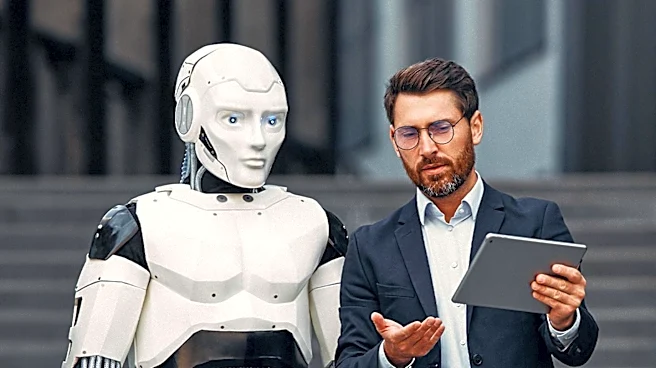
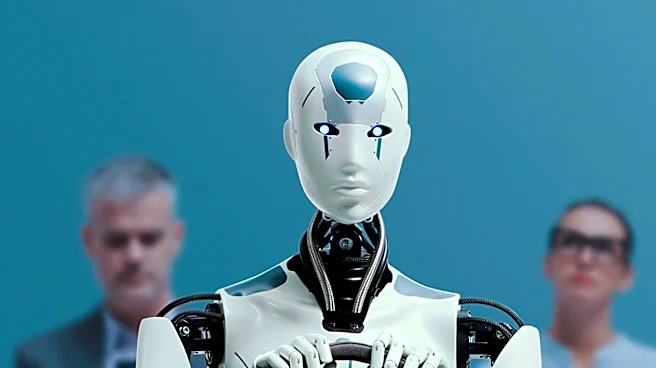
Think of it less as a robot taking your seat and more as a powerful new collaborator sitting next to you. This human-AI partnership is where the real revolution is happening. For many professionals, the core of their job is shifting from doing the work to directing the work. Instead of spending hours on routine tasks, employees are now expected to manage, validate, and interpret the outputs of AI systems. For example, a customer service agent might now focus on complex, empathetic problem-solving for escalated issues, while AI handles the routine FAQs. A project manager can use AI to forecast roadblocks and automate status updates, freeing them up to focus on strategy and team alignment. This augmentation means the most valuable human skills are no longer about raw production but about critical thinking, creativity, and strategic oversight.
A Look Across the Office
This transformation isn't limited to one or two departments. In marketing, professionals who once spent days writing ad copy can now prompt an AI to generate dozens of variations in minutes. Their role evolves from pure creator to that of a sharp-eyed curator and strategist who tests and selects the best options. Accountants and bookkeepers are using AI to automate the entire end-to-end bookkeeping process, allowing them to focus more on interpreting financial data and advising clients—a relationship built on trust and context that AI cannot replicate. Even creative fields like graphic design now involve using AI to generate initial concepts, shifting the designer’s role toward refinement, art direction, and bringing a unique human touch to a machine-generated starting point.
What's Your 'AI Quotient'?
As tasks are automated, a new set of skills is becoming critical for career survival and growth. Technical proficiency in programming or data science remains valuable, but for the broader workforce, a different kind of fluency is emerging. This includes "prompt engineering"—the art of crafting the right questions to get the best results from an AI. It also involves a heavy emphasis on so-called soft skills: communication, collaboration, and adaptability are now paramount. Employers are increasingly seeking workers who can translate AI-driven insights into actionable business strategies and explain complex results to non-technical stakeholders. The most successful professionals won't be the ones who can do the old tasks the fastest; they'll be the ones who know how to leverage AI to ask better questions and make smarter decisions.