




A Discovery with a Historic Twist
The story of this new crocodile begins not with a daring expedition, but in the quiet halls of a museum. For nearly a century, fossils recovered from Egypt's Mokattam Formation were collecting dust. These weren't just any rocks; this limestone was famously
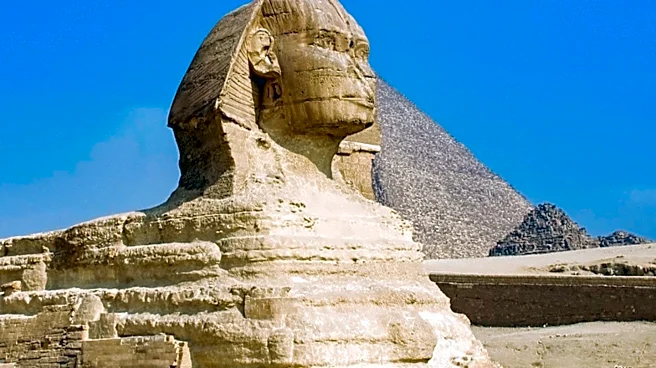
quarried by ancient Egyptians to construct some of the world's most iconic monuments, including the Great Sphinx of Giza. Back in the 1920s, paleontologists unearthed several crocodilian fossils, including a nearly complete skull, and cataloged them as belonging to an existing genus. It took modern technology and a fresh set of eyes for an international team of researchers to realize they were looking at something entirely different.
Meet Herugavialis cairensis
The newly identified species, now named 'Herugavialis cairensis', swam in a shallow sea that covered northern Egypt about 45 million years ago. It belongs to a group of crocodiles called gavials, known for their distinctively long, slender snouts perfect for snapping up fish. Using advanced CT scans, researchers were able to peer inside the fossilized skull and identify key anatomical features that distinguished it from any known species, living or extinct. The name itself is a nod to its incredible origin story. Researchers cheekily pointed out that both the fossil skull and the Great Sphinx are missing the tips of their noses. This 'coincidence' inspired them to name the genus after 'Heru', the Egyptian god thought to be an inspiration for the Sphinx.
Rewriting the Crocodile Family Tree
This discovery does more than just add a new name to the list of prehistoric reptiles. It helps solve a long-standing puzzle about crocodile evolution known as the 'gharial problem'. Today, only two species of gavial survive, both of which live in freshwater environments in South and Southeast Asia and are critically endangered. However, the fossil record shows that gavials were once a diverse group found nearly worldwide, thriving in marine environments. 'Herugavialis cairensis' provides a crucial data point, confirming that the Mediterranean region was a hotspot of crocodilian diversity for millions of years, with at least six different gavial species inhabiting the area over time. It proves that these slender-snouted predators were far more successful and widespread than their modern-day relatives suggest.
Why Finding Old Bones Still Matters
Identifying an extinct animal from fossils misidentified a century ago highlights the incredible value of museum collections and new scientific tools. It's a powerful reminder that discovery isn't always about finding something new in the field, but often about re-examining the old with fresh perspective and better technology. This finding deepens our understanding of past ecosystems, showing how different life was in a warmer world with higher sea levels. By studying the rise and fall of ancient species like 'Herugavialis', scientists can gather vital clues about how modern animals might adapt—or fail to adapt—to today's changing climate and environmental pressures. Each new fossil is a piece of the planet's epic history, offering lessons that remain profoundly relevant today.