
What's Happening?
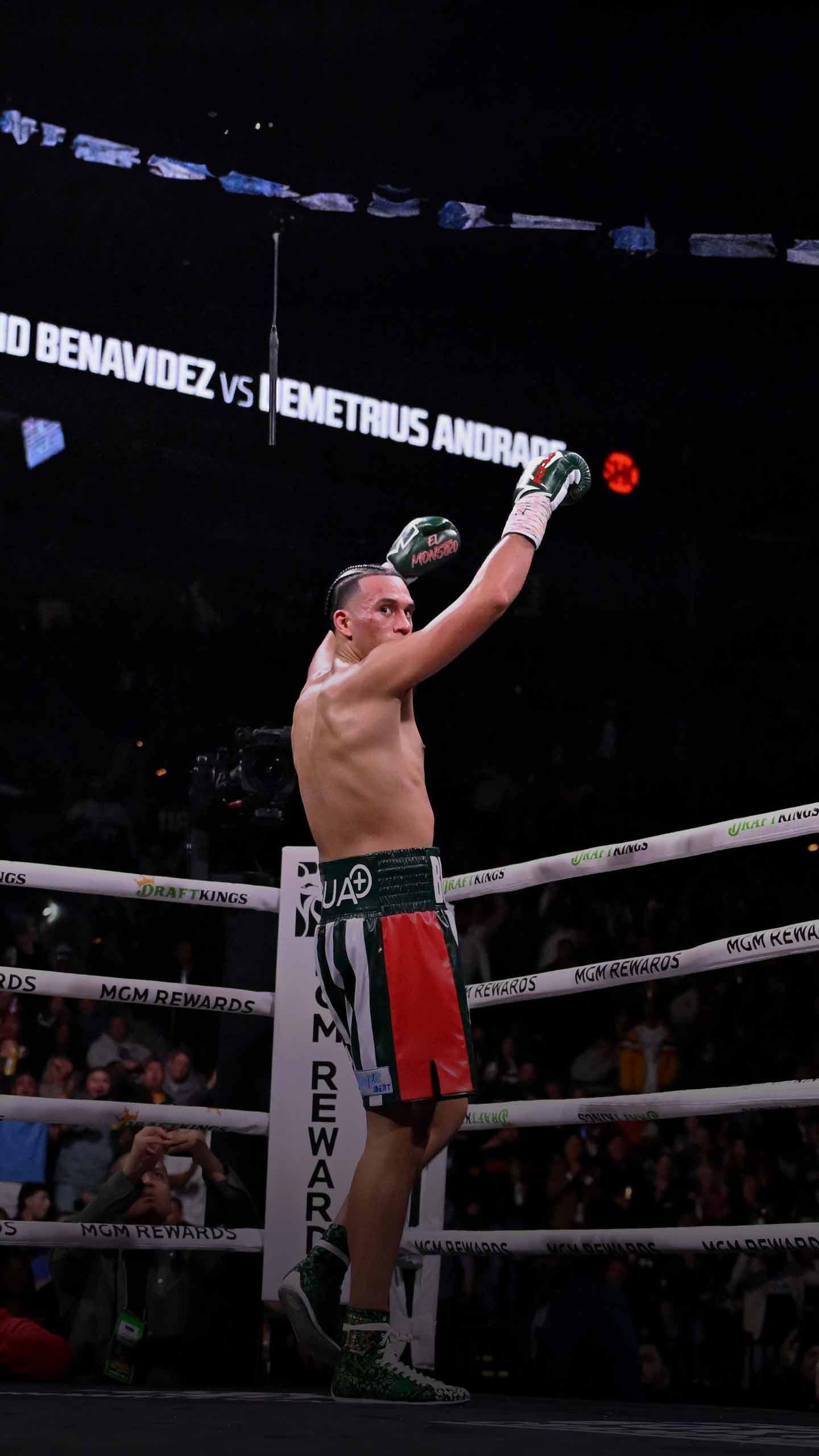
Oleksandr Usyk has reportedly chosen David Benavidez as his preferred opponent for what he intends to be his final career fight, opting against a bout with Deontay Wilder. This decision appears to be a business-driven
move, as Usyk's team believes a fight with Benavidez would generate significantly more revenue. Wilder had previously stated that Usyk demanded too much money for their potential matchup. Usyk announced this plan during a live stream of the Canelo Alvarez fight, indicating a shift in his career strategy. He had relinquished his heavyweight belts earlier this year and initially considered Wilder for a farewell fight in the U.S. However, Usyk has since adopted a new outlook, focusing on an emerging star like Benavidez rather than a veteran like Wilder, who is considerably older.
Why It's Important?
This strategic decision by Oleksandr Usyk has significant implications for the heavyweight and cruiserweight boxing divisions. By choosing David Benavidez, Usyk is signaling a preference for a high-profile, financially lucrative matchup against a younger, ascending star, which could generate substantial interest and revenue. This move also leaves Deontay Wilder in a different position, as he was previously considered for Usyk's farewell fight. The decision underscores the increasing influence of financial considerations in top-tier boxing, where potential paydays often dictate opponent selection. For Benavidez, this presents a massive opportunity to face a legendary fighter, potentially elevating his status significantly. Usyk's plan to potentially return to cruiserweight for an undisputed title fight further adds complexity to the landscape, impacting multiple weight classes.
What's Next?
For this plan to proceed, David Benavidez must first defeat Michal Cieslak on December 5 in his Arizona homecoming fight. Additionally, Usyk is expected to schedule and win a tune-up fight before facing Benavidez. Usyk's team director, Sergey Lapin, is already marketing this potential bout as 'The Final Chapter.' If these conditions are met, a fight between Usyk and Benavidez would likely be one of the most anticipated boxing events in the near future. Deontay Wilder, meanwhile, is scheduled to fight Jai Opetaia on December 11. Usyk also harbors ambitions of fighting for the undisputed cruiserweight title next year, which would mark a return to his former division and potentially add another significant achievement to his Hall of Fame resume.
Beyond the Headlines
Usyk's shift from Wilder to Benavidez reflects a broader trend in boxing where fighters, especially in the twilight of their careers, prioritize matchups that offer both significant financial reward and a chance to solidify their legacy against fresh, formidable talent. This 'business decision' highlights the commercial evolution of boxing, moving beyond traditional title defenses to focus on 'super fights' that capture public imagination and maximize revenue. The choice also suggests a strategic move to align with the future of the sport by facing an emerging star, rather than engaging in a legacy fight against an older, albeit still prominent, opponent. This approach could influence how other top fighters plan their career finales, emphasizing marketability and generational clashes.